

Audio By Carbonatix
Participants at a lecture on new ideas for engagement with the African diaspora, have called for the institution of a truth and reconciliation process to help settle and assuage the scourge of slavery and to hasten the integration of African-Americans and Afro-Caribbeans back to the African continent.
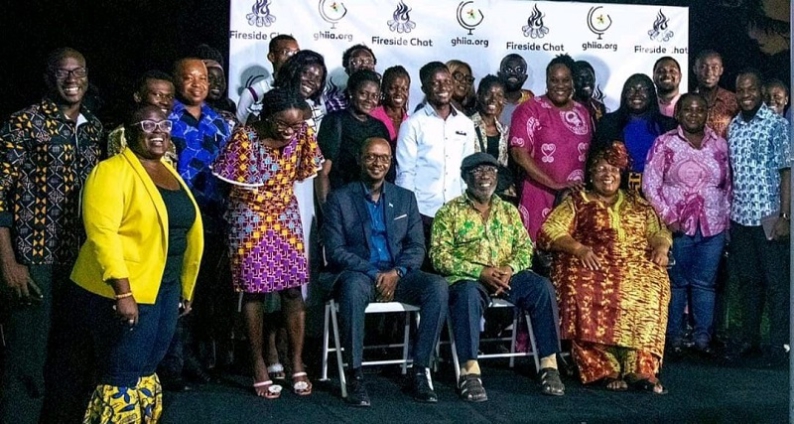
The event was organised by the Institute of International Affairs, Ghana (GhIIA.org) under the theme "New ideas for engagement and integration: Africa and its forced Diaspora" and was held at Mmofra Place.
The eminent Professor Esi Sutherland-Addy, a noted academic and public servant headlined it as the keynote speaker, and was moderated by Dr. Kwabena Opoku Agyemang of the Institute of African Studies, University of Ghana, Legon.
The event was highly patronised with an audience consisting members of the Institute, retired and serving diplomats, members of the diplomatic community and the African-American and Afro-Caribbean community in Ghana.
Professor Sutherland-Addy noted that though Ghana had done well to champion integration and the 'return' of the diaspora, more had to be done for Africa's forced diaspora to come back to the country.
Predicating her presentation on her personal experience, she noted that the draw of Ghana for African-Americans and Afro-Caribbeans was strong in the pre-war and colonial era.
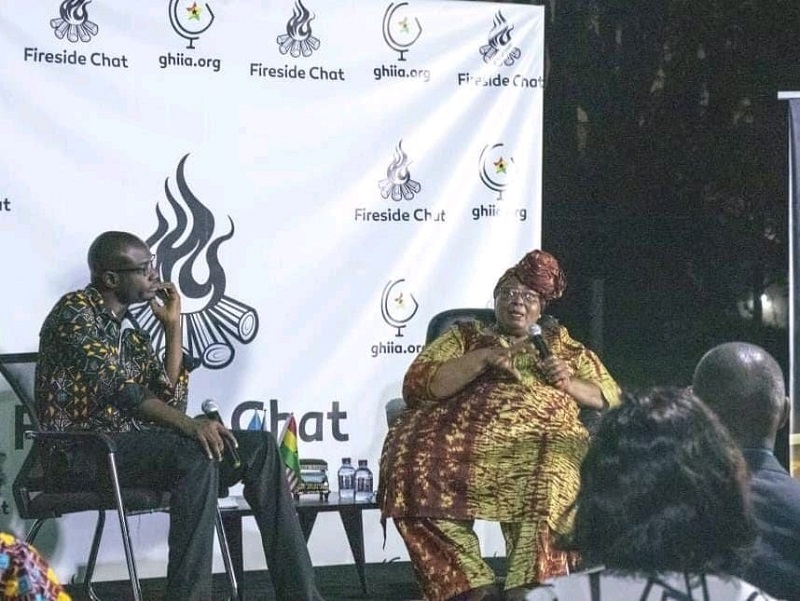
She noted that her father, Bill Sutherland, moved to the then Gold Coast with fellow African-Americans like Dr. Lee, as part of a desire to re-integrate and to promote Pan-Africanism, which led to being part of the effort in convincing Martin Luther King to attend Ghana's independence celebrations.
She further indicated that, Ghana had done well with initiatives like PANAFEST and the YEAR of RETURN, but more had to be done to achieve a deeper level of engagement with the forced African Diaspora.
In response to a question by Dr. Opoku-Agyemang, she agreed with the latter's assertion concerning the weakness of the current educational syllabus in teaching Ghanaian students about slavery.
Professor Sutherland-Addy was gravely worried that if the battles on stories around the tragedy of slavery are not won, the narrative on slavery will be morphed into a warped recollection and will lead to a severance of ties with the Afro-American and Caribbean communities.
She drew parallels with the Holocaust, which she said had revisionists trying to warp the story of that tragedy, but because of the concerted effort of the Jewish community, this was being mitigated and pushed back.
She urged a similar effort on the transatlantic slave trade. Both Professor Sutherland-Addy and Dr. Opoku-Agyemang agreed that this has led to the pernicious rise of the sentiment amongst African Americans that somehow slavery was positive or that Africans back home actively and joyously participated in the trade.
She explained that more deliberate and consistent policies and actions have to be taken to ensure a smoother ability for returnees to integrate, and commended the government for conferring citizenship on African-Americans, including the recent conferment of citizenship on Viola Fletcher and Hughes Van Ellis, two of the oldest survivors of the Tulsa race riots.
Comments from the audience were supportive of the initiative. Madam Nana Akosua Serwah Oyo, Director of Admissions at the Academic City noted that in her 20-year stay in Ghana, this was the first time she had ever witnessed an open dialogue event about a conversation that delved into the deep issues around "the return".
She agreed with the need for a general re-¬education and re-awakening, noting that Ghanaians and other Africans sometimes used derogatory nicknames for African-Americans, mocking their slavery in the plantations.
An eminent Ghanaian, Mr. Charles Zwennes who is of Afro-Caribbean and Ghanaian descent, in his commentary also reiterated his admiration for the event. He expressed a view in support of a truth and reconciliation process to assuage and settle the feeling of abandonment felt by the forced diaspora.
He argued fervently that the view and context of forts and castles be reconsidered and that these structures be called for what they were - warehouses for slavery.
BUGUMS are the fireside chat events at the Institute of International Affairs, Ghana. It is a platform that provides key players in Ghana's International Affairs landscape opportunities to share recollections and lessons from their career and experience. This particular BUGUM was to commemorate Black History Month.
Latest Stories
-
Politicisation could undermine parliamentary probe into cocaine seizures – Dr Osae-Kwapong
2 minutes -
EOCO chases MP: Can Section 41 cure lacuna in EOCO Act? – Inusah Fuseini
5 minutes -
GNFS, GWL inspect fire hydrants in Ministries enclave; 23 found faulty
10 minutes -
Gov’t directs release of 50,000 bags of grain to ECOWAS
12 minutes -
Ghana, Germany deepen cooperation on railways, labour mobility
18 minutes -
Huge crowds greet Pope in Paris for open-air Mass
28 minutes -
‘I never said I’ll declare a state of emergency’ – President Mahama on galamsey
1 hour -
Bobby Banson condemns EOCO’s attempted arrest of Nana Agyei Baffour Awuah
2 hours -
When Kumasi begins to look like somebody is in charge
2 hours -
Parliamentary probe into cocaine seizure would be a waste of time – Inusah Fuseini
2 hours -
Cocaine seizure: Focus on Ghana’s reputation, not partisan blame – Osae-Kwapong
2 hours -
Two Invitations, Three Interrogations: Did Baffour Awuah tell the whole story?
2 hours -
Drug cartels may be seeing Ghana as easy route – Lenin Anane Agyei
3 hours -
Ghana risks gaining notoriety as drug-trafficking hub – Bobby Banson
3 hours -
Government dismissed my drug trafficking warning, then tried to arrest me – Ntim Fordjour
3 hours