

Audio By Carbonatix
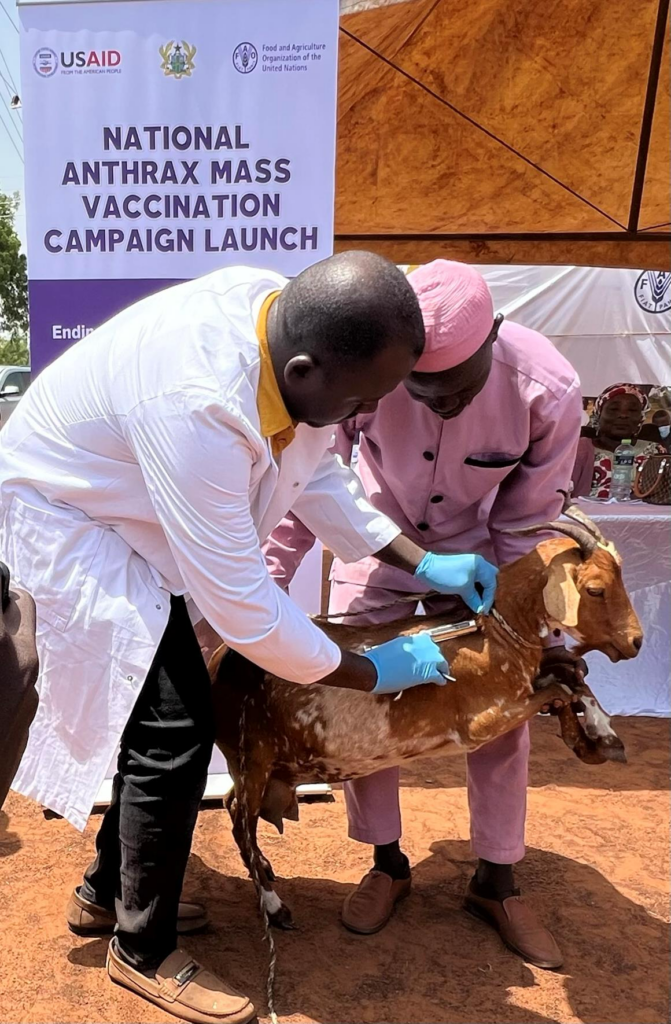
The United States Government, through the United States Agency for International Development (USAID), is donating 100,000 doses of the anthrax vaccine in support of the Ghana Government and the U.N. Food and Agriculture Organisation’s (FAO) anthrax vaccination campaign.
The campaign is expected to cover about one million animals across the five regions of the north.
“Anthrax not only threatens human life. When it destroys livestock, it also threatens economic prosperity and food security,” said USAID/Ghana Mission Director Kimberly Rosen during the launch.
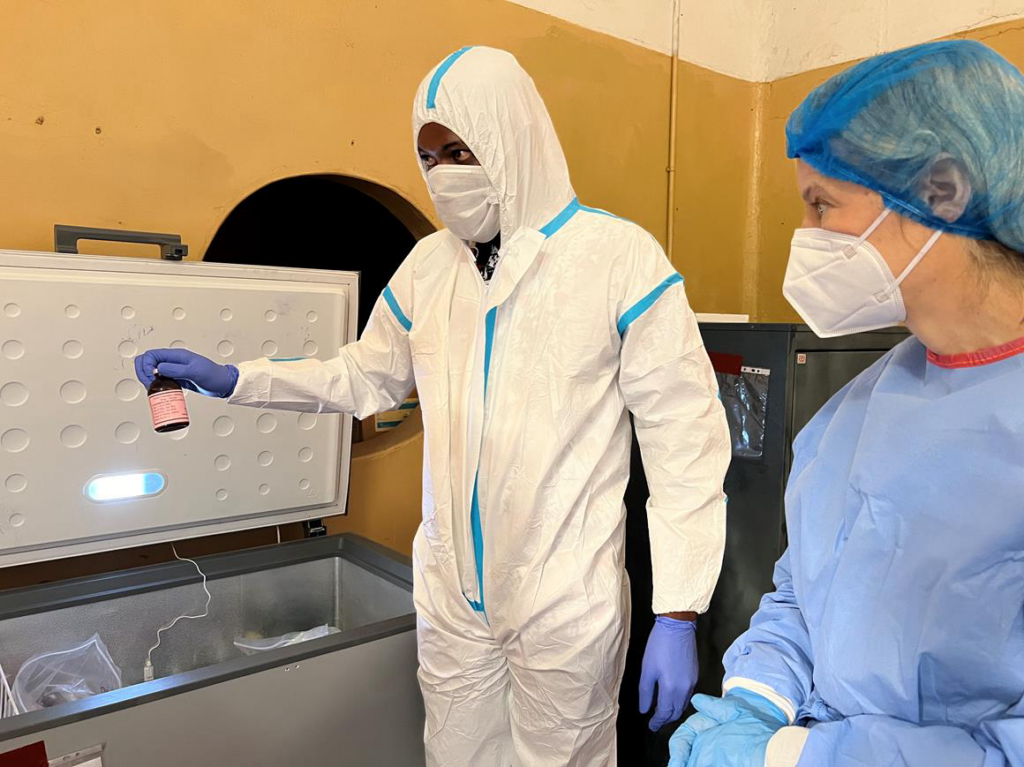
Before the launch event, Ms. Rosen and partners from FAO toured the Vaccine Production Unit of the Central Veterinary Laboratory in Pong-Tamale. In support of domestic manufacturing capacity, USAID recently purchased 100,00 anthrax vaccines from the Central Veterinary Lab to donate to the anthrax vaccination campaign.
“During our tour of the Central Veterinary Laboratory this morning, it was clear that with some automation and more investment, the lab could produce larger quantities of vaccines to meet the national market and also be exported.
"More vaccines mean healthier animals, safer humans and potential revenue and job creation for the Veterinary Service Department,” she added.
Anthrax is a serious, potentially life-threatening infectious disease that is passed from animals to humans.
Vaccination campaigns of animals like cattle, sheep, and goats, prevent the disease from occurring in animals, reducing the risk of transmission to humans.
In May 2023, Ghana experienced an outbreak of anthrax, affecting six districts in the Upper East Region. A total of 97 animals died from the anthrax outbreak.
Thirteen suspected human anthrax cases were detected, including one death. The Government of Ghana and its partners worked quickly to contain the outbreak.
To prevent future outbreaks, yearly animal vaccination is recommended.
USAID and Ghana have worked closely together to strengthen veterinary health services for close to two decades.
In 2006, the U.S. supported the Accra Veterinary Laboratory to diagnose Avian Influenza, allowing for a faster local response to the disease.
In the past year, USAID provided approximately $105 million to Ghana’s health sector for global health security, nutrition and social protection, maternal, newborn, and child health, and more.
Effective preventive and response outbreak activities require close collaboration between multiple sectors and Government agencies, including the Ministry of Food and Agriculture’s Veterinary Services, the Ghana Health Service, the Ministry of Interior, the Ministry of Local Government, and the National Disaster Management Organisation.
Latest Stories
-
Banks NPL ratio of 16.1% is still too high – S&P
21 minutes -
Guidelines, regulations of cryptocurrency in Ghana fall short of comprehensive oversight – IMF
55 minutes -
COCOBOD’S GH¢16.3bn SPV: Real progress toward a sustainable cocoa sector
1 hour -
Ghana lose Morocco friendly as Atlas Lions turn to Mali
3 hours -
Burnham ‘really concerned’ if Man City owners sell up after rule breaches
3 hours -
2026/2027 GPL: Kelvin Nkrumah strike sends Medeama top of league table
3 hours -
Punish Manchester City this season, say other club chiefs
3 hours -
Emmanuel City crowned champions of maiden Global Game Scouting Tournament
3 hours -
MPship should not shield anyone from arrest – Felix Ofosu-Kwakye
4 hours -
Thomas Partey loses father Jacob Teye Partey
4 hours -
Gov’t rejects Baffour Awuah ‘kidnap’ claims, says EOCO officer was lawfully executing arrest
4 hours -
Martin Kpebu explains when EOCO can arrest Manhyia South MP after securing court warrant
4 hours -
EOCO’s reasons for seeking Manhyia South MP arrest warrant not justified – Kpebu
4 hours -
MTN Ghana warns SMEs against sharing PINs amid digital fraud risks
4 hours -
Yendi nursing students warn restricted access to skills lab could affect their training
4 hours