

Audio By Carbonatix
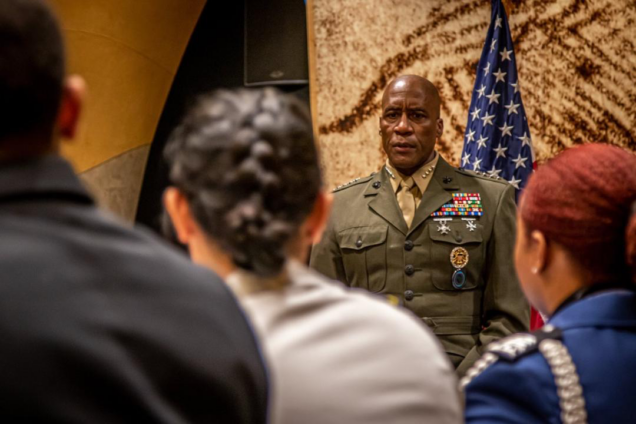
Commander of the United States Africa Command (AFRICOM), Marine Corps General Michael E. Langley, confirmed to the media on Thursday that he has travelled to coastal West African countries, including Ghana, following the withdrawal of U.S. military forces from Niger.
The U.S. troops were stationed in Niger until May this year to monitor regional violent extremism.
However, after the ouster of Niger's democratically elected president Mohamed Bazoum, the military junta agreed with U.S. authorities for a complete withdrawal of American forces by September 15, 2024.
Addressing a virtual news conference after a meeting of African Chiefs of Defense Staff in Gaborone, Botswana, General Langley expressed concerns about extremist organizations thriving on instability in regions with weak governance, leaving populations ungoverned.
He emphasized the dire situation in coastal West Africa, stating, "The bottom line answer is, it is less safe."
Moving forward, the military chief explained that AFRICOM intends to engage with countries in coastal West Africa to identify their needs and provide enduring solutions.
"In most cases, it will be a whole government approach on their end as well. And so that's where our 3D construct within AFRICOM comes into play, because we have those shared objectives, shared challenges, but also the throughput of how we address an enduring solution," he said.
When asked whether Benin, Ghana, or Ivory Coast are being considered for a U.S. military base after pulling out of Niger, General Langley confirmed, "Yes, I've travelled across West Africa, across coastal West Africa.
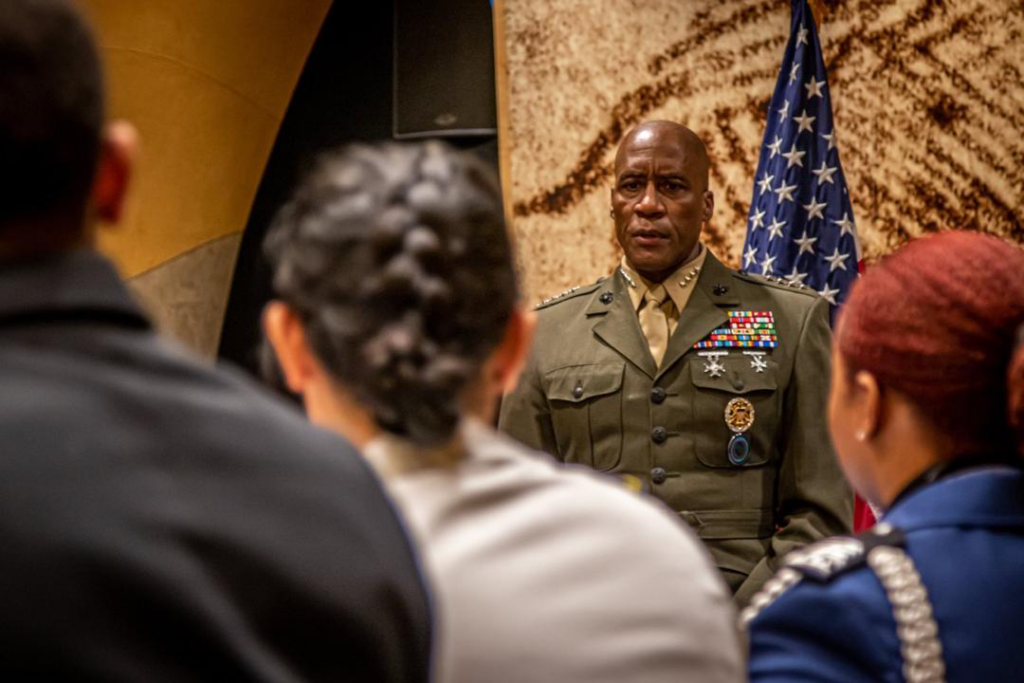
"Those that are up against the growing threat, whether it's on their borders or already across their borders, and I listen to what they need to be successful. They understand and they tell me it's a whole government approach."
General Langley added that AFRICOM remains focused on the growing terror threat in West Africa and considers the situation crucial for both its African partners and the protection of the U.S. homeland.
He emphasised the importance of building partnerships and capacity with African allies, ensuring that AFRICOM listens, learns, and understands their needs.
"This aligns with the Global Fragility Act, which promotes a strategy of preventing conflict and promoting stability. We work with our African partners to implement this strategy effectively and serve as an enduring solution to terrorism," General Langley added.
AFRICOM plans to further engage with civil society and communities in the coming days, aiming to provide services and build institutions at the local governance level while closing the civil-military divide, which is considered effective in countering terrorism.
Latest Stories
-
Todays Front pages: Monday, September 28, 2026
3 minutes -
WAFU B U-17 Girls Cup: Black Maidens finish tournament with 4-0 win over Cote d’Ivoire
8 minutes -
2026 Women’s Super Cup: FC Savannah to face Epiphany Warriors in final on September 29
21 minutes -
Ghana’s second chance: How President Mahama’s return offers historic opportunity for transformation
27 minutes -
AFCON 2027Q: Alexander Djiku ruled out of clash against Gambia
31 minutes -
RCI Immanuel Temple donates supplies to Motherly Love Orphanage
1 hour -
COCOBOD asks investors to fund cocoa purchases, but proceeds may also repay old debt
2 hours -
Gov’t hands over site for construction of 160-bed Savannah Regional Hospital
2 hours -
NCPTA clarifies GH¢200 cap on PTA dues and levies per parent
2 hours -
Asante Kotoko part ways with coach Eric Tinkler
2 hours -
GTA calls for ultra-modern Cocoa Museum in Western North
2 hours -
NPP says concerns over delegates’ register addressed ahead of October 3 polls
2 hours -
PwC Ghana appoints George Arhin as Country Senior Partner
2 hours -
New Economy will turn imports into opportunities for Ghanaian production – Ato Forson
2 hours -
Two Ada SHS students convicted, placed on 12-month good behaviour bond
2 hours