

Audio By Carbonatix
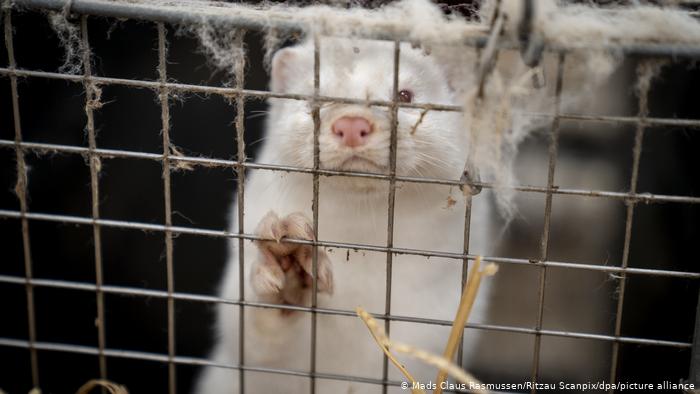
All non-residents coming from Denmark will no longer be allowed into the UK, the government announced. Denmark ordered a nationwide mink cull after a mutated version of the coronavirus was transmitted to humans.
The United Kingdom issued an immediate travel ban for all non-residents traveling from Denmark following outbreaks of a mutated version of the coronavirus at Danish mink farms.
The new measures, announced early Saturday morning, went into effect at 0400 GMT/UTC.
"This decision to act quickly follows on from health authorities in Denmark reporting widespread outbreaks of coronavirus in mink farms," Transport Secretary Grant Shapps said on Twitter.
"Keeping the UK public safe remains our top priority," he added.
DENMARK update:
— Rt Hon Grant Shapps MP (@grantshapps) November 7, 2020
From 4am on 7 November, British Nationals or residents who are returning to the UK directly or indirectly from Denmark will need to self-isolate with other members of their household until two weeks have passed since they were last in Denmark.
Under the new rules, British citizens and permanent residents returning from Denmark — either directly or indirectly — will need to quarantine with others in their household for 14 days.
The ban does not apply to freight drivers and other transporters. The restrictions will be reviewed after a week.
The UK initially responded to the news on Thursday by announcing that all travelers would be required to self-isolate
Denmark defends measures
On Wednesday, Denmark announced that a mutated version of the coronavirus had been transmitted from minks to humans, infecting 12 people in the north of the country.
The government ordered a nationwide cull of the country's roughly 17 million farmed minks. They also announced strict new lockdown rules to contain the spread.
Danish officials warned that the mutated strain could threaten the effectiveness of any future COVID-19 vaccine.
The World Health Organization (WHO) has said there is currently no evidence that any of the known coronavirus mutations pose an increased threat to humans.
The Danish government, however, defended the strict order to slaughter the country's farmed minks, saying it would not take any risk.
Denmark's infections diseases institute has identified five variants of the virus stemming from mink, but only one, known as cluster 5, showed "reduced sensitivity" towards antibodies.
There have been several cases of coronavirus outbreaks at mink farms in the Netherlands as well, which prompted 100 farms to temporarily shut in late August.
Latest Stories
-
Gov’t directs release of 50,000 bags of grain to ECOWAS
1 minute -
Ghana, Germany deepen cooperation on railways, labour mobility
6 minutes -
Huge crowds greet Pope in Paris for open-air Mass
17 minutes -
‘I never said I’ll declare a state of emergency’ – President Mahama on galamsey
58 minutes -
Bobby Banson condemns EOCO’s attempted arrest of Nana Agyei Baffour Awuah
1 hour -
When Kumasi begins to look like somebody is in charge
1 hour -
Parliamentary probe into cocaine seizure would be a waste of time – Inusah Fuseini
1 hour -
Cocaine seizure: Focus on Ghana’s reputation, not partisan blame – Osae-Kwapong
2 hours -
Two Invitations, Three Interrogations: Did Baffour Awuah tell the whole story?
2 hours -
Drug cartels may be seeing Ghana as easy route – Lenin Anane Agyei
3 hours -
Ghana risks gaining notoriety as drug-trafficking hub – Bobby Banson
3 hours -
Government dismissed my drug trafficking warning, then tried to arrest me – Ntim Fordjour
3 hours -
Day Two: 3rd Republic Bank-JoyNews Habitat Fair Clinic underway at Junction Mall
3 hours -
NACOC addressing inherited gaps in fight against drug trafficking – Deputy Director-General
3 hours -
Taekwondo goes to school as GTF launches five-region youth campaign
3 hours