

Audio By Carbonatix
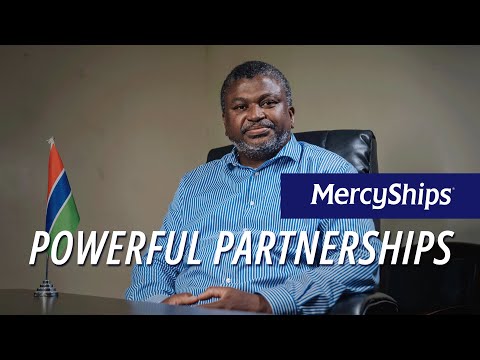
By Dr. Ahmadu Lamin Samateh, Minister of Health, Republic of The Gambia.
In the realm of medicine, there are pivotal moments that can forever change lives. For me, that transformative moment occurred two decades ago when my path intersected with medical mission teams in our country, including Mercy Ships (www.MercyShips.org), an organisation committed to delivering life-changing surgeries to those who need it most. Witnessing their surgical interventions and the profound impact on people’s lives ignited my passion to become a surgeon.
I realised that the human body’s needs transcend borders and the Gambian people deserved access to quality surgical care.
Becoming a surgeon in The Gambia was not without challenges. With no medical school in our country at the time, I pursued education elsewhere. Armed with newfound knowledge and expertise, I returned to the country to make a positive impact on healthcare.
Currently, the landscape of surgical care and education in The Gambia presents its own set of challenges. Surgery, being a diverse field, requires specialists, and specialists are often scarce in low-income countries like ours. Many individuals suffering from surgical conditions continue to endure unnecessary pain or rely on the assistance of organisations like Mercy Ships. Bridging this gap remains a significant challenge.
In recent years the country has made notable progress, such as establishing a residency programme. This step is critical for sustainability and ensuring that we train our specialists in fields like surgery, gynaecology, internal medicine, paediatrics, and family medicine. However, expanding the scope of training to address the broad range of surgical disciplines remains a concern that also requires support from international partners.
Resource limitations are deeply rooted in the country’s healthcare sector. With a population of approximately 2.7 million, our health budget pales in comparison to the staggering €2.9 billion budget I learned about during my recent visit to a European country. Treating acute appendicitis in New York, Tokyo, London, or Banjul requires the same expertise, yet our available resources differ significantly.
The country also largely relies on imports for 100% of its medical consumables, making their cost and availability unpredictable. There is also a dire shortage of trained healthcare professionals. While we strive to equip our healthcare facilities with state-of-the-art equipment and medications, the lack of skilled personnel hampers our efforts.
Despite these challenges, the government is actively working to address the gaps in its healthcare system, in collaboration with organisations like the World Bank, WTO, UNDP, UNICEF, UNFPA, Global Fund, and the World Food Program. These efforts, while commendable, require continuous dedication and strategic partnerships to achieve meaningful and lasting change.
In the interim, we rely on the support of healthcare professionals from other countries, particularly Cuba and neighbouring African nations, to help us bridge the capacity gaps, ensuring that our patients receive the care they urgently need.
In general, access to surgical care and education remains a critical concern across the continent. Finding ways to overcome these barriers is crucial. For instance, establishing manufacturing hubs in Africa to produce medical equipment and supplies would reduce dependency on imports and make these essential items more affordable and accessible.
African countries should collaborate in training specialists, sharing knowledge and resources through partnerships and mutual training programmes. Through such partnerships we can strengthen healthcare infrastructure, improve access to quality services, and ultimately transform healthcare for the better.
However, partnerships are not without their challenges. Limited resources, both financial and logistical, often hinder the progress of low-income countries. Limited health budgets make achieving global healthcare targets a daunting task. Despite the obstacles, we must capitalise on the resources available to us and maximise their potential to provide the best care possible.
Partnerships with international organisations like Mercy Ships play a critical role in filling the gaps in surgical care. Mercy Ships’ recent field service in the country, where 92 patients were operated on and 122 healthcare professionals were trained, exemplifies the ripple effect of impactful interventions. Individuals who once faced social stigma and isolation due to their physical conditions now have a chance to thrive. Children who were unable to attend school due to disfigurements now have an opportunity to receive an education. Families burdened by the healthcare costs of their loved ones have found relief, enabling them to provide for their households.
Continuing this collaboration, we are determined to expand the scope of interventions and address other critical areas, such as cancer care. By facilitating training opportunities for Gambian healthcare professionals on board Mercy Ships, we can enhance our local capacity and ensure sustainable healthcare services for our people.
Looking ahead, our focus remains on building sustainable healthcare systems and ensuring access to quality surgery care for all. Uniting through partnerships, both within Africa and with international organisations, is crucial to overcome challenges and transform healthcare in Africa. The time for action is now! Together, we can bring hope, healing, and a brighter future to the millions of individuals who deserve nothing less.
Distributed by APO Group on behalf of Mercy Ships.
Latest Stories
-
GPL 2025/26: Dreams FC stage stunning comeback to hammer Eleven Wonders
2 hours -
Livestream: The Probe examines Kumasi’s looming water crisis
2 hours -
MTN Ghana gears up to lead Africa’s AI revolution
2 hours -
Philanthropist Alhaji FuZak donates Da’wah bus to Ambariya Sunni community
2 hours -
GUTA calls for suspension of Publican AI system over trade disruptions
2 hours -
TTAG raises alarm over proposed recruitment of 7,000 teachers, demands national posting roadmap
2 hours -
Civilians feared killed after reports of air strike on Nigerian market
3 hours -
Bishop Simon Kofi Appiah installed as new Jasikan Diocese Bishop
3 hours -
Trump’s Strait of Hormuz blockade threat raises risks and leaves predicaments unchanged
3 hours -
US Court backs extradition of former MASLOC CEO Sedina Tamakloe-Attionu to Ghana
3 hours -
Seven arrested as NAIMOS dismantles illegal mining camp, seizes firearms at Boin River
3 hours -
Fire erupts at Madina Ritz Junction, destroys multiple wooden structures and containers
3 hours -
Daniel-Kofi Kyereh returns from long-term injury, registers assist for Freiburg U23
3 hours -
Knifeman calling himself ‘Lucifer’ slashes three at NYC’s Grand Central
4 hours -
Brands are built from within to without
4 hours