

Audio By Carbonatix
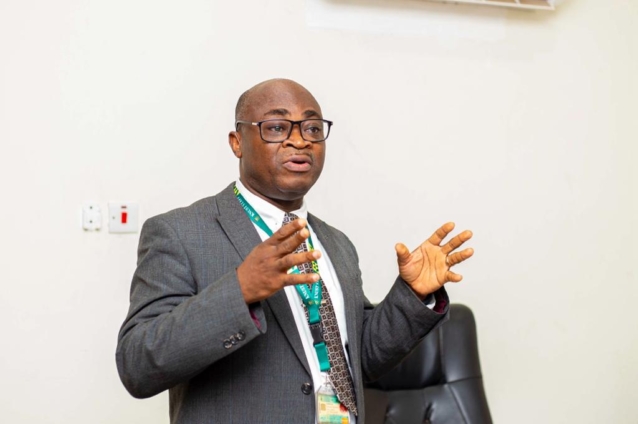
As a typical African child who started his education in the 70s, Alexander’s academic journey has been quite challenging. He began in Akyem Buadua in the Eastern Region. By his sixth year of primary education, he had attended four schools in three different regions in Ghana.
“I started from Akyem Buadua near Akwatia for two years, moved to Akyem-Suabe for one year, and then attended Achimota Primary in the Greater Accra Region for one year. I then moved to Buoho for another year and then moved to Chirapatre and finally completed my primary education at Esereso in the Bosomtwe district of the Ashanti region,” he recounted.
Alex gained admission to Osei Tutu Senior High School in Kumasi, where he studied general science. After that, he went to T.I. Ahmadiyya Senior High School in Kumasi for his A-Level program. In 1993, he gained admission to the Kwame Nkrumah University of Science and Technology to study B.Sc. Biological Sciences.
Encounter with NTDs
After his national service at the Komfo Anokye Teaching Hospital as a clinical biologist, he sought a postgraduate position at the Kumasi Center for Collaborative Research in Tropical Medicine (KCCR) to pursue his master's degree.
Alex was fortunate to be hooked on the Filariasis project. Initially, he worked on onchocerciasis (river blindness) projects in the Upper Denkyira district in the Central Region. After a year, he also worked on lymphatic filariasis projects in the Western Region of Ghana. During this time, he truly understood the impact of neglected tropical diseases (NTDs) on both the diseases and the people affected by them.
He witnessed people suffering from severe conditions like elephantiasis of the leg and scrotum, who were largely ignored by society. This ignited his passion for the field.
“As a young research scientist on the filariasis projects, I discovered that almost everyone I examined had the baby worm in their blood, indicating infection. However, only a few people had developed elephantiasis of the leg or scrotum,” he said.
Interestingly, he approached his German supervisor, Prof. Dr. Med. Dietrich Buettner who couldn't also explain.
“I asked my German Professor, why everybody is infected but only a few people have the disease. His answer was 'Alex, I don’t know if you become a professor of parasitology, then you can answer that',” he recalled.
He realized that understanding the cause was crucial for effective control and treatment.
After completing his master's, he discussed with Prof. Dr. Med. Achim Hörauf his desire to pursue a PhD focusing on the genetics of lymphatic filariasis.
He therefore collected samples from the Western Region of Ghana and, in 2003, joined Professor Hörauf’s lab in Bonn, Germany.
Alexander discovered that elephantiasis is not caused by the adult worm blocking the lymphatic vessel but rather the blockage is due to overproduction of some growth factors produced by the person in response to presence of the adult worm.
This revelation allowed him to identify biomarkers, which are measurable indicators that can tell us about the presence or severity of a disease.
This allowed him to test antibiotics like doxycycline for treating elephantiasis and enlarged scrotum known as hydrocele.
He later found that doxycycline could kill adult worms, offering a more effective treatment than ivermectin, which only kills baby worms. This significantly reduced the treatment duration from years to just a few weeks.
To would-be NTD scientists
It’s well-known, that funding for Neglected Tropical Diseases (NTDs) is often scarce. These diseases primarily affect the poorest and most marginalized communities in developing countries, and as a result, they do not receive as much attention or financial support as other, more high-profile diseases.
The lack of funding makes it challenging to conduct research, develop treatments, and implement control programs. However, there have been recent efforts by international organizations and philanthropic groups to increase funding and support for NTDs to help address this gap.
Prof. Alexander Debrah advises aspiring researchers in NTDs that while funding is scarce, the field is crucial for addressing the needs of neglected populations.
He encourages young scientists to pursue research in NTDs, highlighting that international funding is improving and the work is vital for the poorest communities.
Throughout his career, Prof. Alexander Debrah has been invited to numerous international conferences and has interacted with many notable figures in the field. His work has been recognized and awarded, including invitations from the Nobel Laureate Committee and the United Nations General Assembly Science Summit.
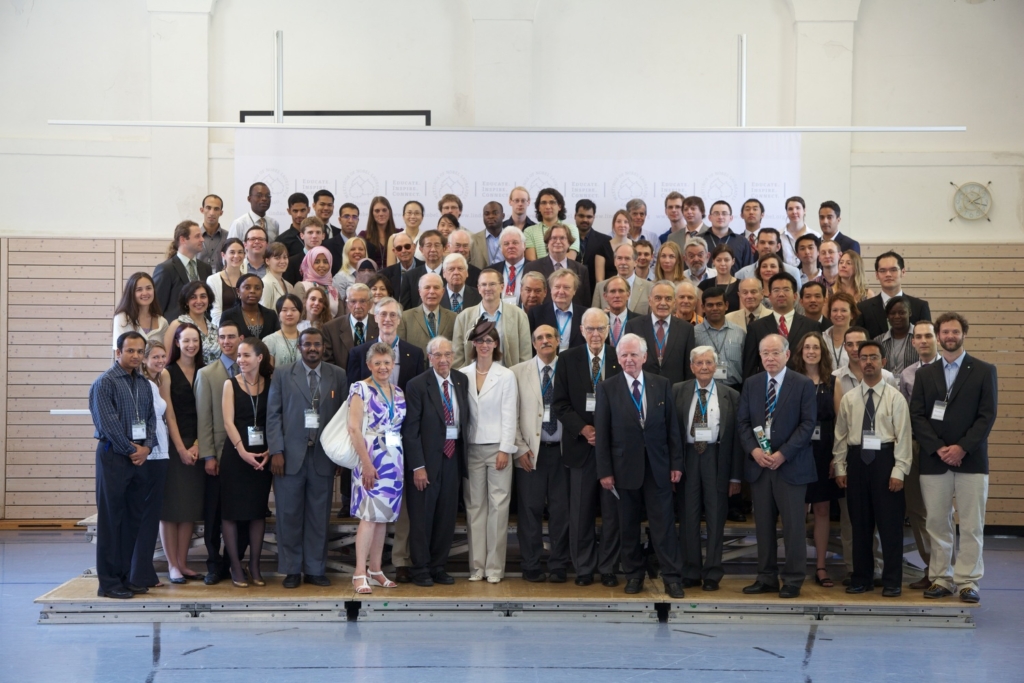
He hopes to be remembered for his contributions to understanding and treating elephantiasis and hydrocele, particularly for proving the genetic basis of these diseases and promoting effective treatments.
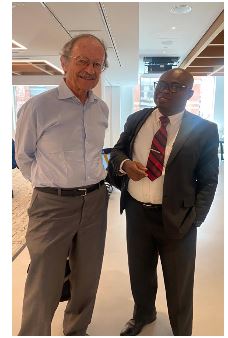
Professorial inaugural lecture
On August 8, 2024, Prof. Alexander Yaw Debrah will be delivering his professorial lecture on the Topic: “Eliminating Filarial Diseases: A New Hope for an Old Battle.”
The lecture will demonstrate how, through local and collaborative research and partnerships, his research has achieved several significant outcomes.
Latest Stories
-
Ex-Spurs player Vega set to run for FIFA president
7 minutes -
Arteta signs new contract with champions Arsenal
17 minutes -
Former Man City player Silva comes out of retirement
26 minutes -
‘I have a screen in my office’ – Akandoh on real-time emergency bed tracking
31 minutes -
Government begins pilot of national emergency bed management system
52 minutes -
GRA forms 9-member committee to probe alleged missing containers at Tema Port
1 hour -
Foreign Minister inspects VFS Global Visa Centre, highlights commitment to service quality standards
1 hour -
Declan Rice close to agreeing new Arsenal deal
2 hours -
‘Draining’ few days for Gauff after online racist abuse
2 hours -
Media worker, journalist remanded over alleged GH¢800,000 fraud
2 hours -
PAC sends Ghana Water hearing back, demands Minister and MD appear over financial status
2 hours -
Foreign Affairs Minister inspects 20+ visa centres, demands better conditions for Ghanaian applicants
3 hours -
Guardiola set to attend Man City v PSG next week
3 hours -
GACL to hold full-scale emergency simulation exercise on October 15
3 hours -
327 entries submitted for 30th GJA Media Awards
3 hours