

Audio By Carbonatix
About a million Americans a year are expected to develop dementia by 2060, roughly double today’s toll, researchers reported Monday.
That estimate is based on a new study that found a higher lifetime risk than previously thought: After age 55, people have up to a 4 in 10 chance of eventually developing dementia -- if they live long enough.
It’s a sobering number but there are steps people can take to reduce that risk, such as controlling high blood pressure and other bad-for-the-brain health problems. And it’s not too late to try even in middle age.
“All of our research suggests what you do in midlife really matters,” said Dr. Josef Coresh of NYU Langone Health, who coauthored the study in the journal Nature Medicine.
Dementia isn’t only Alzheimer’s
Taking longer to recall a name or where you put your keys is typical with older age. But dementia isn’t a normal part of aging -- it’s a progressive loss of memory, language and other cognitive functions. Simply getting older is the biggest risk and the population is rapidly aging.
Alzheimer’s is the most common form, and silent brain changes that eventually lead to it can begin two decades before symptoms appear. Other types include vascular dementia, when heart disease or small strokes impair blood flow to the brain. Many people have mixed causes, meaning vascular problems could exacerbate brewing Alzheimer’s symptoms.
Measuring the risk from a certain age over the potential remaining life span can guide public health recommendations and medical research.
“It’s not a guarantee that someone will develop dementia,” cautioned Dr. James Galvin, a University of Miami Alzheimer’s specialist. He wasn’t involved with the new study but said the findings fit with other research.
Dementia risk is different by age
Prior studies estimated about 14% of men and 23% of women would develop some form of dementia during their lifetime. Coresh’s team analyzed more recent data from a U.S. study that has tracked the heart health and cognitive function of about 15,000 older adults for several decades.
Importantly, they found the risk changes with the decades.
Only 4% of people developed dementia between the ages of 55 and 75, what Coresh calls a key 20-year window for protecting brain health.
For people who survive common health threats until 75, the dementia risk then jumped — to 20% by age 85 and 42% between ages 85 and 95.
Overall, the lifetime dementia risk after age 55 was 35% for men and 48% for women, the researchers concluded. Women generally live longer than men, a main reason for that difference, Coresh noted. Black Americans had a slightly higher risk, 44%, than white people at 41%.
Yes, there are ways to help lower dementia risk
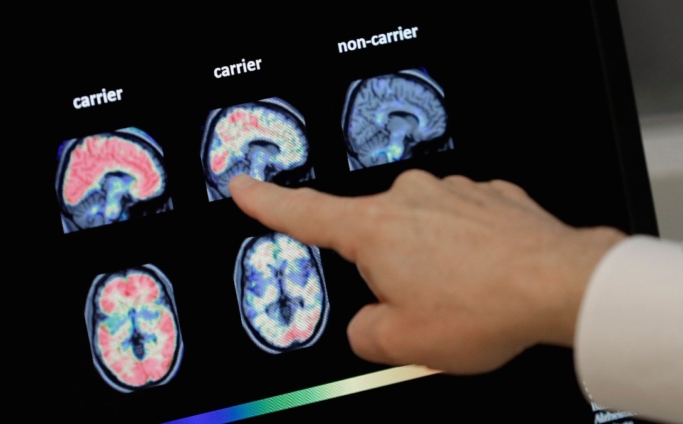
There are some risk factors people can’t control, including age and whether you inherited a gene variant called APOE4 that raises the chances of late-in-life Alzheimer’s.
But people can try to avert or at least delay health problems that contribute to later dementia. Coresh, for example, wears a helmet when biking because repeated or severe brain injuries from crashes or falls increase the risk of later-in-life dementia.
Especially important: “What’s good for your heart is good for your brain,” added Miami’s Galvin. He urges people to exercise, avoid obesity, and control blood pressure, diabetes and cholesterol.
For example, high blood pressure can impair blood flow to the brain, a risk not just for vascular dementia but also linked to some hallmarks of Alzheimer’s. Similarly, the high blood sugar of poorly controlled diabetes is linked to cognitive decline and damaging inflammation in the brain.
Stay socially and cognitively active, too, Galvin said. He urges people to try hearing aids if age brings hearing loss, which can spur social isolation.
“There are things that we have control over, and those things I think would be really, really important to build a better brain as we age,” he said.
Latest Stories
-
Journalists look back on a decade of breast cancer reporting in Ghana
21 minutes -
President Mahama ends Resetting Ghana tour of Ahafo Region
2 hours -
African negotiators seek delivery of climate commitments at COP31
2 hours -
BoG develops AI rules for financial sector
2 hours -
‘Big Push’: Government assures contractors of prompt payments
2 hours -
Court fines miner for breaking into gold buying shop
3 hours -
Tarkwa court jails labourer for three years over GH¢123,000 theft
3 hours -
GAEC must retain nuclear scientists for Ghana’s nuclear ambitions – Minister
4 hours -
Man reportedly mistaken for game and shot by hunter dead in forest
4 hours -
19-year-old mason jailed 15 years for defiling seven-year-old pupil
4 hours -
Ghana’s banking sector assets rise 20.47% to GH¢500.2bn – BoG Governor
4 hours -
22 injured as Sprinter bus overturns at Sege after tyre burst
4 hours -
UN housing expert urges Ghana to strengthen Rent Control Department amid housing affordability concerns
4 hours -
Delta-BCI partnership reaches 166,000 people with breast cancer education
4 hours -
Power restoration fault suspected in Kumasi Central Market fire
10 hours