

Audio By Carbonatix
A United States citizen working for a humanitarian organisation in the Democratic Republic of Congo has tested positive for the Ebola virus. The Centres for Disease Control and Prevention confirmed the case on Friday. The patient is employed by Samaritan’s Purse, a disaster relief group. This individual is now the second American to contract the virus during the current outbreak in the region.
The Status of the Patient and Containment Efforts
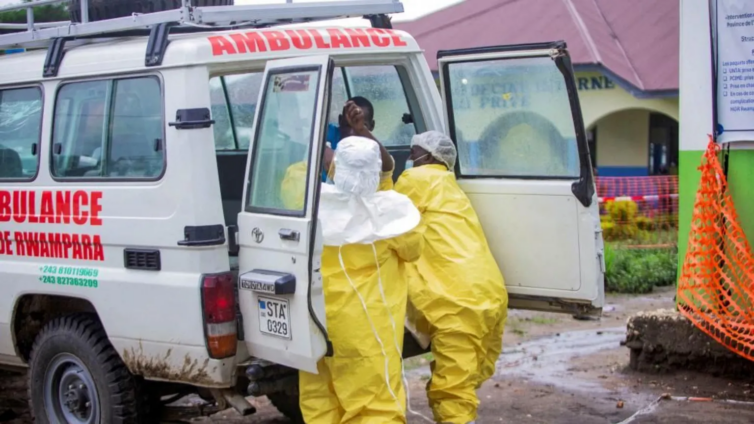
The aid worker had been assisting with logistics in Bunia, the regional capital of Ituri province, for the past month. The employee was not involved in direct patient care. He has been in isolation since Monday and is receiving care at an Ebola treatment centre operated by Samaritan’s Purse. While the organisation has not publicly confirmed evacuation plans, reports suggest preparations are underway to transfer the patient to a specialised facility in Frankfurt, Germany. The CDC is currently collaborating with the worker’s employer and local Congolese health authorities to identify high-risk contacts and prevent further transmission of the virus.
Scope of the Outbreak
The current crisis involves the rare Bundibugyo strain of the Ebola virus. This specific variant currently lacks an approved vaccine or medical treatment, prompting an urgent international research response. The outbreak is rapidly expanding, with recent data showing 1,792 confirmed cases and 625 deaths in the Democratic Republic of Congo as of early July. The virus has also reached neighbouring Uganda. Experts believe the disease circulated for up to five months before official detection, complicating containment efforts. Ongoing conflict, regional instability, and a strained local health system continue to hinder public health responses.
Domestic Risk and Treatment Policies
Despite the rising numbers in Central Africa, federal health officials stress that the risk to the American public remains very low. No cases of the virus have been confirmed within the United States. The administration has faced significant logistical challenges regarding the treatment of American citizens who contract the virus while working abroad. A prior proposal to establish a specialised treatment centre in Kenya was abandoned following local legal opposition. Previous protocols involved repatriating infected citizens for care in domestic medical units, a practice that has become a point of contention for current policymakers.
Lessons from Previous Cases
The medical community continues to draw insights from the recovery of Dr Peter Stafford, an American missionary who contracted the virus earlier this year. Dr Stafford was treated at a hospital in Berlin after being evacuated from the Congo. Following his recovery, he described the harrowing nature of the illness in an exclusive interview. “That was a difficult time,” he stated. “I had a high fever, I had weakness, at times too difficult even to walk on my own.” His wife, Dr Rebekah Stafford, noted the psychological toll the situation took on their family, particularly their young children. “Our oldest son definitely understood, telling our kids ‘hey guys, your dad has Ebola,’” she said, noting the necessity of explaining the strict quarantine measures required for his safety.
Regional Preparedness and Community Response
Public health experts across Africa are emphasising that community engagement is the cornerstone of controlling this outbreak. As cases persist in Ituri, North Kivu, and South Kivu provinces, regional governments and international partners have intensified surveillance and contact tracing efforts. The World Health Organisation has begun integrating new diagnostic tests into its emergency response to help stabilise affected health zones. This collaborative approach focuses on local outreach to demystify the virus and encourage early reporting, which remains critical for patient survival and preventing community spread.
As global health agencies work to address the accelerating crisis, the path toward stabilising the region remains complex. Balancing the urgent need for international humanitarian aid with the logistical and political realities of treating exposed personnel remains a significant challenge for the global community. Success will likely depend on strengthened surveillance, sustained funding, and a unified international commitment to navigating the security and medical hurdles currently hindering the response.
Latest Stories
-
Mr President, Ghana was mentioned at the UN; why aren’t we talking about it?
44 minutes -
Accra to convene Africa’s regulators and markets on tokenisation at AVAS 2026
46 minutes -
The Paradox of Plenty — When every smartphone becomes a newsroom
1 hour -
GTA sensitises taxi drivers in ‘Know Ghana’ tourism campaign
3 hours -
Archbishop Agyinasare calls for responsible speech amid growing social media abuse
3 hours -
‘It will be inexcusable for gov’t not to honour payment of teachers’ arrears by 30th October’ – Haruna Iddrisu
3 hours -
Forbes’ World’s Best Employers 2026: No Ghanaian firm ranked among 900 companies
3 hours -
Electronic processing of teachers’ data: ‘The decision is the Controller’s’ – GES boss
3 hours -
Teachers’ Strike: Haruna Iddrisu questions paper-based processing of promoted teachers’ data
3 hours -
Savannah Region: Kunfusi bridge collapses again, leaving nearly 4,000 residents cut off
3 hours -
Teachers’ strike: GES targets Monday deadline to submit promotion data to Controller
3 hours -
Inflation to average 11.3% in 2027 – Fitch Solutions
4 hours -
‘I didn’t campaign for NDC to come and do this nonsense’ – Kpebu on EOCO’s conduct
4 hours -
Fitch Solutions maintains policy rate forecast of 14% by December 2026
4 hours -
Diaspora Nasara Caucus congratulates Mohammed Ali Suraj, new NPP executives
5 hours