

Audio By Carbonatix
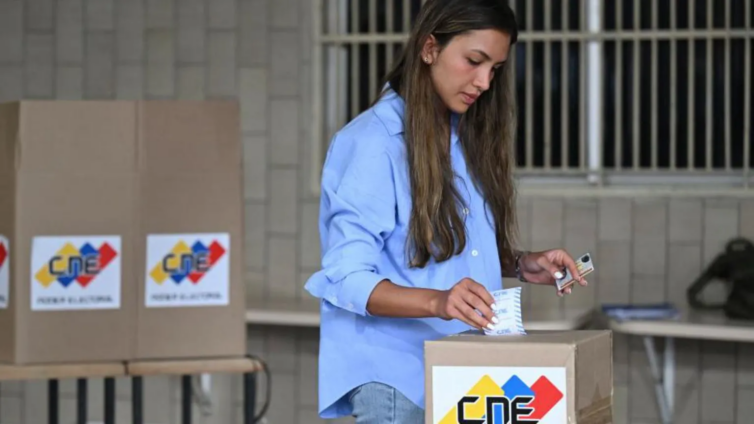
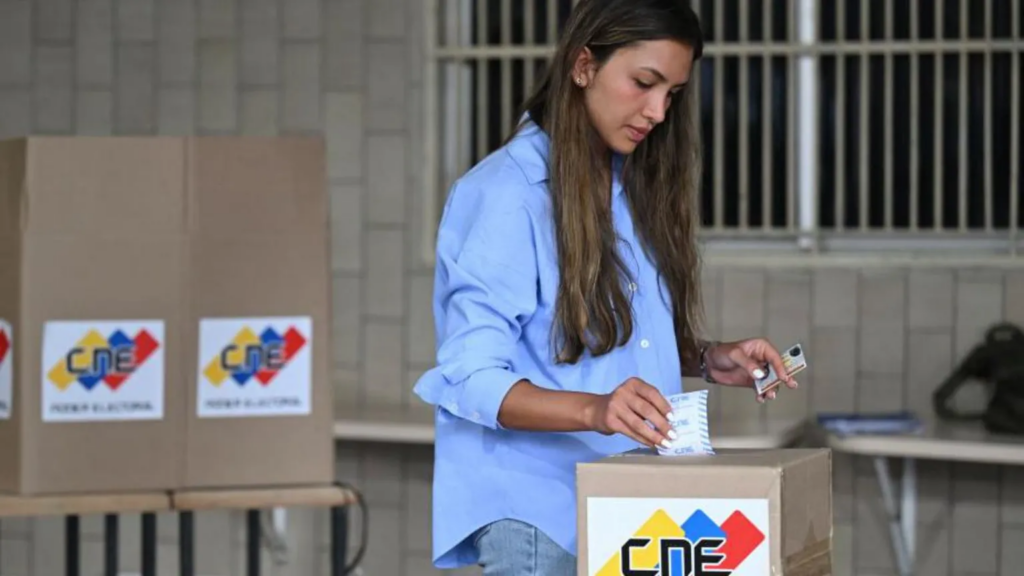
Polls are starting to close in Venezuela's presidential election, in which the governing socialist PSUV party's Nicolás Maduro is seeking a third term in office.
Polling stations were scheduled to shut at 18:00 local time (22:00 GMT), but they have to remain open if people are still queuing to cast their vote.
Mr Maduro's main challenger is Edmundo González, a former diplomat who has the backing of a coalition of opposition parties.
The opposition called on supporters to keep vigil at their polling stations to verify the counting process in the "decisive hours" after closing, amid widespread fears the PSUV would attempt to steal the vote.
Opinion polls have suggested Mr González has a wide lead over the incumbent, but as Mr Maduro's 2018 re-election was widely dismissed as neither free nor fair, there is concern that the result of this election could be tampered with, should it not go Mr Maduro's way.
Opponents of the president have overcome many hurdles in the run-up to the election, not least the fact that their chosen candidate, María Corina Machado, was banned from running for office.
Ms Machado, who has remained at the forefront of the opposition campaign, reminded voters that the counting process was legally meant to be public.
She called on "all Venezuelans to remain at their polling stations... keeping vigil".
The PSUV has been in power in Venezuela for the past 25 years - first under the late Hugo Chávez, then under his hand-picked successor, Mr Maduro.
Under their leadership, the PSUV has gained control not just of the executive and the legislative, but also of much of the judiciary.
Since he assumed the presidency in 2013, Mr Maduro has presided over an economic collapse, during which GDP shrank by 70% and more than 7.7 million people fled the country in search of a better life.
If he wins, Mr González has said he will do "everything possible" to woo back those who have left.
But Mr Maduro has said he intends to win the election "by hook or by crook" and has warned of a "bloodbath" if he loses.
The National Electoral Council (CNE) - the body which organises the election and announces the official result - is dominated by government loyalists.
Its president, Elvis Amoroso, is a close personal ally of Mr Maduro.
Venezuela has the world's biggest oil reserves, but its oil output has plummeted under President Maduro - the result of a combination of lack of investment, mismanagement and oil sanctions.
A lifting of the oil sanctions - imposed by the US in order to exert pressure on Mr Maduro following the 2018 presidential election - could have repercussions on the price of oil globally.
Voting in Venezuela is electronic. Voters punch in a button assigned to their preferred candidate on a voting machine.
The electronic results are sent to the CNE headquarters, but the voting machine also prints out a paper receipt which is then placed in a ballot box.
By law, parties are allowed to send witnesses to the count of these paper receipts carried out at each polling station.
It will be these tallies which the opposition will be monitoring to see if they square with the results announced by the CNE.
Latest Stories
-
Renewed flood intervention at Mallam Junction raises hopes among residents, businesses
40 minutes -
St Augustine’s College retain National Investment Quiz title after nail biting grand finale
49 minutes -
Education infrastructure investment will drive Banda’s development – Ahmed Ibrahim
56 minutes -
Teacher unions strike: Gov’t presents fresh proposals as talks end inconclusively
2 hours -
51,000 teachers’ promotion arrears to be validated for October payment – Education Minister
2 hours -
Kwabena Boamah appointed Board Chair for Impact Investing Ghana
2 hours -
Striking teacher unions to meet Fair Wages and Salaries Commission on October 6
3 hours -
EOCO working with AG to arraign Nana Baffour Awuah before weekend court
3 hours -
Duraplast reassures customers after fire, announces October 5 reopening
3 hours -
Call off strike, gov’t will not renege on promotion arrears pledge – Haruna Iddrisu appeals to teacher unions
3 hours -
Committee set up to validate teachers eligible for 20% deprived-area allowance – Education Minister
3 hours -
Five-member committee to search for new Black Stars coach after Sports Ministry-GFA meeting
3 hours -
Pinktober: Breast cancer survival exceeds 90% when detected early – Breast Society of Ghana
3 hours -
TCDA to adopt Upper West’s MATCO mango farm as northern prototype, issues warning against felling shea trees
4 hours -
‘Fear delegates’ tag: Afoko touts genuineness among delegates ahead of NPP delegates conference
4 hours