

Audio By Carbonatix
Youth in Power: Embracing Imperfection for a Progressive Democratic Future
Dear Mr. President,
The unfolding controversy surrounding the Sammy Gyamfi's dollar saga presents a moment of political complexity, one marked not merely by legal or ethical implications but by its resonance within the broader landscape of youth inclusion and public trust. While the matter is undoubtedly fraught with public sensitivity, I write to propose a course of action that affirms both accountability and the transformative ideals that underpin your administration’s governance philosophy.
I respectfully submit that a formal reprimand, rather than exclusion from office, represents the most constitutionally sound and developmentally judicious response. This recommendation emerges not as an attempt to trivialise the gravity of the situation, but rather as a call for balanced adjudication - one that recognises the necessity of accountability while remaining anchored in the principles of mentorship, institutional resilience, and democratic maturation.
Your administration has, to its enduring credit, made significant strides in the political inclusion of youth and women, an achievement that reflects a deliberate disruption of the entrenched asymmetries of power that have historically marginalised these groups. This paradigm shift is not only symbolic of progress but also substantive in its challenge to the orthodoxies that have long governed political participation in Ghana.
History offers compelling precedent. The early post-independence era bore witness to the foresight of Dr. Kwame Nkrumah, who entrusted a cadre of young men and women, many in their twenties and thirties, with critical roles in the national development agenda. Though inexperienced, they became architects of some of Ghana’s most transformative policies. Their occasional missteps were not terminal failures, but necessary episodes in the iterative process of governance and institutional learning.
This historical lens is crucial: it reminds us that youthful imperfection is not antithetical to good leadership. Rather, it is a component of growth. Governance, after all, is not the exclusive domain of those who have perfected its every nuance, but a continuum where responsibility, mentorship, and reflective learning coexist. To support young leaders only in moments of triumph, and abandon them at the first signs of fallibility, is to reinforce a brittle political culture that discourages innovation, suppresses bold leadership, and ultimately alienates the very demographic we claim to empower.
Youth and women remain structurally disadvantaged in Ghana’s political ecosystem. Their appointments must therefore transcend optics. Genuine inclusion demands that we empower them through participation in consequential decision-making, provide frameworks for guidance, and respond to their misjudgments with proportionality and clarity, not punitive exclusion. The cost of disillusionment, particularly among a politically aware and engaged generation, is far greater than the discomfort of navigating controversy with principled resolve.
In the case at hand, it would be both ethically sound and politically strategic to transform this episode into a learning moment, not only for the individual involved but for the broader political actors. By choosing reflection over retribution, your administration can reaffirm its commitment to intergenerational equity, democratic deepening, and inclusive governance.
Ultimately, Ghana's democratic future hinges on our collective ability to mentor and sustain a new generation of public leaders. Their voices, experiences, and even their missteps are integral to building a state that is adaptive, resilient, and just. Let this moment serve not as a rupture, but as a reckoning with the kind of political maturity that welcomes imperfection as part of the journey toward excellence.
Yours faithfully,
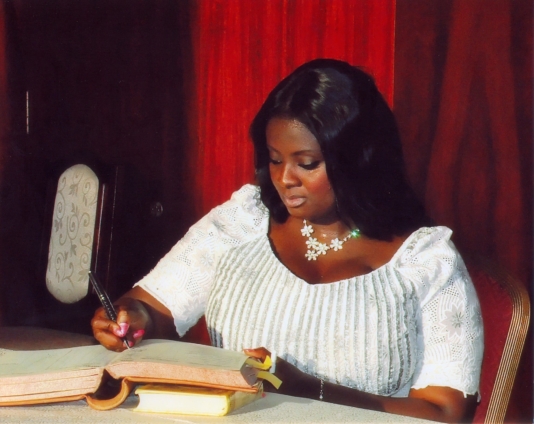
Victoria Hamah
Latest Stories
-
Extractive firms urged to strengthen cyber defences as digital risks grow
2 minutes -
Photos: Mahama engages Ghanaian diaspora in New York on Ghana’s economic recovery
4 minutes -
Man jailed 10 years for defiling 11-year-old girl at Kpandai
46 minutes -
At least 27 people killed in two shootings in South African township
1 hour -
Iranian minister says only negotiation can end conflict after Trump rejects Hormuz deal
2 hours -
Some Ghanaians use free speech to destroy reputations – Bobby Banson
2 hours -
Crowds, deals and home solutions as Republic Bank-JoyNews Habitat Fair enters final day
5 hours -
Fire Service finds only five functional hydrants in Ministries enclave
5 hours -
Government to sign 1,200MW gas power deal before end of 2026 – Mahama
5 hours -
West Mamprusi launches community-led WASH and livelihoods project across 100 communities
5 hours -
Iran says it will wait for official US response after Trump rejects Strait of Hormuz proposal
5 hours -
90 Oti communities to benefit from government electrification project
6 hours -
Floods leave 246 without shelter as 93 houses collapse in North East Gonja
6 hours -
Labour Minister wants SOEs to help shape new public pay system
10 hours -
IPEC will ensure Equity and Sustainability in SOEs Compensation
11 hours