

Audio By Carbonatix
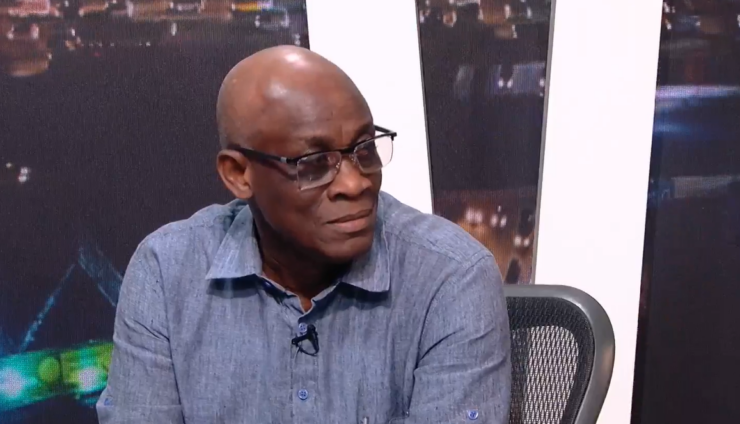
The former Finance Minister, Seth Terkper, has questioned the legacy Ghana is leaving following news that eurobond holders will forego about $4.7 billion owed them by the government.
Speaking on JoyNews’ PM Express, he explained that to some extent this debt forgiveness will ease a bit of the stress on the economy and facilitate the release of the subsequent IMF funds.
However, Mr Terkper said that despite this upside he had mixed feelings about debt forgiveness noting “What legacy are we leaving? As a country, HIPC was total debt forgiveness, within two decades of default, and here we are being forgiven again.
"Is this a legacy that we want for Ghana? I say this with some regret and confidence in the fact that this was envisaged when we discovered oil.”
He disclosed that the NDC government had anticipated the possibility of a debt default and the possibility that without certain measures in place, Ghana “would continue slipping”.
As such the government had put in place measures to prevent, but things have not gone as planned, Mr Terkper noted.
“So when we discovered oil, there was a one-and-a-half-year debate as to what to do with oil, and we pledged both sides. One, we said never should we allow cocoa and gold prices to go up, then we are happy, go down, and then it's all tears—stabilisation fund. We said if the stabilisation fund is going high, we could cap it, use it for two purposes - contingency fund.”
“Then you come to the sinking fund, that's for debt repayment…because you can't just keep borrowing. We (the NDC government) had used approximately $350 million to take off President Kufuor’s first bond.
"And then we left $250 million and $200 million was used by the current government to pay off the balance. And we did a debt restructuring backed by the World Bank Guaranteed Bond, which is now impaired.”
This comes after the government has reached an agreement in principle with two bondholder groups to restructure around $13 billion of its debt.
The agreement will see Ghana's bondholders forego about $4.7 billion of their loans and provide cash flow relief of about $4.4 billion up until 2026 when the country's current International Monetary Fund programme ends.
The IMF described the agreement as "a significant positive step" for Ghana. The committee representing its international bondholders said it would give the country a path to economic recovery.
The government is also proposing two options, under the deal. This is the P.A.R. and Disco Option.
According to the agreement, investors who take the Disco option will receive three new bond instruments.
However, the P.A.R. option will have up to ¢1.6 Billion CAP.
The agreement will also ensure that the government will enter into Non-Financial Terms, described as a most favoured creditor clause that will ensure that other creditors do not receive better net present value terms.
The Bondholders have also agreed to a 37 per cent haircut on their interest and maturity.
However, banking consultant, Dr. Richmond Atuahene, has warned the government against completing the external debt restructuring agreement with its official creditors.
Reviewing whether the deal is a saviour for the Cedi, he said the country is treading on a risky path where it will continue to rely on foreign funds, leading to more borrowing in subsequent years.
Mr. Atuahene was contributing to Joy Prime’s Prime Morning show on Tuesday with Roselyn Felli, following Finance Minister Dr. Mohammed Amin Adam’s announcement on the completion of Ghana’s debt restructuring programme with its creditors.
“Let me make it categorically clear to Ghanaians that the trajectory we’re going, we’re treading on dangerous paths like Argentina and Greece, and we don’t want to go there because every four years we’d have to go and restructure the debt because you haven’t put it in anything that will be able to pay the cash flows,” he cautioned.
Latest Stories
-
Ghana housing finance conference adopts communiqué to improve affordable housing access
3 hours -
Special Initiatives Minister urges Wa Technical Institute to enrol more girls as EU-backed solar training lab opens
3 hours -
In the matter of my first year at the Bar
4 hours -
ActionAid Ghana calls for an end to child marriage, greater investment in girls’ rights
4 hours -
Newsfile to tackle World Cup visa scandal, beach demolitions, education strikes, BRICS bid
4 hours -
UK-Ghana Trade & Investment Summit: Trade Resource Centre to help businesses maximise UK-Ghana trade opportunities
4 hours -
Embassy of Denmark celebrates World Maritime Day
4 hours -
Linking LEAP to productive inclusion could cut extreme poverty by 2030 – UNICEF
6 hours -
Trade Ministry backs use of creative arts to rehabilitate prison inmates
6 hours -
Negotiations with government to continue despite strike suspension – GNAT
6 hours -
‘Ghana cannot afford to waste public resources; every cedi has a job’ – Ato Forson
6 hours -
Ghana expects economic boost as World Assemblies of God Congress brings 10,000 delegates to Accra
6 hours -
Joy in Nayilifong as Farouk Aliu Mahama donates 100kVA transformer to improve power supply
6 hours -
Chief Justice urges employers to tackle mental health stigma in workplaces
7 hours -
Analysis: Ghana’s yellow fever numbers reveal a gap between vaccination and protection
7 hours