

Audio By Carbonatix
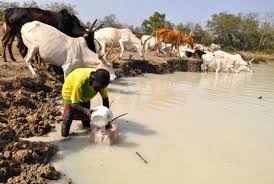
Residents of Damwaateon, a deprived farming community in the Wa West District of the Upper West Region have expressed concern about the manner in which they compete with both wild and domestic animals for water from a stream in the community.
That, they said, was as a result of the lack of alternative source of water in the community for domestic purposes such as cooking and drinking, which had compelled them to rely on dugouts at the stream for water.
Madam Mercy Dasaa, a resident of the community told the Ghana News Agency (GNA) that the streams dried-up in the dry season and they had to dig dugouts before they could get water to fetch.
“Sometimes if you are not lucky, you will dig and fetch and the time you will return the next day animals would have come to drink and destroy it, so you have to dig again to fetch”, she explained.
Madam Dasaa said they had only one borehole in the community of more than 500 inhabitants and added that it did not produce enough water during the dry season.
Madam Agnes Diesob, another resident of the community said the situation impeded their economic activities in the community as the women had to spend several hours at the stream or borehole in search of water for the family.
The residents appealed to the District Chief Executive, Mr Edward Larbiri Sabo and the Member of Parliament for the area, Mr Joseph Yiele Chireh to come to their aid by providing them with a source of potable water.
They said if nothing was done to alleviate their plight in accessing potable water in the community, they would not entertain any politician who would come to the community to campaign for votes during the electioneering.
Meanwhile, Mr Yussif Gizuure, the Assembly Member for the area told the GNA that he was aware of the challenges facing the people including the challenge in accessing potable water.
He gave the assurance that he would negotiate with the DCE to find solutions to those challenges.
Ghana, as a signatory to the 17 United Nations Sustainable Development Goals (SDGs), was required to, among other things; ensure availability and sustainable management of water and sanitation for all by 2030.
Latest Stories
-
Judges’ conference forces further adjournment of Salomey Baffoe case
6 minutes -
GRA assures Tullow of collaboration to settle $393m tax liability without disrupting its petroleum operations
36 minutes -
South Korea demands apology from Pyongyang for landmine blasts that injured three
40 minutes -
Carlos Queiroz not the sort of coach Black Stars need – Nii Lante Vanderpuye
1 hour -
AFCON 2027Q: ‘Our Black Stars team is gone’ – Former Sports Minister
1 hour -
Prof. Prempeh calls for public review of draft constitutional reform bills
2 hours -
AFCON 2027Q: ‘I have never seen a poor performance from Black Stars like against Gambia’ – Nii Lante Vanderpuye
2 hours -
Bawumia backs insurance sector reforms after engagement with IBAG
2 hours -
Nigeria set to launch National Digital Address System 9 years after Ghana showed the way
2 hours -
Policy rate decision takes time to reflect in lower lending rates – BoG
2 hours -
Western Regional Minister applauds Karpowership’s role in Ghana’s power sector
3 hours -
Playback: Road safety crises: Where are we getting it wrong?
3 hours -
Enterprise Life celebrates 25 years of protecting families and building trust
3 hours -
ICC London rules in favor of Ghana against Tullow over $400m tax charge
3 hours -
We are disappointed in ICC’s ruling over our corporate income tax assessment in Ghana – Tullow Oil
3 hours