

Audio By Carbonatix
The Governor of the Bank of Ghana, Dr. Ernest Addison, has warned that Ghana does not have a choice but to manage a tight fiscal consolidation in an election year.
According to him, the lessons of the economic crisis are fresh on everybody’s mind, and therefore there is the need to keep the currency stable going into the election
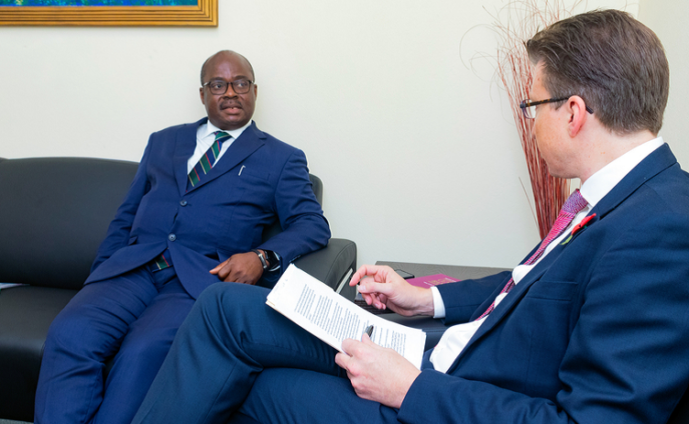
Speaking in an interview with Christopher Jeffery of centralbanking.com at the ECCB 40th anniversary and Central Banking Autumn meetings in Saint Kitts and Nevis, he said the central banking financing of the government will remain zero unless otherwise.
“Ghana doesn’t have a choice but to do so, because we have all seen what an economic crisis can do. The lessons are fresh on everybody’s mind. And the need to keep the currency stable is paramount going into the election”.
On independence of the central bank, he said central bank independence is relative, noting, “We have acted independently for most of the time that I have been in office”.
He added “I have not had to consult anybody to set interest rates. The Bank of Ghana is relatively independent. We have an inflation-targeting framework. We have a Monetary Policy Committee that sets interest rates. Independence is all about operational independence. Once you have the structures and the tools to do that, you are there”.
Domestic Debt Exchange Programme
Regarding the Domestic Debt Exchange Programme, the Governor was unhappy the Bank of Ghana took 50% of the haircut, saying, it raise the matter with the International Monetary Fund.
“We were not. We did raise the matter with the IMF. The IMF brought in central bank balance sheet experts to look at our accounts who, by the time they were done, were of the view that despite the haircut, we were policy solvent and we could still operate”.
He said the issue of reviewing the central bank’s accounts would have to be revisited in another three years, adding, “Obviously, this was a time we needed to make progress to ensure the Fund’s board meeting took place. The central bank had become almost the last obstacle to getting Ghana’s programme approved by the IMF. Therefore, it was difficult to spend too much time on further discussions”.
He mentioned that the other parties – pensions funds – were not much affected, adding, “I think they got off relatively easier than they would have if the initial permutations had been followed. We had to take an additional haircut because of that – from 35% to 50%”.
Latest Stories
-
GRA assures Tullow of collaboration to settle $393m tax liability without disrupting its petroleum operations
16 minutes -
South Korea demands apology from Pyongyang for landmine blasts that injured three
20 minutes -
Carlos Queiroz not the sort of coach Black Stars need – Nii Lante Vanderpuye
50 minutes -
AFCON 2027Q: ‘Our Black Stars team is gone’ – Former Sports Minister
1 hour -
Prof. Prempeh calls for public review of draft constitutional reform bills
1 hour -
AFCON 2027Q: ‘I have never seen a poor performance from Black Stars like against Gambia’ – Nii Lante Vanderpuye
1 hour -
Nigeria set to launch National Digital Address System 9 years after Ghana showed the way
2 hours -
Policy rate decision takes time to reflect in lower lending rates – BoG
2 hours -
Western Regional Minister applauds Karpowership’s role in Ghana’s power sector
2 hours -
Playback: Road safety crises: Where are we getting it wrong?
2 hours -
Enterprise Life celebrates 25 years of protecting families and building trust
3 hours -
ICC London rules in favor of Ghana against Tullow over $400m tax charge
3 hours -
We are disappointed in ICC’s ruling over our corporate income tax assessment in Ghana – Tullow Oil
3 hours -
Cost of building inflation for August 2026 increases to 4.6% – GSS
3 hours -
Today’s front pages: Wednesday, September 30, 2026
3 hours