

Audio By Carbonatix
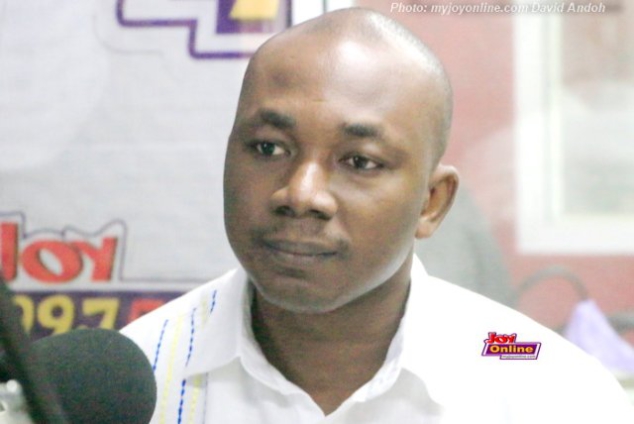
Economist, Professor Godfred Bokpin says government’s use of upward rate adjustments as a measure of raising revenue rather than enforcing compliance and removing administrative inefficiencies is creating a financially repressed society.
According to him, the government’s intention to raise the Value Added Tax (VAT) rate by 2.5% rather than ensuring citizens and businesses comply with the tax measure is counterproductive and would rather hinder the recovery of the private sector after Covid.
Speaking on JoyNews’ Newsfile on Saturday, he said, “If you pick VAT and you relate that to our regional peers and our structural peers or our aspirational peers, our VAT is collecting less than its desirable amount and it’s simply because of exemptions that are granted at the ports and the others.
“So what that tells you is that we’re doing slightly above 40% while others are doing close to 70%. That gap is inefficiency. You close that gap through compliance and administrative issues at the port and various levels, not through increasing the rate.”
“So we’re rather focusing more on rate adjustment which is burdensome, inequality enhancing and counter-productive rather than efficiency and that is pathetic. You know, Covid did not only affect the government, it affected households, private sector and the rest of them,” he added.
He noted that the layers of levies on goods and services in the country would eventually lead to a financially repressed society which could implode sooner than later if active measures are not taken to get rid of these counterproductive taxes.
He said with the country experiencing capital flight and businesses collapsing under the harsh economic conditions, upward rate adjustments would likely face the same outcomes as the e-levy did with more Ghanaians choosing non-compliance as a means to reduce their burden.
“You check across the globe, compare to our regional peers, structural peers … I’m looking at it this way so that you look at it that we have one big labour market in Africa now because of the AFCFTA, so whatever you do here, you must do it bearing in mind the competition. It’s just like the World Cup, every country is preparing their team to go and win.
“So while you’re preparing you must also keep an eye on your opponent. Now since Covid came, we have introduced Covid levy, we have introduced sanitation levy. If you look at the layer of taxes and the adjustment... simply put, we’re creating a financially repressed society that can only explode one day.
“We’re inhibiting the growth drivers of this economy…what is likely to happen somewhere along the line, you may find that when you want to increase more revenue, rather than through efficiency and you’re doing it through rate adjustment, people may choose non-compliance as a way to survive and offset that burden and that is what the e-levy suffered from in terms of the projections,” he explained.
Latest Stories
-
GRA blames system failure for delay in issuing receipt over passenger’s customs duty
5 minutes -
Livestream: Newsfile discusses World Cup visa scandal, beach demolitions, education strikes, BRICS bid
9 minutes -
NC-PTAs welcomes end of teachers’ strike, urges parents to prepare children for Monday
19 minutes -
Government procures over 2,000 transformers as Ghana’s electricity access hits 89.13% – Energy Minister
46 minutes -
UTAG-UG threatens strike on October 19 over unpaid allowance
54 minutes -
Let The Constitution direct Chieftaincy to deliver “All Development Is Local”
2 hours -
John Jinapor outlines renewable energy, nuclear power priorities for 2027
3 hours -
Ghana explores centre of excellence for hearing, communication and cochlear implant care
3 hours -
Schizophrenia-related disorders lead mental health cases recorded in Ghana
4 hours -
Dutch authorities enlist Ghana in hunt for fugitive drug lord Bolle Jos
4 hours -
Ghana housing finance conference adopts communiqué to improve affordable housing access
9 hours -
Special Initiatives Minister urges Wa Technical Institute to enrol more girls as EU-backed solar training lab opens
9 hours -
In the matter of my first year at the Bar
9 hours -
ActionAid Ghana calls for an end to child marriage, greater investment in girls’ rights
9 hours -
Newsfile to tackle World Cup visa scandal, beach demolitions, education strikes, BRICS bid
10 hours