

Audio By Carbonatix
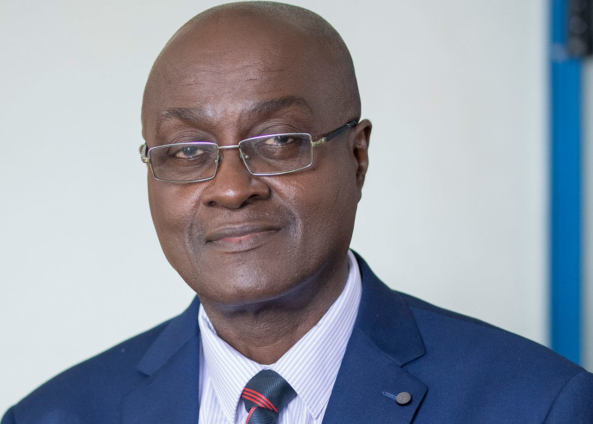
Banking consultant Richmond Atuahene has called for accountability over the Bank of Ghana's (BoG) GH₵53 billion negative equity, insisting that those responsible for the mess must be held accountable.
In an interview on Joy FM's Midday News on Wednesday, March 12, he called for those responsible for breaching financial regulations to be summoned before Parliament to explain their actions.
“There was a law that stated they should not exceed a 5% fiscal financing threshold, yet they went as high as 60%. This is a clear violation, and they cannot claim ignorance. The Governor, the Minister, and those involved must be held accountable for their actions,” he asserted.
His comment comes after the Finance Minister, Dr. Cassiel Ato Forson, advised BoG to explore internal cost-cutting measures instead of relying on taxpayer funds for a GH₵53 billion bailout to address its negative equity position.
Dr. Atuahene supported the Finance Minister’s stance that the government cannot afford to recapitalise the central bank at this time, given the nation’s fiscal constraints.
“Like the Minister said, you don’t create a mess and leave it for others to clean up. Whoever created this mess must take personal responsibility. When they engaged in the monetisation of fiscal deficits in 2021 and 2022, some of us warned them about the consequences, but they didn’t listen,” he stated.
Dr. Atuahene stressed that rather than relying on external funding, the Bank of Ghana should explore internal restructuring, cost-cutting, and asset sales, including a sale-leaseback arrangement on some of its properties, to raise the necessary capital.
He also highlighted the potential damage to Ghana’s international credibility if the Bank of Ghana remains in a financially distressed position.
“This affects Ghana’s credibility. BoG has correspondent relationships with the Bank of England, the Federal Reserve, and the African Development Bank. If it continues to operate in a capital-deficient state, international institutions may lose confidence in our financial system,” he warned.
Dr. Atuahene also criticised the central bank for insisting that it is “policy solvent,” arguing that capital solvency is more critical in this situation.
“You can claim policy solvency all you want, but if you are capital insolvent, it means you cannot function properly. BoG has been making losses year after year. They made losses in 2023, and they are making losses in 2024. How long will this continue?” he questioned.
Latest Stories
-
Ghana’s BRICS move requires clear strategy to manage risks – Godfred Bokpin
2 seconds -
Pay teachers realistic income – Duncan Amoah to gov’t
16 minutes -
Bechem to become chicken capital of Ghana – Mahama projects
18 minutes -
Gov’t targets recruitment of 16,500 health professionals in 2026
39 minutes -
Two-week strike will not derail academic calendar – GNAT President
54 minutes -
Headmaster detained after BBC investigation into alleged sexual abuse of students
1 hour -
GNAT pushes for clear implementation procedures of teachers’ conditions of service
1 hour -
Recurrent strikes threaten quality of education and academic calendars – Prof Bokpin
1 hour -
‘Cockroach’ group leaders among hundreds detained in Delhi protest
1 hour -
Don’t let speed of information become your judgement – CJ tells new lawyers
2 hours -
World Cup visa scandal: People have leveraged public office to facilitate fraud – Senyo Hosi
2 hours -
Glut! Farmers count losses as prices crash, customers happy
3 hours -
GSA postpones auction of unserviceable vehicles
3 hours -
Man charged with attempted murder after stabbing
3 hours -
World Cup visa scandal: Senyo Hosi says issue goes beyond calls for Sports Minister’s resignation
3 hours