


Audio By Carbonatix
A private legal practitioner, Albert Gyamfi, has described the act of family members withdrawing money from the bank account of a deceased to organise their funeral as a criminal offence that is punishable by law.
According to the lawyer, although this is a common practice in the Ghanaian sociocultural context, the act, by law, is characterised as intermeddling with the property of the deceased, an act that is punishable by law.
Mr Gyamfi further explained to the host of The Law, Samson Lardy Anyenini that the bank account of a deceased by law is immediately closed off when the person is declared dead.
Thus, no relative can access the bank account of the deceased until a letter of administration (LA) or probate has been granted to them to have access to the bank account, he said.
“Let me sound this warning, the general practice has been that when a person dies, people would want to go into his bank account for money for the organization of the funeral. That is intermeddling. Wherever the family will find a room to organize the funeral, they should do so. And when probate has been granted, then if there's any property to liquidate that debt, they use his property to do so."
“But you cannot go into his bank account, withdraw money for purpose of a funeral. As soon as the person dies, doctors declare him dead, his bank account is closed until probate has been granted,” Mr Gyamfi cautioned while contributing to a discussion on The Law on Sunday.
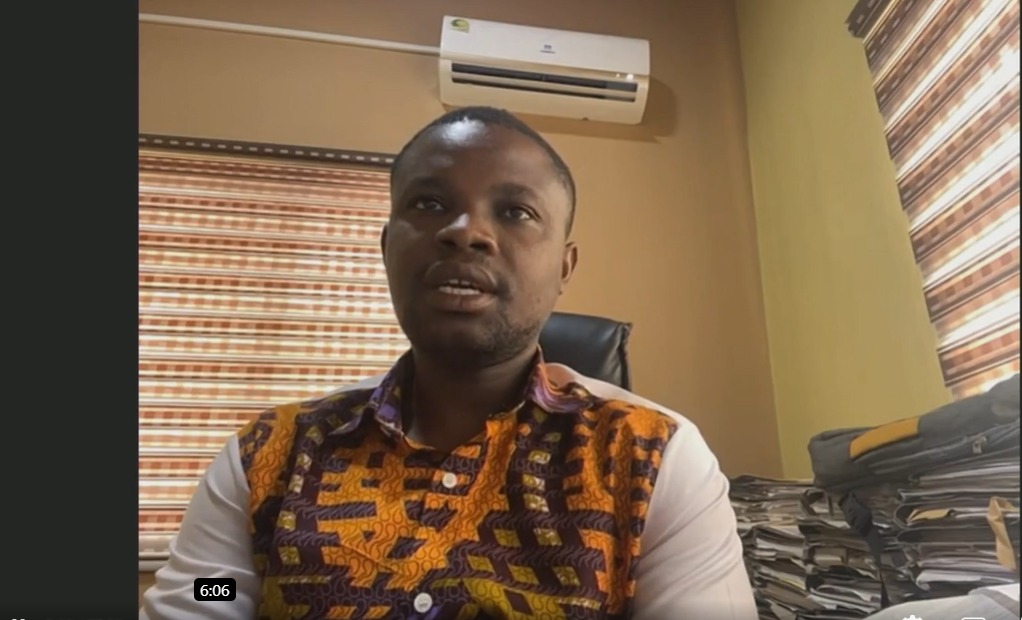
Subsequently, he shared that in a situation where an individual gathers the properties of a deceased person to safe keep the assets but does not deprive the entitled persons of the use of the property, such an act was not categorised as intermeddling with the properties of the dead person.
“If you look at section 17, the law principally says, unlawfully deprive the entitled persons of the use. So, the law has a mens rea of you unlawfully depriving persons of the use. So, if I am only gathering them for safekeeping, I am not depriving people of the use,” Mr Gyamfi emphasised.
Hence, referencing a scenario whereby the deceased person was the owner of a vehicle that was being used as a commercial vehicle, the lawyer advised that a driver in such a case keeps the sales received safe until legitimate administrators are appointed to whom the driver can give an account of the money received.
However, he warned that the inability of the said driver to account for the money is categorised as intermeddling.
So, the lawyer stated that, “If you are unable to account and some monies are gone somewhere, then you can be said to have been depriving the beneficiaries of the use, and you will be guilty of intermeddling.
“So gathering properties in good faith for purposes of administration in mind does not amount to intermeddling,” Mr Gyamfi reiterated.
Latest Stories
-
Ablakwa urges Africans not to view immigrants as threat to national progress
3 minutes -
Ghana’s economic salvation lies not in shifting geo-political allegiances – Dr Atuahene
7 minutes -
BoG proposes tougher rules on loan repayment assessment
12 minutes -
Government plans mandatory drug tests for public service jobs — Muntaka
17 minutes -
Media urged to intensify awareness campaigns on breast cancer
22 minutes -
Interior Minister urges public to share drug intelligence
28 minutes -
Afadzato South DCE commissions water projects, teachers’ bungalow
33 minutes -
Council of State urges sustained dialogue, negotiations as teachers resume work
38 minutes -
We are committed to leaving a legacy in Mandari – Bole-Bamboi MP
42 minutes -
Greater Accra teachers resume work after strike suspension
50 minutes -
Education Minister assures teachers of salary adjustments by October 16
55 minutes -
Abass Osabutey declares bid for NDC Deputy National Organiser position
57 minutes -
Education Minister inaugurates NDU Governing Council, announces $25m seed funding
1 hour -
THE LAW 101: La Beach Demolitions – The State’s own documents, the courts’ orders – and the bulldozers
1 hour -
DVLA contributes GH¢17.7m to Consolidated Fund in 2025
1 hour