

Audio By Carbonatix
The World Bank has approved $500 million in financing for the Ghana Market Access and Connectivity Project (GMACP), a major initiative to improve rural road connectivity, strengthen agricultural value chains, expand economic opportunities, and create short-term direct jobs for rural communities across Ghana.
Poor road conditions and inadequate maintenance have long constrained rural livelihoods in Ghana — limiting market access, driving up transport costs, and contributing to significant post-harvest losses.
The project directly addresses these challenges by rehabilitating and maintaining critical feeder roads in selected regions, improving all-season connectivity between rural production areas and key markets, and enabling farmers to reach buyers more efficiently, transition into higher-value agricultural activities, and unlock local job and income opportunities along agricultural value chains.
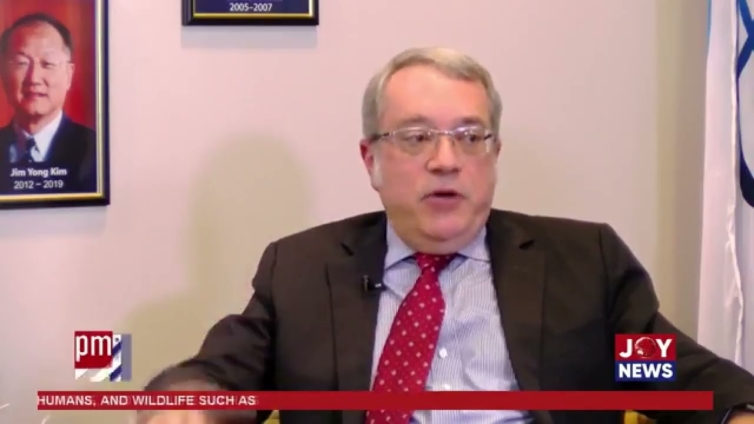
"This project will improve access to markets and opportunities for rural communities while strengthening Ghana's agricultural competitiveness and resilience," said Robert Taliercio, World Bank Division Director for Ghana, Liberia, and Sierra Leone.
“It will directly benefit more than 550,000 people — including approximately 350,000 farmers, 250,000 women, and 310,000 youth. It is also expected to generate more than 5,000 direct jobs and over 25,000 indirect jobs through civil works and road maintenance activities.”
To be implemented by the Ministry of Roads and Highways, the GMACP project will support the rehabilitation and maintenance of more than 1,000 kilometers of rural roads across four clusters spanning the Upper West, Northern, Savannah, Oti, Volta, Eastern, Ashanti, Bono, and Western regions.
These areas are major producers of priority crops — including maize, rice, yam, and cassava — that are central to Ghana's food security but remain constrained by poor market connectivity. Improved all-season access aims to reduce transport costs, shorten travel times, increase supply reliability, and open larger markets to smallholder farmers, ultimately reducing post-harvest losses, strengthening agricultural value chains, and contributing to lower food prices and improved food security.
The GMACP incorporates climate-resilient design to ensure roads and drainage systems can withstand climate risks over the long term.
Sustainability is a central pillar of the project: it will help operationalize the Road Maintenance Trust Fund (RMTF) and introduce Performance-Based Contracts for road maintenance, while providing technical assistance to strengthen institutional capacity and ensure that rehabilitated roads remain functional beyond project completion.
Latest Stories
-
Food Buffer Stock seeks stronger liquidity buffer despite record profit
5 minutes -
LPG investments key to achieving 50% access target by 2030 – Energy Minister
6 minutes -
Jinapor: New LPG terminal strengthens Ghana’s energy security
9 minutes -
Agbodza directs road agencies to fast-track design approvals to prevent project delays
12 minutes -
Housing Minister urges stakeholders to prioritise quality education in Banda District
18 minutes -
Government redeems pledge to complete abandoned projects – Kofi Buah
23 minutes -
Sam George calls for Black Stars disbandment, GFA dissolution after Gambia defeat
25 minutes -
Bunkpurugu MP urges action to curb network disruptions in Northern Ghana
26 minutes -
Education Minister calls for evidence-based response to learning crisis in West Africa
33 minutes -
NPA reaffirms regulatory support as Puma Energy deepens investment in LPG and CRM
35 minutes -
Ketu South NDC clears 73 aspirants for constituency elections
38 minutes -
We are with all flood victims – Hohoe MP
44 minutes -
Asharami Ghana commends NPA CEO Edudzi Tameklo for support towards LPG vessel arrival
50 minutes -
Finance Minister engages AGI, leaders ahead of 2027 Budget
56 minutes -
Enforce surcharges, modernise audits to curb GH¢100bn losses – Audit Service urged
1 hour