

Audio By Carbonatix
Ghana is witnessing a concerning drop in water quality attributed to land use activities, prompting urgent calls for collaborative action.
Human activities such as illegal mining, fishing with harmful chemicals, and improper waste management are contributory factors to the depreciation in water quality.
Recent statistics reveal a significant decline in the quality of the nation’s water resources, plummeting from 86 percent to 58.8 percent.
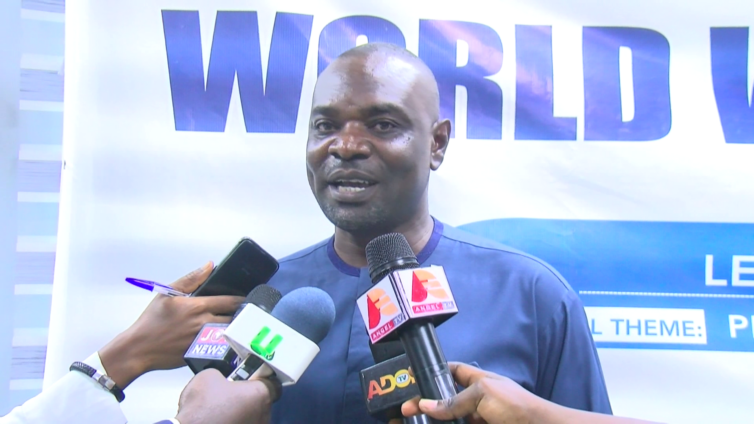
Speaking to JoyNews, the Executive Director of the Water Resource Commission, Dr Bob Alfa, highlighted the reasons for this decline in water quality.
He explained, “Ghana’s water resources are deteriorating in terms of quality. We are experiencing degradation of our water bodies due to land use activities. However, we still have some parts of Ghana where we have quite a lot of good water resources. So, for some areas, we have good water quality, and for some areas, we have poor water quality. That is the situation now.”
Dr Alfa emphasised that Ghana had good water resources in previous years in terms of percentage, but due to the activities of illegal mining, the nation started losing some of its river bodies.
He stressed the need to address destructive land practices to protect Ghana’s dwindling water resources.
“If we are able to combat galamsey and improper waste disposal, I believe we can restore our water quality back to the previous level of 86 percent,” he added.
He clarified that Ghana is within the borderline of being a water-secure country but has been classified as a water-vulnerable country. He warned that if the nation makes mistakes, it could become water-insecure.
Dr Alfa suggested possible solutions to curb the situation, emphasising the need for proactive measures aimed at reversing this trend.
He called for collaboration among stakeholders to ensure a sustainable future for all.
“We have to collaborate with other agencies – such as the Ministry of Lands and Natural Resources, the Environmental Protection Agency (EPA), and other relevant bodies – to eliminate the menace of galamsey,” he said.
The Executive Director of the Water Resource Commission acknowledged that the fight against illegal mining would take time but urged all stakeholders to join forces in this battle.
Additionally, he identified bad fishing methods, such as using chemicals, and improper waste disposal as significant challenges.
Dr Alfa mentioned ongoing efforts to tackle these issues, including collaborating with the Ministry of Fisheries on fish farming and working with local assemblies to address waste disposal problems.
He reiterated his organisation's commitment to collaborating with all relevant agencies to minimise the impacts of these detrimental activities.
Latest Stories
-
Cedi was worst African currency in quarter 2, 2026 – World Bank
16 minutes -
AI gains can lift three times as many people out of poverty in Ghana – World Bank
44 minutes -
Police arrest suspect over jewellery theft during fire outbreak
3 hours -
EOCO returns Hanan’s £6,700, GH¢2,750 and devices after defence challenge
3 hours -
Opplift Youth Entrepreneurs Summit 2026 equips entrepreneurs with skills, mentorship and support
3 hours -
Rival clubs want range of punishments for Man City
4 hours -
Tear gas in Paris and Marseille as school protests grow across France
4 hours -
Kane inspires England to win over Czech Republic in UEFA Nations League
4 hours -
Finland orders halt to work on two Google data centres
4 hours -
Substitute Merino scores twice as Spain win in Croatia
4 hours -
Ronaldo wants Portugal ‘punishment’ but not retiring
4 hours -
White House defends Trump comment to let Iran ‘take out’ LA and San Diego
5 hours -
Asos confirms hackers sent ‘unauthorised’ notification to app users
5 hours -
US televangelist Jim Bakker, disgraced from sex scandal and fraud, dies at 86
5 hours -
Congolese-born golfer to represent Ghana at Turkish Airlines World Cup grand final
5 hours