

Audio By Carbonatix
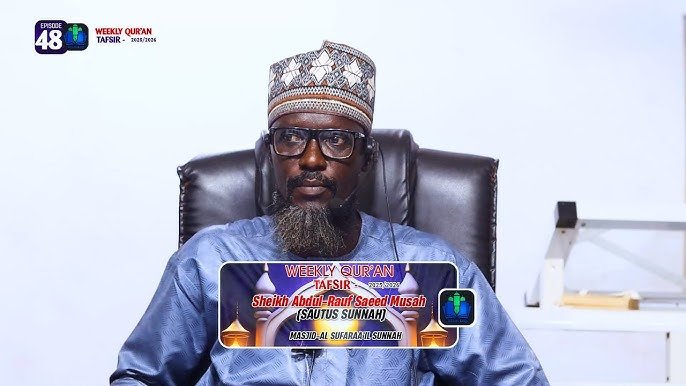
The Overlord of Dagbon, Ya-Naa Abukari Mahama II, has imposed a sweeping ban on Saeed Musah Abdul Rauf of the Anbariya Islamic Movement in Tamale, citing repeated instances of disrespectful and radical remarks despite several warnings from traditional authorities.
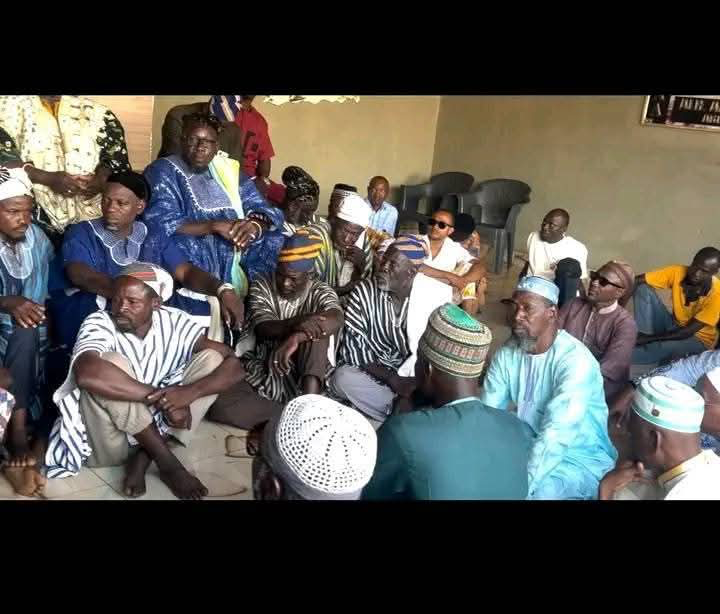
The announcement was made on Monday at the Gukpegu Naa Palace in Tamale, in the presence of the controversial Sunni preacher and leaders of the Anbariya Islamic Movement.
Announcing the decision, the Linguist of the Gukpegu Traditional Area said Imam Abdul Rauf Saeed’s recent public sermons and comments had undermined peace, unity, and the moral fabric of Dagbon, posing a potential threat to community harmony.
According to the Palace, Imam Saeed had earlier been cautioned by the Ya-Naa’s elders and representatives of the Dagbon Council of Imams following multiple complaints about his provocative and divisive preaching.
His refusal to heed those warnings led to the current sanction, which bars him from leading prayers or delivering sermons within the Dagbon Traditional Area and the Northern Region.
Sheikh Abdul Rauf has long been known for challenging both Islamic and traditional establishments. His sermons are often laced with takfirism and provocative rhetoric.
The latest ban follows a viral sermon in which he criticised a long-standing poetic appellation of the Ya-Naa — “Tihi ni mori lana,” meaning “the owner of the trees and grasses” — describing it as Islamically offensive.
The phrase, however, is a traditional metaphor that symbolically portrays the Dagbon King as protector of both the strong and the weak, and not a literal claim of ownership.
Since rising to prominence about four years ago, Sheikh Abdul Rauf has led the Anbariya Islamic Movement into conflicts with nearly all other Islamic sects in Tamale, frequently labelling them “kafir,” an Arabic term for “disbelievers.”
His criticism has even extended to respected figures such as Mallam Basha of Nuria Islamic, leader and founder of the breakaway Anbariya Sunni Movement.
Before the ban was announced, tensions were high at the Palace when leaders of the Anbariya Islamic Movement arrived without Abdul Rauf himself.
He was later compelled to appear before the Gukpegu Naa’s elders, where the sanction was formally pronounced in his presence.
Reactions to the ban have been mixed. Some residents and Islamic scholars in Tamale have praised the decision as necessary to preserve peace and mutual respect between faith and tradition.
Others, however, have called for dialogue and reconciliation between the Palace and the Anbariya leadership.
As of press time, neither the Anbariya Islamic Movement nor Abdul Rauf had issued an official statement on the matter.
Latest Stories
-
Drug bust case: Only Customs officers, MPS officials in scanning room – NACOC
29 minutes -
I don’t mind being insulted; I have a crocodile skin – President Mahama
42 minutes -
Samson’s Take: Verify the badge – and verify the story
53 minutes -
President Mahama explains why Ghana must rethink regulation of TikTok, other new media platforms
1 hour -
Rule of law must be protected – GBA condemns EOCO action against Baffour Awuah
3 hours -
950,000 barrels of Sankofa crude head to TOR as GNPC deepens domestic refining
3 hours -
Scales of deception removed – Annoh-Dompreh attacks new cocoa price
3 hours -
Young Positivist Writes : My Experience with GCLP
4 hours -
Strong Day 1 turnout sets tone for Day 2 of Republic Bank-JoyNews Habitat Fair Clinic
5 hours -
Ghana Army warns new soldiers against social media misuse, uniform abuse
5 hours -
AMA calls for science-led action to tackle environmental health risks in Accra
5 hours -
NPP Canada Organizer BigMo urges Diaspora to support Kodua Frimpong
6 hours -
He entered at eight; he is now 16: Ghana’s children growing up in prayer camps
9 hours -
‘Development must not always begin from Accra’ — Anwelle Foundation launched in Jirapa
9 hours -
PKO trio eye victories at Odwira Festival
12 hours