

Audio By Carbonatix
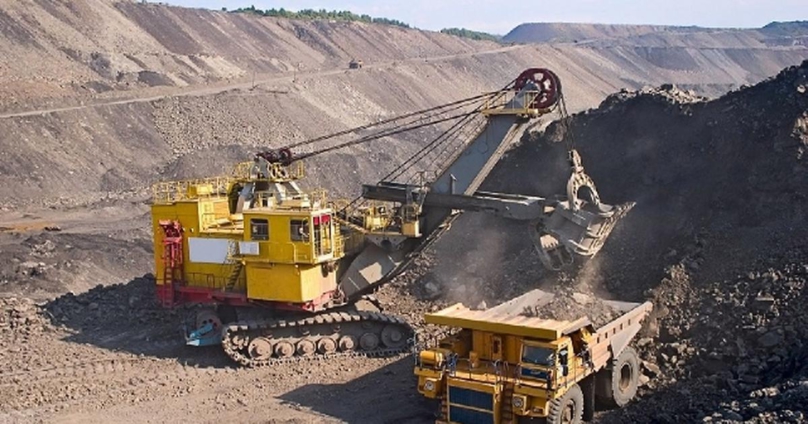
Although the mining sector is doing well in Ghana, its contribution to the country’s economy could be improved if a number of obstacles to investment were removed, as the Chamber of Mines pointed out when it submitted its findings to Parliament on 3 August.
The Ghanaian mining sector’s good health shows no signs of failing. As Africa’s leading producer and the world’s sixth-largest producer of gold overall, the country’s mining activities saw average growth of 20% per annum between 2013 and 2020. This makes it the country’s third-largest economic sector.
It was the main attraction for foreign direct investment to drive the economic recovery in the 1980s and played a key role in the country’s development. Since then, it has become the mainstay of the economy, interconnected with practically all other economic sectors owing to the significant demand for goods and services that it creates for local companies.
Historically focused on the production and export of gold (97% of the country’s mining revenue), manganese, bauxite and diamonds, the mining sector is Ghana’s leading domain for exports. As an essential source of tax revenue (1.9 billion Cedi were collected every year between 2010 and 2020 – an average increase of some 27% over the last decade), it is also the country’s leading domain for exports, constantly surpassing the main export sectors in terms of share of GDP.
Persistent obstacles to investment
Although mining continues to attract new foreign players – particularly from Russia and China – the Chamber of Mines stresses that a number of persistent obstacles limit investment. This is despite the fact that the country has the potential to be a producer of diversified materials and to develop exploration activities for industrial and energy-related minerals (iron ore, lithium, limestone, feldspar, etc.).
According to an annual survey of mining companies conducted by the Fraser Institute (which assesses countries’ appeal in terms of mining investment), Ghana ranked as Africa’s third most attractive country in 2020, and was 25th globally. Excessively high exploration and production costs are behind this low ranking.
It started to plummet in 2018 when it lost its status as the main beneficiary of the exploration fund to Mali. Since then, Burkina Faso and Ivory Coast have overtaken it, leaving Ghana in fourth position in Africa in terms of exploration budget in 2020, with US$85 million.
Annual fees for mining rights, processing fees and search permit costs, ground rent... owning land for exploration purposes is more costly in Ghana than in any other country in the subregion. Falling investment in exploration can also be attributed to the VAT applied to exploration costs – and this is vital if there is to be sustained production.
The consequence is that the cost of owning land for exploration purposes is two and four times higher in Burkina Faso and Ivory Coast, respectively. For investors, those are not the only obstacles: the average cost of producing one ounce of gold is higher than the continental and world average. At the end of 2020, the all-in sustaining cost (or AISC) of gold mining was US$1190 per ounce – that’s US$176 more than the average for all producers in Africa.
Illicit mining and insecurity
Other obstacles include the cost of fuel – a major area of expenditure for mining companies. Since the increase in the price of diesel is correlated to the cost of supplying fuel to the mines, the price of the diesel that they consume is higher than prices throughout the subregion – including in landlocked countries – at least 22% more expensive.
Illegal mining operations and insecurity are also a source of worry for investors – as recent disruptions in mines and their surrounding areas have confirmed. Despite law-keeping forces being deployed, violent attacks and encroachments on mining concessions continue.
This represents significant lost profits for the mines and the state. One such example is the encroachment onto the Adamus concession, which resulted in the loss of more than $1 million of potential fees for the state. This will have repercussions on the cost of this mining operation.
As far as infrastructure is concerned, the deplorable state of the railway network does not make things any easier. The western railway network which is used to transport minerals to the Takoradi port has deteriorated through lack of adequate investment, forcing mining companies to use road transport instead.
The Chamber of Mines is trying to get the government to address these obstacles so that the mining industry can reach its full economic potential. A worthwhile aim, given that Ghana could easily be turned into a hub for mining support services in West Africa, giving it a major competitive advantage.
Latest Stories
-
Ablakwa receives Presidential Special Envoy on Reparations to advance global agenda
8 minutes -
Christina Koch becomes first woman to travel around the moon on Artemis II
19 minutes -
Epstein survivors’ calls to meet King Charles and Queen harder to ignore as US visit approaches
25 minutes -
UN Secretary-General names Ghana’s Anita Kiki Gbeho as South Sudan envoy
26 minutes -
Mali withdraws recognition of Sahrawi Republic, backs Morocco’s autonomy plan
31 minutes -
Gov’t distributes over 8,500 laptops to One Million Coders project
32 minutes -
Julius Debrah, ‘man to beat’ as NDC’s James Agbey dismisses Musah Dankwah’s polls
38 minutes -
GPRTU in Savannah Region to protest alleged eviction in Damongo
1 hour -
Re: Reinsurance does not replace process — A response to the SIGA–SIC defence
1 hour -
Gender Ministry supports Harriet Amuzu in ongoing abuse case
2 hours -
AG joins plaintiff to scrap OSP ?: We should be mindful of the mischief in this – Bobby Banson
2 hours -
Samson Lardy Anyenini questions willingness of Attorneys-General to prosecute political colleagues
2 hours -
It is only fair the OSP is heard in Supreme Court case – Bobby Banson
2 hours -
Asiedu Nketia resumes Ashanti tour, second leg kicks off on Sunday
2 hours -
NLA denies salary cut claims, threatens legal action over reports
2 hours