

Audio By Carbonatix
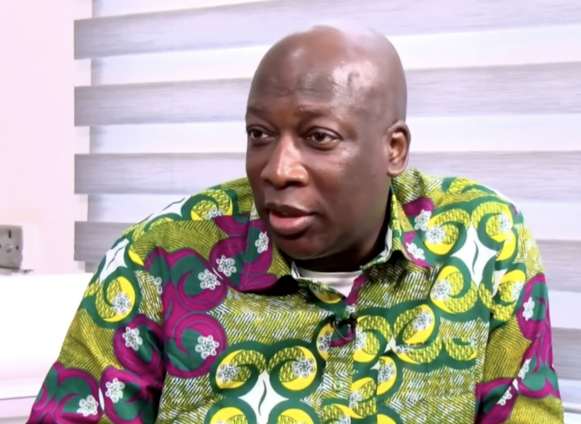
Business executive and former Unilever Executive Vice President Yaw Nsarkoh has raised concerns about what he describes as Ghana’s growing fixation on legal technicalities at the expense of real social impact.
Speaking on Joy News’ PM Express on Tuesday, he said the country risks mistaking legal procedure for justice.
“The media have played a part in that as well; the rule of law is very important, don’t get me wrong,” he said. “If you’re going to have a disciplined society, you have to have a rule of law.”
But he argued that public discourse has become heavily skewed.
“But you just tune into any station, and everywhere we are talking about the technicalities of legal science without coupling it to what real impact we are looking for in society, how that is going to drive real development?”
According to him, legal processes are only a means to an end.
“Now the technicalities of legal science may be important, but the reason why the entire process for the delivery of administrative justice exists is to deliver justice in society.”
He questioned whether the current focus reflects lived realities.
“So if you have all the technicalities of legal science in place, which are necessary, but you have 20% of your population living in extreme poverty, is that justice?” he asked.
“If you have all the suffering and misery that is around us, is that justice?”
Mr Nsarkoh stressed that achieving justice requires a broader, multidisciplinary conversation.
“If you are going, therefore, to deliver real justice, it is not a matter that can be left to only the legal experts; you need all the other disciplines involved.”
He rejected narratives that attack lawyers but insisted they are only part of the solution.
“Because for you to get real justice in society, the lawyers have a role. I don’t participate in that conversation that demonises them.”
“But so do the sociologists, so do the philosophers, so do the peasants who are living their experiences. Where is that conversation taking place?”
He also criticised the media’s approach, arguing that excessive focus on legal jargon alienates ordinary citizens.
“But look at the amount of time that our media spends on the technicalities of legal science, which itself excludes many people because we are using such esoteric language that the ordinary people in the streets don’t even understand what you’re talking about.”
Latest Stories
-
LA 2028: Black Queens hold final training session ahead of second leg against Mauritius
10 minutes -
Standards are not Seasonal: What the EC appointments teach both sides
24 minutes -
King Mohammed VI urges private sector to create youth jobs and spread benefits of growth
25 minutes -
KGL U17 Colts 2026: Greater Accra win title after penalties win over Western Region
25 minutes -
UK Investment Roadshow opens in London to advance UK-Ghana growth partnership
36 minutes -
Assemblies of God requires pastors to resign before entering partisan politics – Rev. Wengam
46 minutes -
Ghana targets 20% annual reduction in maternal deaths – Health Minister
51 minutes -
Cyber attacks in Africa grow faster than global rate, report finds
53 minutes -
Ghana signs UAE deal to create 5,000 overseas jobs
60 minutes -
One Million Coders Programme targets 100,000 digital jobs in two years – Sam George
1 hour -
John Jinapor, Italian Ambassador explore opportunities for energy sector investment
1 hour -
NHIA seeks legal reforms to support Free Primary Healthcare
1 hour -
Beatrice Annan defends Afi Agbenyo’s EC appointment, cites record of gender advocacy
1 hour -
Ghana seeks investment deals in Bangkok amid global economic crises
1 hour -
IMF raises Ghana’s 2026 growth forecast to 5.7%, sees inflation falling to 4.8%
1 hour