

Audio By Carbonatix
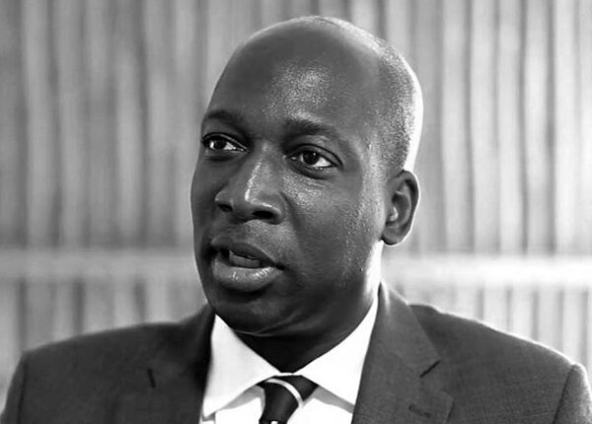
Former Executive Vice President of Unilever Ghana and Nigeria, Yaw Nsarkoh, says the collapse of local governance represents the “final nail” in what he calls the illusion of democracy.
Speaking on JoyNews’ PM Express following his provocative lecture titled “Iniquities of Iniquity in Our Santa Claus Democracy”, he argued that democracy in Ghana has been reduced to “a public auction for the highest bidder,” with the electorate treated as passive ballot boxes rather than active agents of change.
“The space in which we are now,” he said flatly, “Local Government has essentially collapsed. It is non-functional. People don’t feel represented, and the structures meant to connect power to the people have withered.”
He painted a picture of a democracy that wears the clothes of electoral procedure but lacks the lifeblood of true participation and accountability.
“We have a dark-skinned president and a national anthem, but we are not in control of our sovereign productive forces. That doesn’t make you independent — and certainly doesn’t make you democratic,” Nsarkoh said, referencing ideas from Kabral Blay-Amihere’s Return to the Source.
In his view, Ghana’s political trajectory has been fatally compromised by both historical burdens and present-day dysfunctions.
He dismissed simplistic comparisons between Ghana and countries like Singapore, insisting that starting points and institutional histories matter.
“The starting points were different,” he explained. “When Europe was democratising, capital accumulation had already begun. They were distributing wealth that had been created. We, on the other hand, were navigating post-colonial chaos.”
He further cited Claud Ake’s critique of post-colonial governance in Africa, arguing that Ghana’s ruling class quickly became what he called “the new colonialists.”
“The post-colonial elite took over the facilities of the state and looked after themselves,” Yaw Nsarkoh said. “The system is not broken — it is working exactly as it was re-engineered to: to serve a tiny elite.”
He condemned the monetisation of politics as a core reason for citizen alienation, saying, “Our politics has become transactional. It’s a bidding war. And the people are no longer citizens — they are spectators.”
According to Yaw Nsarkoh, democracy cannot be sustained without functioning local governance, deep civic consciousness, and a re-imagining of how sovereignty is exercised in a post-colonial state.
“Until the people are empowered not just to vote, but to shape and own the governance process, we will continue this theatre — democracy as choreography, not transformation.”
As he sees it, Ghana is now dangerously close to the tipping point. “You can’t run a country from Accra alone,” he warned.
“And when people can’t feel power where they live, the legitimacy of the whole system begins to rot from below.”
Latest Stories
-
GRA assures Tullow of collaboration to settle $393m tax liability without disrupting its petroleum operations
16 minutes -
South Korea demands apology from Pyongyang for landmine blasts that injured three
20 minutes -
Carlos Queiroz not the sort of coach Black Stars need – Nii Lante Vanderpuye
50 minutes -
AFCON 2027Q: ‘Our Black Stars team is gone’ – Former Sports Minister
1 hour -
Prof. Prempeh calls for public review of draft constitutional reform bills
1 hour -
AFCON 2027Q: ‘I have never seen a poor performance from Black Stars like against Gambia’ – Nii Lante Vanderpuye
1 hour -
Nigeria set to launch National Digital Address System 9 years after Ghana showed the way
2 hours -
Policy rate decision takes time to reflect in lower lending rates – BoG
2 hours -
Western Regional Minister applauds Karpowership’s role in Ghana’s power sector
2 hours -
Playback: Road safety crises: Where are we getting it wrong?
2 hours -
Enterprise Life celebrates 25 years of protecting families and building trust
3 hours -
ICC London rules in favor of Ghana against Tullow over $400m tax charge
3 hours -
We are disappointed in ICC’s ruling over our corporate income tax assessment in Ghana – Tullow Oil
3 hours -
Cost of building inflation for August 2026 increases to 4.6% – GSS
3 hours -
Today’s front pages: Wednesday, September 30, 2026
3 hours