

Audio By Carbonatix
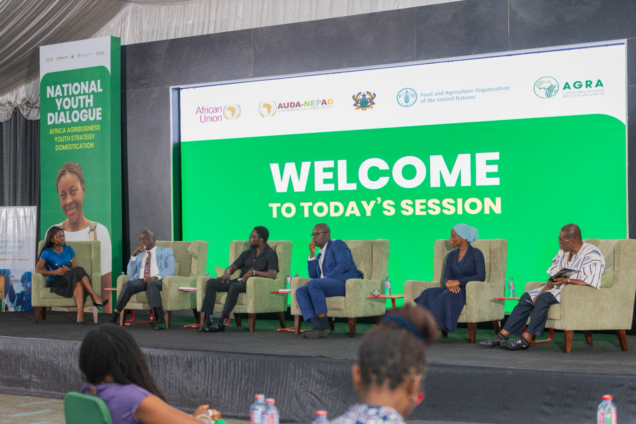
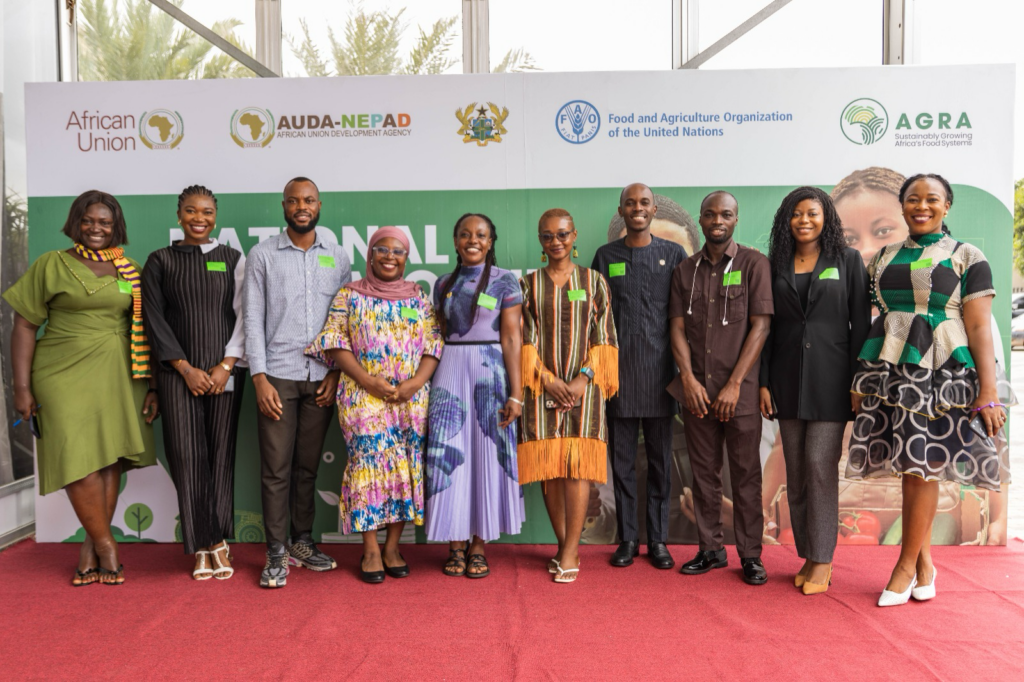
A National Youth Dialogue on the domestication of the Africa Agribusiness Youth Strategy (AAYS) and the Youth in Agrifood Systems Performance Index (YAPI) has concluded in Accra, with the youth calling for a greater share of investments under the country's flagship food systems programmes.
In a communique issued at the end of the three-day dialogue organised by AGRA, Mastercard Foundation and the Government of Ghana, the youth called for urgent, coordinated and accountable actions to translate AAYS and YAPI commitments into laws, budgets, programmes, and measurable results.
AAYS is the African Union’s blueprint for enhancing youth participation across agrifood value chains, with a strong emphasis on enterprise development, market access, and inclusive policy design.
YAPI is the union’s accountability and tracking framework that measures how effectively countries support youth inclusion in agribusiness.
The young people said Ghana should now move from mentioning youth in agrifood policies to making youth intentionality a funded, measured and accountable deliverable across the Feed Ghana Programme (FGP), the National Agricultural Investment Program (NAIP), National Youth Policy, Africa Continental Free Trade Area (AfCFTA) trade systems, district delivery mechanisms and parliamentary accountability.
“The stronger story for Ghana is not that youth are mentioned in policy; it is that Ghana can measure whether young people have skills, assets, jobs, voice and resilience.”
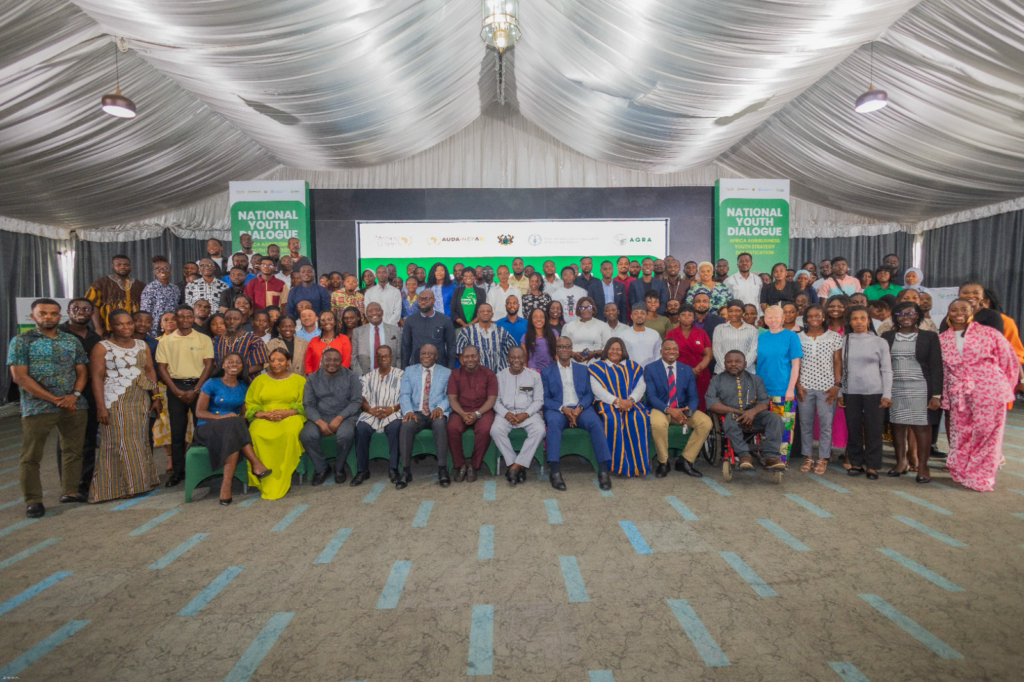
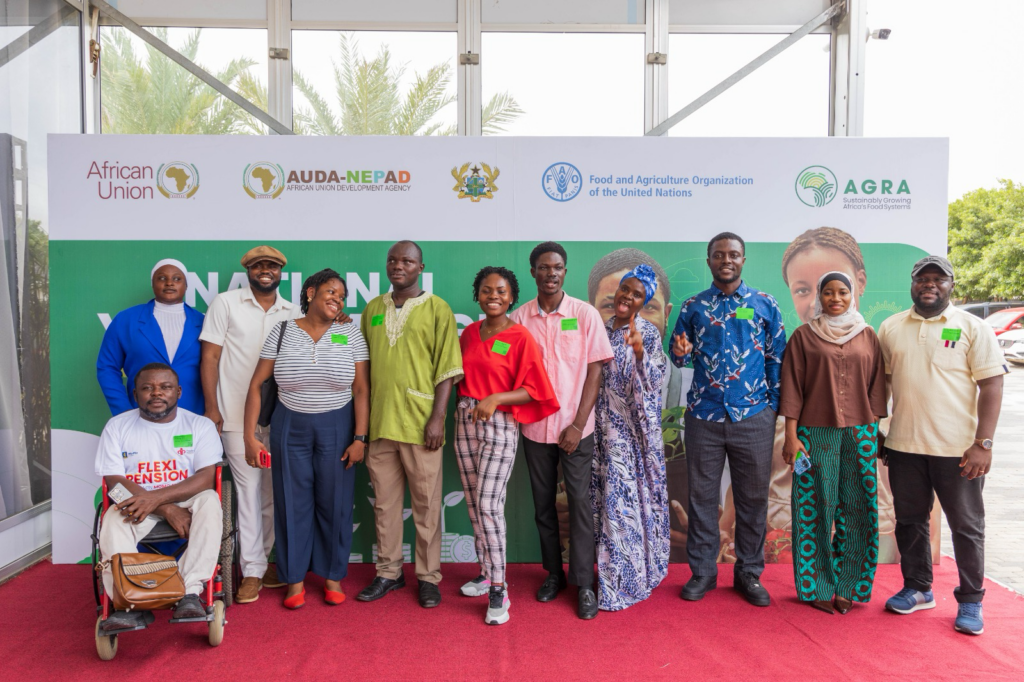
The dialogue, which was on the theme, “Bridging Policy to Practice for Youth Participation in Regional and Continental Markets”, brought together over 350 youth agribusiness practitioners, as well as representatives from public institutions, parliament, regional trade bodies, private-sector actors, development partners and technical organisations.
The FGP is the government’s flagship agricultural initiative, launched in 2025 to boost domestic food production, reduce the food import bill, and create sustainable jobs.
The dialogue examined how the 270 planned farmer service centres (FSCs), farm banks, agricultural production enclaves, input-credit systems, extension platforms and market infrastructure promised under the FGP can be converted into youth service lanes covering skills, advisory services, finance, land readiness, mechanisation, aggregation, certification and market access.
Participants noted that FGP expects about 2.6 million direct and indirect jobs, while the NAIP theory of change anticipates more than 900,000 direct and 1.7 million indirect jobs by 2029.
They say the key issues are how to define the youth share of these jobs, ensure decent work outcomes for youth, and ensure that youth-led enterprises have market access.
Participants called for the FGP to make room for ring-fenced youth access and youth-disaggregated reporting across farm banks, irrigation, mechanisation, inputs, advisory services, energy, and productive infrastructure.
“Every youth commitment should state who, how many, through which instrument, at what cost, by which institution and how it will be reported. They carry youth baselines, targets, budget tags and reporting responsibilities.”
The dialogue also discussed how Ghana’s large agrifood resource envelopes - about GH¢302.21 billion ($27 billion) for FGP and GH¢322.91 billion ($29 billion) for the NAIP - can become youth-visible finance windows.
Working groups deliberated on contract farming legislation, tax exemptions for youth agro-processing enterprises, youth land banks, and the modernisation of technical and vocational training as practical policy actions to bridge youth enterprise realities and national agrifood transformation.
Participants also said the FGP and NAIP targets on climate-smart practices, insurance, warehousing, aggregation, import substitution and child stunting reduction should be linked to youth-led climate-smart enterprises.
The dialogue highlighted the need for a Youth Agrifood Skills and Mentorship Track through the farmer services centres, vocational institutions, universities, National Service, innovation hubs and private agritech mentors.
Call to action
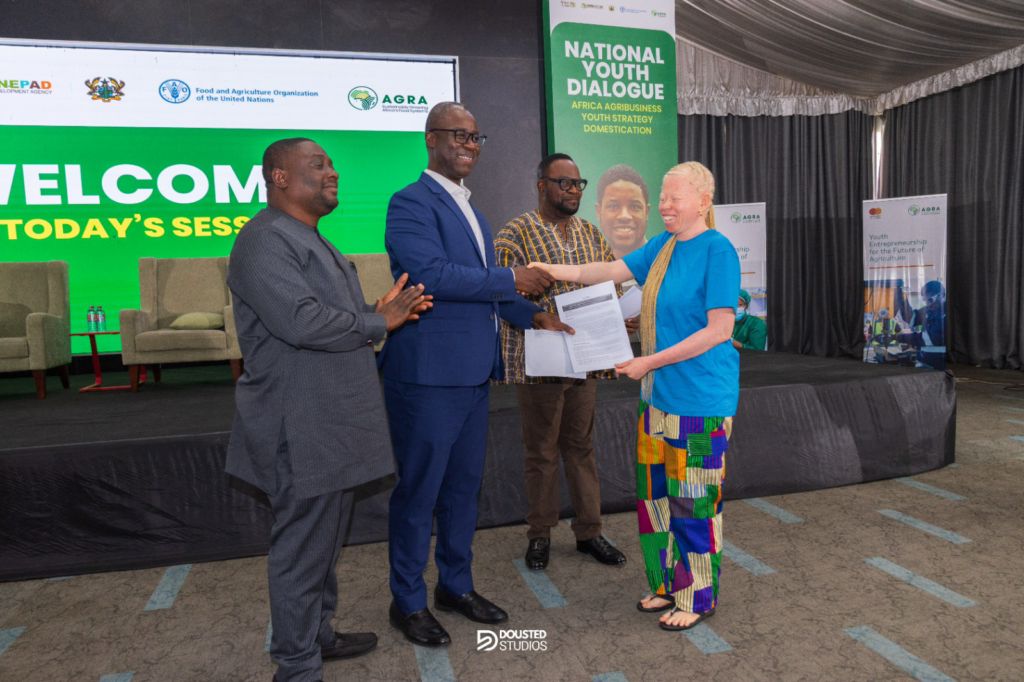
The sessions concluded with a Youth-Parliamentary Dialogue with members of Ghana’s parliament. The youth called on the government to integrate AAYS and YAPI into the FGP, NAIP, the National Youth Policy implementation, and relevant trade and enterprise programmes.
They also demanded the formalisation of youth representation in policy, planning, budgeting, sector review, district delivery and accountability mechanisms.
The youth urged parliament and other stakeholders to commit to championing youth-responsive policy and legislative reforms in finance, land, certification, standards, contract farming, tax incentives, and market access.
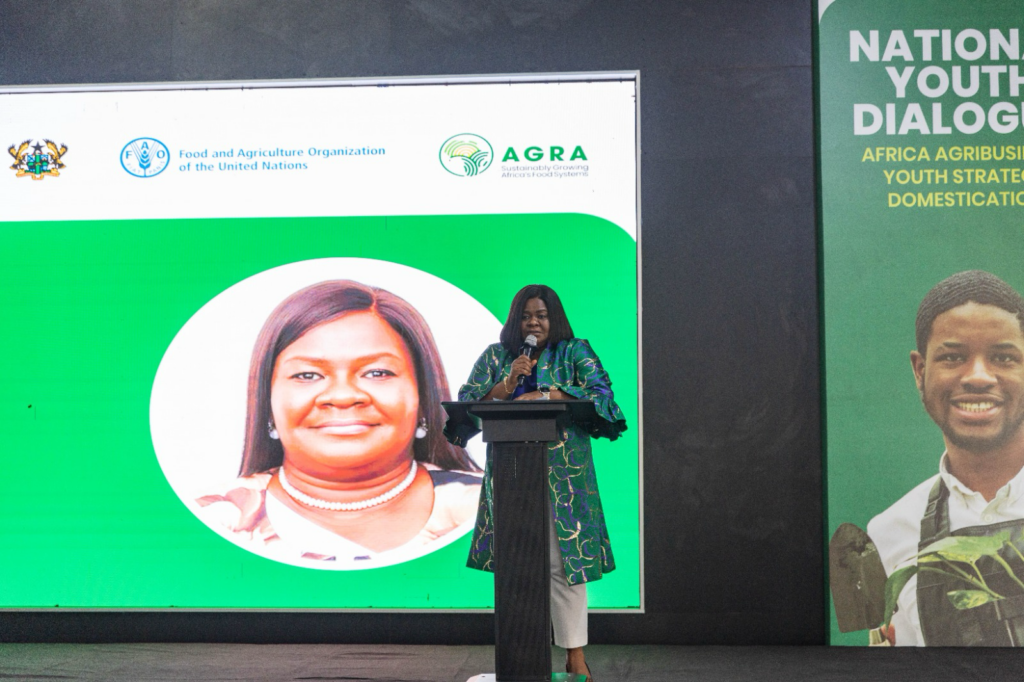
“Youth intentionality should not be treated as a side note in Ghana’s agrifood agenda. It should be embedded in the FGP’s delivery machinery, NAIP costing and annual action plans, etc.”
In response, Chairman of Parliament’s Food and Agricultural Committee Dr Godfred Seidu Jasaw said,
“We have accepted these commitments from the youth. They have practical asks that policy would need to address. So, we look forward to working with these commitments, studying them, and fashioning out next steps. This is good. We are excited about the strategy.”
Country Program Lead for AGRA Ghana, Dr. John Jagwe, said the dialogue highlighted the importance of creating platforms where youth can engage directly with policymakers on issues that will shape their future.
He said the engagement shows the next generation of agri-leaders are ready to drive the transformation of Africa's agrifood systems. 2025 National Best Youth Farmer, Robben Asare said, “It was a nice opportunity sharing ideas with the members of parliament.”
As part of next steps, a youth agribusiness parliamentary brief covering finance, tax relief, contract farming, standards, certification and budget markers will be prepared for Ghana’s parliament.
The youth will also convene a six-month accountability session and publish Ghana’s first youth agrifood scorecard.
Latest Stories
-
Parliament questions proliferation of unapproved containers in East Legon
35 minutes -
Promotion arrears alone cannot end teachers’ strike — PRETAG
41 minutes -
Ebi Bright alleges assault on driver in dispute with Tema Central MP
47 minutes -
GH¢35m Darkuman 24-hour market to be completed in 16 months — MCE
54 minutes -
NPP risks losing Karaga seat if Amin Adam doesn’t contest – John Boadu
58 minutes -
Ghana Reference Rate falls to 10.04% in October as borrowing costs ease
60 minutes -
53% of NPP delegates backed alternatives to John Boadu in chairmanship race – Mussa Dankwah
1 hour -
High taxes, water shortages push up hotel operating costs — Hotels Association
1 hour -
Catholic Bishops demand tougher action on tramadol, marijuana and other drugs
1 hour -
Government positioning Banda District to become major tourism destination hub – Housing Minister
1 hour -
Deputy Education Minister appeals to striking teachers to return to classrooms
1 hour -
Government to involve corporate Ghana in street maintenance – Ayariga
1 hour -
No contractor is untouchable because of political links — Agbodza
1 hour -
Contractors to resume work on Phase Two of Kejetia Market Project
2 hours -
Government committed to resolving teachers’ concerns - Vice President
2 hours