

Audio By Carbonatix
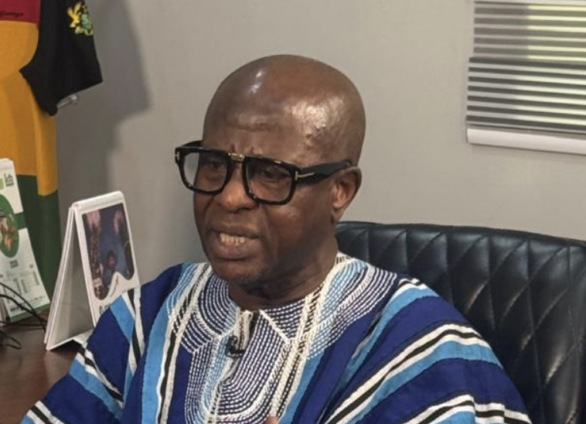
Ghana needs at least ¢1.5 billion to build a meaningful national food reserve system, far above the ¢300 million currently available to the National Food Buffer Stock Company, its CEO, George Abradu-Otoo, has said.
Speaking on JoyNews’ PM Express Business Edition on Thursday, he said the amount allocated so far is inadequate for large-scale purchases of surplus grains from farmers.
“Last year, Minister of Finance Dr Ato Forson announced that they were giving us further ¢200 million to continue the good work that we were doing, so in other words, so far we had only ¢300 million,” Mr Abradu-Otoo said.
He explained that while the funding has enabled the company to begin building reserves, it falls far short of what is required to make a real impact.
“If we need to do proper meaningful mopping up of excess grains, we need no less than ¢1.5 billion, so you can imagine what ¢300 million has done,” he stated.
Mr Abradu-Otoo, however, described the government’s intervention as an important first step towards strengthening the country’s food security system.
“But it’s a good beginning because it hasn’t been done before. That’s where I draw my comfort from,” he said.
According to him, the government's decision to prioritise establishing food reserves marks a significant policy shift.
“It’s a good beginning for the government to even think in the first place that we need to have a national food reserve,” he noted.
He said Ghana has lagged behind its neighbours in setting up strategic food reserves despite being a major agricultural producer.
“Because if you take the West African sub-region, Ghana is the only country that did not have a food reserve, can you believe that?” he said.
Mr Abradu-Otoo pointed out that several countries in the region have long recognised the importance of maintaining food stocks to cushion their populations against supply shocks and price volatility.
“Interestingly, we can also have Mali, etc, have a national food reserve,” he added.
His comments come as concerns grow over food security, post-harvest losses and the need for government interventions to stabilise grain markets and support farmers during bumper harvests.
The Buffer Stock CEO believes that scaling up funding for the programme would enable the company to buy larger quantities of excess grain, reduce waste, and provide the country with a stronger buffer against future food shortages.
Latest Stories
-
UNICEF Ghana launches first Children’s Film Festival to amplify children’s voices
14 seconds -
Ghana must close gaps that allow drug trafficking – Dr Pelpuo
8 minutes -
Emmanuel Osei: President Mahama, dissolve GFA and save our soul
21 minutes -
Uganda Airlines to launch direct Accra-Entebbe flights from October 27
23 minutes -
Ghana records surge in 2025 tourism receipts as Ahafo Region honors top industry players
25 minutes -
I don’t have an official car, I use my own – Pelpuo
36 minutes -
Maiden Black Star Fashion Week to highlight Ghana’s national fashion platform
36 minutes -
GPRTU has entrusted vehicle inspection responsibility to station masters – GPRTU member
36 minutes -
President Mahama to open housing finance conference in Accra on October 7
44 minutes -
Cocaine probe: Speaker is right in dismissing Minority’s motion of parliamentary inquiry – Dr Pelpuo
45 minutes -
Academic City presents cybersecurity white paper to Communications Minister
46 minutes -
Pelpuo calls for independent commission to oversee Ghana’s public sector remuneration
46 minutes -
Bekwai MP to engage Assembly over traders displaced by market redevelopment
47 minutes -
Accra-Abidjan flight relaunch will boost trade, investment and regional integration – Ambassador Alhassan Abu
49 minutes -
Mahama tasked me to identify initiatives that fit Reset Agenda – Pelpuo
49 minutes