

Audio By Carbonatix
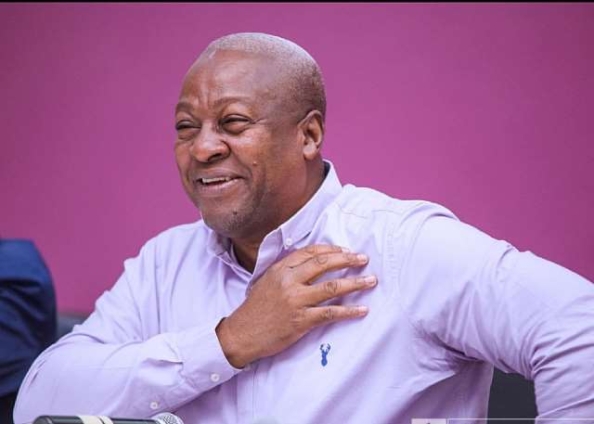
The Ghanaian cedi has recorded its strongest first 120-day performance against the US dollar under the current administration of President John Dramani Mahama, ranking top among all presidential transitions since the cedi was redenominated in 2007.
A comparative analysis by JoyNews Research reveals that from January 7 to May 7, 2025, the cedi appreciated by 9.25%, moving from GH¢14.71 to GH¢13.35 per dollar. This marks the sharpest early-term gain for any president in over 15 years, overtaking performances under Presidents Atta Mills, Akufo-Addo, and Mahama’s own previous tenure.
Nonetheless, former President Akufo-Addo remains the only leader to have recorded a cedi appreciation during the first 120 days of both his terms since the redenomination.
What Is Fueling the Cedi’s Comeback in 2025?
The 2025 performance marks a sharp contrast to President Mahama’s first 120 days in office in 2013, when the cedi depreciated by 3.7%, falling from GH¢1.89 to GH¢1.96. This suggests the current administration has either learned from past missteps or is benefiting from improved macroeconomic alignment.
There is no doubt that this is a remarkable turnaround. The cedi's performance may reflect a blend of deliberate policy choices, favourable external conditions, and renewed investor confidence.
An analysis by the JoyNews Research indicates that this sudden rebound is not accidental. A mix of global, fiscal, and central bank dynamics has aligned in favour of the local currency.
The cedi’s appreciation coincides with a global shift away from the greenback, particularly among BRICS nations and some African economies. The rising adoption of alternative currencies in oil, commodity, and intra-regional trade has weakened dollar dominance, especially following former US President Donald Trump’s sweeping tariff announcements.
This global trade rebalancing and de-dollarization trend is quietly offering breathing space to emerging market currencies like the cedi.
The Bank of Ghana has also played a pivotal role, strategically injecting dollars into the market to shore up supply. Notably, the central bank has provided substantial forex support to Bulk Oil Distributors (BDCs) to facilitate petroleum imports. These interventions have helped stabilize expectations in both the forex and import sectors.
In contrast to previous presidential transitions often marked by sharp spending hikes, the 2025 administration has so far refrained from expansive fiscal spending. This restraint has limited cedi liquidity and helped control inflationary pressures.
By avoiding a spending spree during its honeymoon period, the government has prevented excess liquidity from flooding the economy, ultimately reducing the demand for forex and supporting exchange rate stability.
Ghana’s ongoing $3 billion IMF programme has further bolstered macroeconomic confidence. The IMF’s stringent conditionalities—centered on expenditure control, revenue mobilization, and structural reforms—have reassured investors and markets alike.
Significantly, Ghana’s gross international reserves rose to more than $9.3 billion in the second month of this year, up from approximately $6.1 billion during the same period last year. This has given the central bank more firepower to defend the cedi and cushion against speculative attacks.
Despite a slump in oil export revenues due to challenging global outlooks, gold exports have surged, with cumulative revenue hitting $2.3 billion in the first two months of this year, up from $1.4 billion during the same period last year.
Meanwhile, cocoa export revenue, which had plummeted post-COVID, is showing a strong recovery. In the first two months of 2025, inflows more than doubled compared to February 2024, rising from $369 million to an impressive $836 million.
Adding to this, Ghana, under its three-year IMF programme, has secured debt moratoriums and haircuts, significantly reducing its debt servicing burden across both domestic and external fronts.
About the writer:
Isaac Kofi Agyei is the Lead Data & Research Analyst/Journalist at JoyNews based in Accra, where he covers mostly finance, economics, banking, and politics across Ghana and West Africa, from detailed analytical reports on all key issues to debt crises to IMF programmes. He also serves as the data and research correspondent for SBM Intelligence, an Africa-focused market/security leader in strategic research, providing actionable analyses of West Africa’s socio-political and economic landscape. With his solid academic background in economics and statistics and additional training from credible institutions such as the UNDP, Afrobarometr, Ghana Statistical Service, and a host of others, Isaac has honed his skills in effective data storytelling, reporting, and analysis.
Latest Stories
-
Police blur the line between invitations and arrests – Reindorf Twumasi Ankrah
19 minutes -
Turning invitations into arrests is making citizens reluctant to assist police – Twumasi Ankrah
53 minutes -
The Traffitech-GH SMS spot-fine system: The good, the sad, and the funny – Bright Simons writes
1 hour -
Hawa Koomson pledges experienced and mature leadership of NPP women’s wing
2 hours -
Young woman found dead at Kasoa Peace Town
3 hours -
Playback: The Law examined lawful arrest in Ghana
3 hours -
Mahama urges African governments to treat healthcare as an investment, not budget cost
4 hours -
Bawumia congratulates John Boadu and new NPP executives, pledges support ahead of 2028
4 hours -
Aksa Energy delegation pays courtesy call on GRA Commissioner-General
4 hours -
‘No talent should be left out’ – Bawumia pledges inclusive NPP campaign for 2028
4 hours -
Prof. Mike Oquaye recounts how he blocked the Special Prosecutor’s attempt to arrest Bawku Central MP
4 hours -
Make health sovereignty a priority for Africa – Mahama
4 hours -
Dorimon Naa, Wa West DCE lead massive clean-up exercise; threaten sanctions against recalcitrant residents
5 hours -
Photos from Adom FM Y2K Jam
5 hours -
Praye Tiatia steals the show at Adom FM Y2K Jam [Watch]
5 hours