

Audio By Carbonatix
What does a bank stand for? When this question was posed to an assembly of fresh MBA students some two decades ago, the answers were as complex as the question itself. The notion of what a bank is, does and represents, may mean different things to different people. For some, it could be a storehouse of wealth; a platform for harnessing diversity of talents; and still for others, it could be an empowering tool for businesses and organizations, or simply, a loan house with complex interest rates.
Banks are the engines of growth for many global economies. The basic operation of receiving and lending and whatever is in between, are intrinsically crucial for the survival of the global eco-system. Banks enable the activation of everyday life – buying goods and services, transactions, investments and savings, setting up businesses, and wealth creation. Across the world, the transformation of organizations, infrastructure, international trade and commerce is the reason banks exist. Economies prosper and lives are transformed due to their operations. However, beyond all this, banks are also responsible for other activities – harnessing talents, contributing to socio-economic growth by investing and caring for communities and empowering the youth and women in several initiatives including health and education.
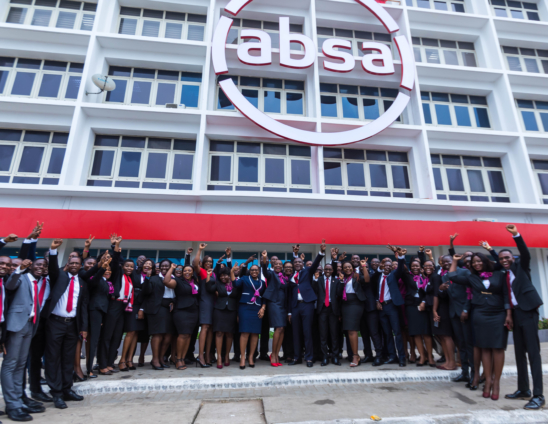
In Ghana, no bank can arguably lay claim to these benefits more than Absa Bank Ghana Limited. The bank celebrated two years of association with the Ghanaian economy only two weeks ago, and yet its importance and function lie in more than a century-old transformative story that continues to be told today. In just two years of assuming the innate Absa identity from the previous Barclays umbrella, the bank has already outdone itself in pushing the boundaries of innovation and creativity and redefining the modern identity of banking.
Today, Absa commands a strong place in Ghana’s economic growth through its financing and restructuring of deals in a diversity of sectors including telecommunications, agriculture, mining, energy, public sector, start-ups and many more. Its image has become a metaphor for efficiency and convenience in a country that is making its way up from a middle-income state into a more progressive economy. Its suite of retail products including contactless cards, prestige and premier banking offerings, mortgage convenience and other structural investments are best in class for the great number of its clients, customers and stakeholders across the country and the sub-region.
Recently the bank commissioned the construction of a new head office in the heart of the capital city, a demonstration of unvarnished commitment to improving upon its long heritage in Ghana by eventually creating a permanent home here. The new head office is to represent the future of the city and will reflect all the trappings of a modern building with strong compliance to environmental conservation, a net-zero agenda and digital innovation. Absa was also the leading financier for the first wholly-owned Ghanaian sea vessel – Flat C - which recently received prominence when it commenced operations on the shores of Ghana to support the oil and gas sector.
At the recent Cocobod loan syndication deal with foreign banks for the burgeoning cocoa sector, Absa was a lead arranger in the structuring and financing of the deal. Again, the bank’s commitment to Ghanaian society cannot be underestimated with initiatives like Ready-to-Work, Employee volunteering, Environmental protection and mentorship, forming the crux of its citizenship agenda.
In a glitzy video on social media to celebrate two years in Ghana, Managing Director, Abena Osei-Poku echoed the point of Absa’s relevance in Ghana:
“It’s been an extraordinary two years in Ghana. We have come this far knowing that it takes two to bring possibilities to life. With your firm support and dedication, we have transformed our offerings to meet your needs. We want to thank you for the confidence and goodwill you have constantly shown to us. We don't take that lightly at all.”
True. The essence of a bank is partnerships and collaboration. The customers and clients of any financial organisation are the reason it exists. Abena’s comments drive home the point that banks need the people – the relationships – to survive. It is a social construct that is quid pro quo. It takes two to bring possibilities to life (the theme of its second anniversary) and surely, Absa’s second year of relevance in Ghana, is a testament to that.
Banking is a lucrative component of modern capitalism and thanks to Absa, it has become a mobility platform for the diversity of its clientele and customers in Ghana.
Latest Stories
-
GPL 2025/26: Dreams FC stage stunning comeback to hammer Eleven Wonders
2 hours -
Livestream: The Probe examines Kumasi’s looming water crisis
2 hours -
MTN Ghana gears up to lead Africa’s AI revolution
2 hours -
Philanthropist Alhaji FuZak donates Da’wah bus to Ambariya Sunni community
2 hours -
GUTA calls for suspension of Publican AI system over trade disruptions
2 hours -
TTAG raises alarm over proposed recruitment of 7,000 teachers, demands national posting roadmap
2 hours -
Civilians feared killed after reports of air strike on Nigerian market
3 hours -
Bishop Simon Kofi Appiah installed as new Jasikan Diocese Bishop
3 hours -
Trump’s Strait of Hormuz blockade threat raises risks and leaves predicaments unchanged
3 hours -
US Court backs extradition of former MASLOC CEO Sedina Tamakloe-Attionu to Ghana
3 hours -
Seven arrested as NAIMOS dismantles illegal mining camp, seizes firearms at Boin River
3 hours -
Fire erupts at Madina Ritz Junction, destroys multiple wooden structures and containers
3 hours -
Daniel-Kofi Kyereh returns from long-term injury, registers assist for Freiburg U23
3 hours -
Knifeman calling himself ‘Lucifer’ slashes three at NYC’s Grand Central
4 hours -
Brands are built from within to without
4 hours