

Audio By Carbonatix
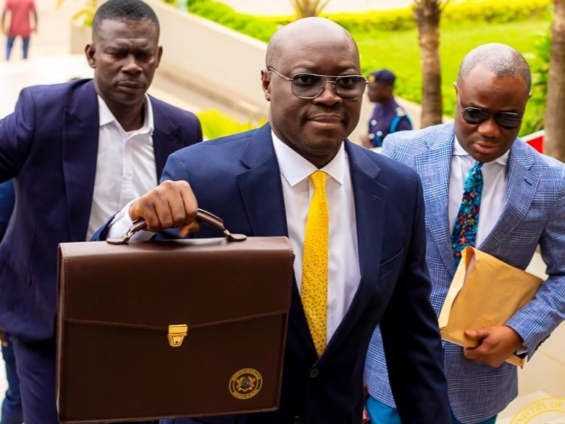
Finance Minister Dr. Cassiel Ato Forson has announced a series of tax reforms under the 2026 Budget aimed at creating a fairer, simpler, and more business-friendly fiscal system.
Presenting the budget to Parliament, Dr Forson said the reforms mark a turning point in Ghana’s tax administration and are designed to make compliance easier for businesses while strengthening domestic revenue mobilisation.
“This is not just a tax reform. It is a step toward a more just, predictable, and business-friendly economy,” Dr. Forson stated. “It honours our pledge to lighten the load on honest taxpayers while building a stronger foundation for national development.”
Among the measures, government has abolished the COVID-19 Health Recovery Levy, reduced the effective VAT rate from 21.9 percent to 20 percent, and raised the VAT registration threshold from GH¢200,000 to GH¢750,000 to ease the burden on small and medium enterprises.
These steps, Dr Forson explained, will return about GH¢5.7 billion to businesses and households and enhance Ghana’s competitiveness.
In addition, VAT on mineral exploration and reconnaissance has been scrapped to encourage new investments, while the zero-rating for locally manufactured textiles has been extended to 2028 to protect local jobs.
The government will also introduce digital VAT monitoring systems, fiscal electronic devices, and a VAT reward scheme to improve compliance and transparency.
Beyond VAT, the Ministry of Finance will undertake a comprehensive review of key tax laws, including the Income Tax Act, the Customs Act, and the Excise Duty Act, to align them with international standards.
Dr Forson said these reviews will simplify compliance, promote equity, and strengthen investor confidence.
“We must move from patchwork reforms to a coherent, modern framework,” he noted. “Our goal is to ensure Ghana’s tax system keeps pace with changing business realities, protects our tax base, and rewards compliance.”
The Finance Minister also indicated that new systems will be deployed at the ports to curb smuggling, under-invoicing, and misclassification.
These measures are expected to close long-standing revenue leakages and improve customs efficiency.
“Through these reforms, we are not merely raising revenue,” Dr Forson emphasised. “We are rebuilding trust between citizens and the state, ensuring that every cedi collected is used to build the Ghana we want.”
The 2026 tax reform package forms a key part of the government’s fiscal consolidation agenda, designed to sustain macroeconomic stability while encouraging private sector growth and job creation.
Latest Stories
-
GhIG pushes for legislation to regulate geoscientists’ activities
5 minutes -
Mfantsipim @150: Ace Anan Ankomah leads project to preserve school’s musical heritage
9 minutes -
Gov’t launches rCOMSDEP in Ahanta West, Mpohor Fiase to promote responsible community mining
10 minutes -
AI is forcing professionals to rethink how they deliver value – Hubtel CEO
13 minutes -
Daily Insight for CEOs: Strengthening the CEO’s Leadership Legacy
14 minutes -
Jimmy Aglah’s ‘When the River Testified’ approved by NaCCA as Supplementary Reader
23 minutes -
Hubtel willing to contribute to Ghana’s proposed AI fund – CEO
27 minutes -
Nkrumah family pays tribute to Gamal, says he died after prolonged illness
37 minutes -
Police arrest eight suspects in anti-narcotics operation at Okaishie Drug Lane
48 minutes -
Former Krowor chairman pledges grassroots empowerment in NDC regional chairmanship bid
50 minutes -
GES recommends reposting of Obuasi SHTS headmaster after August 2026 campus riot
53 minutes -
Rocky Dawuni celebrates King Ayisoba for taking traditional music global
1 hour -
Ghana targets $5bn in annual economic gains from AI – Sam George
1 hour -
From childhood dreams to future careers: Ecobank’s Big Pitch seeks to promote early savings and investment
1 hour -
Public office demands make party work difficult for NDC appointees – Mahdi Gibril
1 hour