

Audio By Carbonatix
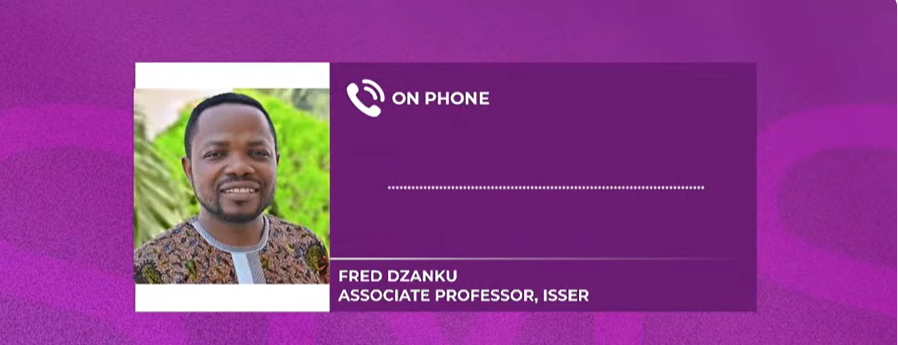
Development economist Fred Dzanku has described the intense competition for security service jobs in Ghana as a reflection of deeper structural weaknesses in the economy rather than merely a recruitment issue.
Speaking on the Super Morning Show on Joy FM on Thursday, 12 March, Prof Dzanku highlighted the huge gap between the number of applicants and available jobs.
“It’s pathetic to say the least, because we know there’s a general problem of youth unemployment across the continent of Africa. And Ghana is no exception. And we need to step back a bit,” he said.
He criticised what he described as the country’s tendency to respond to problems only when they become urgent rather than addressing their root causes.
“I always say that we like to fight fire as a country. We see a problem, and then we talk about it a little bit,t and then we go back to sleep,” Prof Dzanku added.
Using data to illustrate the structural challenges, he noted that manufacturing should be the main driver of youth employment, yet its contribution to Gross Domestic Product (GDP) remains very low.
“As a country, our manufacturing value-added share of our GDP should be rising because that is where you expect to generate the jobs for the youth. As I speak to you, our manufacturing value-added share of our GDP is less than 10%. So where are the jobs going to come from? The jobs are not going to be coming from the other sectors of our economy as much as they would from manufacturing,” he explained.
Prof Dzanku linked these economic realities to the ongoing recruitment into the country’s security services, where the Interior Minister, Muntaka Mohammed-Mubarak, announced that only 5,000 applicants would be recruited in the first phase due to fiscal constraints.
“So what we are seeing — 5,000 jobs and 500,000 people chasing them — is a fundamental definition of how our economy is structured and how our economy is working. That is the basis of the problem. The problem is that we are not generating the jobs in the sectors that should be generating the jobs, let alone talk about even the decency of the jobs that are being turned out,” he said.
The Interior Minister had earlier explained during a press conference at Parliament of Ghana that the recruitment process into the Ghana Police Service, Ghana Prisons Service, Ghana Immigration Service, and the Ghana National Fire Service mainly involves body selection and documentation, with the limited vacancies dictated by fiscal realities.
Latest Stories
-
Church of Pentecost supports over 2,000 BECE candidates in Obuasi with career guidance seminar
12 minutes -
Brandon Asante and Coventry all but promoted to Premier League despite Sheffield Wednesday draw
34 minutes -
GPL 2025/26: Late Kwartemaa strike downs Hearts in Tema
40 minutes -
Ghana Faces Sierra Leone Moment as Prosecutorial Powers come under strain
50 minutes -
Don’t consume fish or seafood from Tema Shipyard until further notice – FDA warns
55 minutes -
Why volunteering might be Africa’s most underrated career accelerator
1 hour -
ActionAid Ghana raises concern over gender gaps in Feed Ghana Programme
1 hour -
Windstorm wreaks havoc in Gushegu, displacing nearly 2,000 residents and damaging schools
1 hour -
Friends of Bridget Bonnie Marks her 35th birthday with donation to Kasseh Model Health Centre
2 hours -
From Ekumfi Kokodo to the Pulpit Stage: Essi Donkor’s gospel journey takes shape
2 hours -
Landfilling waste management creates no value, it’s an economic waste
2 hours -
Photos: Speaker Bagbin Commissions MPs constituency office under parliamentary decentralisation programme
3 hours -
Black Stars technical advisor Winfried Schäfer sacked as GFA shakes up backroom staff
3 hours -
Wenchi water project almost complete, critical to gov’t agenda – GWL MD
3 hours -
Anti-LGBTQ+ bill not part of government’s legislative agenda – Inusah Fuseini
3 hours