

Audio By Carbonatix
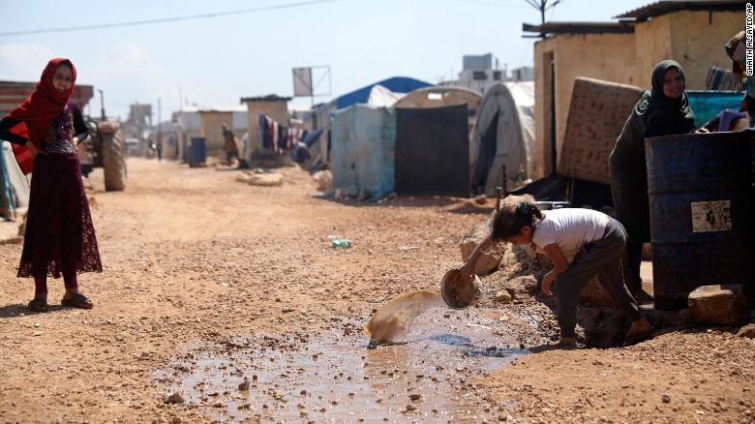
The world is facing multiple famines of "biblical proportions" in just a matter of months, the UN has said, warning that the coronavirus pandemic will push an additional 130 million people to the brink of starvation.
Famines could take hold in "about three dozen countries" in a worst-case scenario, the executive director of the World Food Programme (WFP) said in a stark address on Tuesday. Ten of those countries already have more than 1 million people on the verge of starvation, he said.
He cited conflict, an economic recession, a decline in aid and a collapse in oil prices as factors likely to lead to vast food shortages, and urged swift action to avert disaster.
"While dealing with a Covid-19 pandemic, we are also on the brink of a hunger pandemic," David Beasley told the UN's security council. "There is also a real danger that more people could potentially die from the economic impact of Covid-19 than from the virus itself."
The WFP had already warned that 2020 would be a devastating year for numerous countries ravaged by poverty or war, with 135 million people facing crisis levels of hunger or worse. Their updated projections nearly double that number.
When added to the 821 million people already chronically hungry, that scenario would push more than 1 billion people into dire situations.
The agency identified 55 countries most at risk of being plunged into famine in its annual report on food crises, released this week, warning that their fragile healthcare systems will be unable to cope with the impact of the virus.
"These countries may face an excruciating trade-off between saving lives or livelihoods or, in a worst-case scenario, saving people from the coronavirus to have them die from hunger," the report said.
Ten countries were singled out as particularly at-risk, after housing the worst food crises last year; Yemen, the Democratic Republic of the Congo, Afghanistan, Venezuela, Ethiopia, South Sudan, Sudan, Syria, Nigeria and Haiti.
Most of those countries have so far been spared the worst of the coronavirus pandemic, with the epicenter moving from China to Europe to North America, but the state of their healthcare institutions means even relatively small outbreaks could be devastating. To date, more than 2.5 million cases of the coronavirus have been confirmed globally.
'We do not have time on our side'
Even before the outbreak of the coronavirus, food supplies in some of the most vulnerable regions in the world were being directly affected by impacts such as crop failures and locust swarms.
Exceptional drought followed by extremely heavy rainfall markedly decreased the seasonal crop yield in the Horn of Africa during 2019. These irregular weather and climate patterns also contributed to the worst desert locust invasion in 25 years, which further threatened the crop supply in the region.
Meanwhile, the combination of conflict, climate-related shocks and crop pests had resulted in the world's worst food crisis in Yemen, according to the agency.
The new, coronavirus-related factors affecting each region were myriad. "Lockdowns and economic recession are expected to lead to a major loss of income among the working poor," Beasley said. Overseas remittances will also drop sharply, affecting countries such as Haiti, Nepal, and Somalia, for example.
"The loss of tourism receipts will damage countries such as Ethiopia (and) the collapsing oil prices in lower-income countries like South Sudan will have an impact significantly," he added.
He appealed to UN member states to act now, telling them: "There are no famines yet. But I must warn you that if we don't prepare and act now -- to secure access, avoid funding shortfalls and disruptions to trade -- we could be facing multiple famines of biblical proportions within a short few months.
"The truth is, we do not have time on our side, so let's act wisely -- and let's act fast," he added. "I do believe that with our expertise and partnerships, we can bring together the teams and the programs necessary to make certain the Covid-19 pandemic does not become a humanitarian and food crisis catastrophe."
Latest Stories
-
Free rabies vaccination campaign targets 25,000 dogs and cats nationwide
4 minutes -
Ghana needs a system to track child protection funding to where risks are highest – ARK Foundation
7 minutes -
AI may not replace humans, but workers who fail to adapt could lose jobs – ALX Enterprise
9 minutes -
Gideon Boako: Bretton Woods is fraying; Ghana has built a bridge
10 minutes -
Ghana’s child protection system failing children despite laws and policies – ARK Foundation
11 minutes -
‘Future of Black Queens is safe for many years’ – Black Princesses boss Charles Sampson
14 minutes -
Titus Glover questions Laboma Beach demolition, proposes widening Kpeshie Lagoon outlet
15 minutes -
NACOC arrests 3 suspects linked to Dutch fugitive drug kingpin
36 minutes -
Workers must complement AI skills with professional expertise to remain relevant – ALX Enterprise
48 minutes -
Companies that delay AI adoption risk losing market opportunities – ALX Enterprise
1 hour -
‘The future is bright’ – Gyan backs Black Princesses squad after U-20 World Cup exit
1 hour -
We should treat AI as an opportunity rather than a threat – ALX Enterprise
1 hour -
Malta and Ghana set sights on practical AI partnership
1 hour -
2026 U-20 WWC: ‘Not all wishes come true’ – Gyan inspires Black Princesses after elimination
1 hour -
‘I am not a magician’ – Zdravko Logarušić on Nations FC exit from Africa
2 hours