

Audio By Carbonatix
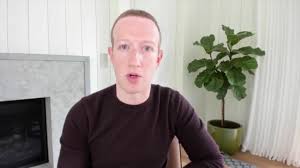
Facebook founder Mark Zuckerberg has told the BBC that it had and would remove any content likely to result in "immediate and imminent harm" to users.
"Even if something isn't going to lead to imminent physical harm, we don't want misinformation to be the content that is going viral," he said.
It removed Brazilian president Jair Bolsonaro's claim that scientists had "proved" there was a coronavirus cure.
This was removed because it was "obviously" not true, he said.
He also said that Facebook had removed content from groups claiming that the rollout of the 5G digital network was a cause of the spread of the virus and in some cases encouraged those who believed that to damage the networks physical infrastructure.
Facebook recently removed content from former broadcaster and conspiracy theorist David Icke for "repeatedly violating our policies on harmful misinformation".
Mr Icke had suggested that 5G mobile phone networks are linked to the spread of the virus and in another video he suggested a Jewish group was behind the virus.
Mr Zuckerberg said: "We work with independent fact checkers. Since the Covid outbreak, they have issued 7,500 notices of misinformation which has led to us issuing 50 million warning labels on posts.
"We know these are effective because 95% of the time, users don't click through to the content with a warning label."
However, Facebook has insisted that unless there was the prospect of real imminent harm, then the company would and should allow what he called the "widest possible aperture" for freedom of expression on the internet.
'Arms race'
He also told the BBC that preventing electoral interference is an "arms race" against countries such as Russia, Iran and China.
He admitted that the firm was "behind" in the 2016 US presidential election.
In his first UK broadcast interview in five years, he said that Facebook had been unprepared for state-sponsored interference in 2016.
But he added the company was confident it had since learnt its lessons.
Facebook was previously embroiled in a political scandal in which tens of millions of its users' data ended up in the hands of political interest groups including Cambridge Analytica.
However, he said the social media giant, which also owns Whatsapp and Instagram, was now better prepared than other companies, and even governments, to prevent future attempts to influence political outcomes.
"Countries are going to continue to try and interfere and we are going to see issues like that but we have learnt a lot since 2016 and I feel pretty confident that we are going to be able to protect the integrity of the upcoming election".
Company control
Mr Zuckerberg also defended his level of personal control over arguably the world's most powerful media platforms.
Although Facebook is a public company worth nearly $700bn (£574bn), he ultimately exerts total individual control thanks to an ownership structure that gives him a controlling interest even though he owns a small fraction of the shares.
He said it had allowed Facebook to make longer-term strategic decisions which have proved to be correct such as waiting to improve the Facebook experience before launching it on smartphones and not selling out early to rivals.
"If it had been different then we would have sold out to Yahoo years ago and who knows what would have happened then. "
Yahoo is now worth 1/20th as much as Facebook.
Facebook continues to face criticism over its reluctance to describe or define itself as a publisher and thus embrace the kind of editorial responsibility that newspapers and traditional broadcasters are legally bound by.
Coronavirus impact
However, it would be hard to argue that Facebook, WhatsApp and Instagram have not provided billions of people with the kind of connectivity with friends and family that has been important during this global pandemic and the consequent restrictions on movement and freedom.
In fact, after many years of courting controversy and opprobrium, it seems clear that Facebook and Mr Zuckerberg are feeling more confident about their public roles.
If there are any winners out of this public health emergency, digital companies like Facebook, Netflix and Amazon are among them.
However, no one is totally immune to the deep downturn that is already upon us and the evidence for which is confirmed with every new economic release.
Facebook knows that and is one of the reasons it is keen to help small businesses online through this week's launch of a service called Facebook Shops.
It's a mutually beneficial exchange. Those businesses are Facebook's current and future customers. What's good for them is good for Facebook.
Latest Stories
-
Power restoration fault suspected in Kumasi Central Market fire
2 hours -
The 7-foot giant of Ngleshie Amanfro: Seven-foot Ghanaian Ephraim Saawa dreams of joining the national basketball team
3 hours -
Government promises support for Kumasi Central Market fire victims
3 hours -
Vibes The Movie: Big Ghun’s Ghanaian film earns five nominations at 2026 REFFA
4 hours -
MamaCare CEO warns unresolved conflicts among health workers could undermine maternal and neonatal care
4 hours -
Health professionals urged to translate medical knowledge into practice to save mothers
4 hours -
Conflicts among care providers linked to maternal, neonatal deaths – Expert
6 hours -
GIS marks 10th TIME conference, champions improved teaching practices
6 hours -
BRICS Or Balance? What Ghana’s bid really means
6 hours -
GPRTU wants full TRAFFITECH-GH implementation to start in 2027
7 hours -
Mahama announces plans to import electric wheelchairs for PWDs
7 hours -
KGL U17 Colts 2026: Western beat Prempeh Elite Academy to set up final final with Greater Accra Region
7 hours -
Late Solanke strike salvages 10-man Spurs draw at Man United
7 hours -
Gender Ministry to monitor welfare of Nana Akua Addo’s children amid domestic violence case
7 hours -
Benedict Okyere Yeboah: Ghana’s football problem goes beyond sacking a coach
7 hours