


Audio By Carbonatix
As the ads boycott grows, Mark Zuckerberg shows no sign of backing down.
"My guess is that all these advertisers will be back on the platform soon enough" the Facebook chief executive has said.
Campaigners accuse the tech firm of being too slow and reluctant to remove some hateful content.
But Zuckerberg added: "We're not going to change our policies or approach on anything because of a threat to a small percent of our revenue."
The comments were made to Facebook staff at a private meeting last Friday, and were subsequently leaked to the Information news site.
The social network has confirmed they are accurate and also announced a fresh development: its chief executive is to meet the organisers of the boycott - Stop Hate for Profit.
It illustrates the concurrent ways Facebook is dealing with the matter.
The first is to be publicly conciliatory: offer smaller changes and hit home its message that hate has no place on the platform.
The second is to privately play down the impact of the boycott: reassure advertisers and resist any fundamental changes to Facebook's business model.
Balancing act
Yesterday the firm's global affairs chief, Sir Nick Clegg, published an open letter to the ad world.
He attempted to assuage fears the company hadn't done enough to combat hate. Not surprisingly, he didn't echo his boss and added: "You'll be back."
Now, of course companies have different internal- and external-facing messages.
But this one in particular underlines the delicate tightrope that Facebook is trying to tread.
The company is undoubtedly rattled by this boycott. According to a list compiled by its organisers, more than 600 brands are now involved.
This week Facebook sent an email to companies and ad agencies assuring them it was doing all it could to remove hate speech.
"This work is never finished, and we're proud of how our apps can help people come together, learn, and organize against hate and show their solidarity" an email to one ad agency said.
But the boycott isn't hurting Facebook as much as you might think.
In fact, Zuckerberg, in that same employee meeting, called the problem a "reputational and a partner issue" rather than a financial one.
And he has a point. The vast majority of companies are still advertising with Facebook.
Take the UK for example.
These are the top 10 companies that advertised on Facebook last year and how much they spent, according to analytics company Pathmatics:
- Huel, a powdered food-maker (£27m)
- Microsoft (£25m)
- Tesco (£22m)
- Giffgaff (£18m)
- Proctor & Gamble (£18m)
- SumUp Payments (£17m)
- BT (£17m)
- Vodafone (£16m)
- American Express (£15m)
- Just Eat (£15m)
With the exception of Microsoft, all of them still appear to be advertising on Facebook.
And thousands upon thousands of small-to-medium-sized businesses are doing likewise.
Return to Washington
One advertising executive sent me an expletive-riddled text yesterday, dismissing the idea its clients would stop advertising on Facebook.
It's that kind of message that gives Zuckerberg reason to be bullish.
Areeq Chowdhury, from WebRoots Democracy, also believes the companies that have joined the boycott will come back.
"The advertising being offered by these internet giants is unparalleled." he says.
"The level of targeting they can achieve is not matched anywhere else, so I find it hard to believe that a lot of them will stop advertising in the long run."
That seems to be what the market thinks, too.
After a dip in Facebook's share price, it's back to pretty much where it was last week.
So, Facebook's strategy so far seems to be working.
The far greater worry is contagion - for example, if users started to leave Facebook and Instagram in large numbers in response to the boycott. But once again, there's little evidence of that happening.
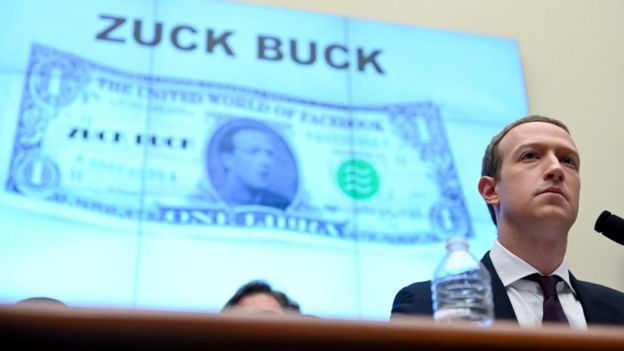
On Wednesday, it was confirmed that Zuckerberg - along with Google's Sundar Pichai, Apple's Tim Cook and Amazon's Jeff Bezos - would testify before Congress in an antitrust hearing later this month.
If the boycott continues to gather force, it could be an uncomfortable encounter, however secure Facebook may feel.
Latest Stories
-
Power restoration fault suspected in Kumasi Central Market fire
2 hours -
The 7-foot giant of Ngleshie Amanfro: Seven-foot Ghanaian Ephraim Saawa dreams of joining the national basketball team
3 hours -
Government promises support for Kumasi Central Market fire victims
3 hours -
Vibes The Movie: Big Ghun’s Ghanaian film earns five nominations at 2026 REFFA
4 hours -
MamaCare CEO warns unresolved conflicts among health workers could undermine maternal and neonatal care
4 hours -
Health professionals urged to translate medical knowledge into practice to save mothers
4 hours -
Conflicts among care providers linked to maternal, neonatal deaths – Expert
6 hours -
GIS marks 10th TIME conference, champions improved teaching practices
6 hours -
BRICS Or Balance? What Ghana’s bid really means
6 hours -
GPRTU wants full TRAFFITECH-GH implementation to start in 2027
7 hours -
Mahama announces plans to import electric wheelchairs for PWDs
7 hours -
KGL U17 Colts 2026: Western beat Prempeh Elite Academy to set up final final with Greater Accra Region
7 hours -
Late Solanke strike salvages 10-man Spurs draw at Man United
7 hours -
Gender Ministry to monitor welfare of Nana Akua Addo’s children amid domestic violence case
7 hours -
Benedict Okyere Yeboah: Ghana’s football problem goes beyond sacking a coach
7 hours