

Audio By Carbonatix
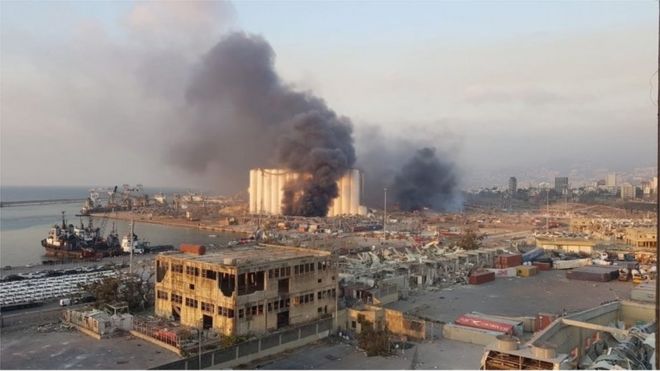
A large blast has hit the Lebanese capital, Beirut, causing widespread damage and injuring many people, officials say.
Reports say the explosion was in the port area of the city, with unconfirmed reports of a second blast. It is not clear what caused them.
Video posted online showed a large mushroom cloud and destroyed buildings.
It comes at a sensitive time, ahead of the verdict in a trial over the killing of ex-PM Rafik Hariri in 2005.
A UN tribunal is due to issue its verdict in the trial of four suspects in the murder by car bomb of Hariri on Friday.
The possible second explosion was reported to be at the Hariri residence in the city.
Lebanon's health minister, Hamad Hasan, has spoken of many injuries and extensive damage.
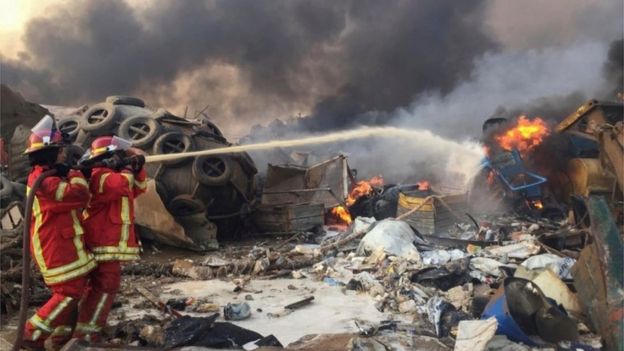
Local media showed people trapped beneath rubble. A witness described the first explosion as deafening. Video footage showed wrecked cars and blast-damaged buildings.
The latest reports come amid political tension in Lebanon, with street demonstrations against the government's handling the worst economic crisis since the 1975-1990 civil war.
There has also been tension on the border with Israel, which said last week that it had thwarted an attempt by Hezbollah to infiltrate Israeli territory.
What's the Hariri case about?
On the morning of 14 February 2005, Rafik Hariri - then an MP who aligned himself with the opposition in parliament - was travelling in a motorcade when the explosion went off in a busy area full of hotels and banks, causing widespread damage.
Mr Hariri had been one of Lebanon's most prominent Sunni politicians and, at the time of his death, had joined calls for Syria to withdraw troops which had been in Lebanon since 1976 following the start of the civil war.
The killing brought tens of thousands of demonstrators on to the streets in protest against the pro-Syrian government, with the finger of blame for the assassination pointed at Lebanon's heavily influential neighbour.
Within two weeks the government resigned and weeks after that, Syria withdrew its forces.
After collecting evidence, the UN and Lebanon set up the Special Tribunal for Lebanon (STL) in The Hague in 2007 to investigate the bombing, and ultimately charged four suspects of the Iranian-backed Hezbollah group with terrorism, murder and attempted murder.
A fifth man linked to the attack, Hezbollah military commander Mustafa Amine Badreddine, was killed in Syria in 2016.
Hezbollah's supporters have dismissed the trial, suggesting that the STL process is not politically neutral.
Latest Stories
-
Trump administration accuses banned media outlets of ‘falsehoods’ ahead of court hearing
2 minutes -
US and Iran hold first talks since June after Trump’s ‘annihilation’ threat at UN
3 minutes -
More than 170,000 respiratory cases recorded in haze-choked Indonesia
8 minutes -
UK to review Chagos Islands deal over lack of US support, Streeting tells BBC
13 minutes -
BoG weighs on rising inflation risks as inflation climbs to 5%
16 minutes -
AFCON 2027Q: Kurt Okraku backs ‘good enough’ Black Stars to fight for Ghana
24 minutes -
Debt financing, expenditure are key risks to liquidity, exchange rate – BoG
27 minutes -
BoG warns of pressure on reserves as GoldBod pauses exports
33 minutes -
No player will intentionally decline national team call-up – Kurt Okraku
41 minutes -
AFCON 2027Q: ‘No player deliberately turned down Ghana’ – Kurt defends injury withdrawals
1 hour -
The Luckiest launches 4th edition of annual promotion with nationwide activations
2 hours -
Ecobank calls for wider access and stronger collaboration on agricultural finance
2 hours -
Agribusinesses need more than loans to reach their full potential – Ecobank
2 hours -
Green finance must deliver measurable benefits to Ghanaian farmers – Ecobank
2 hours -
Today’s front pages: Wednesday, September 23, 2026
3 hours