

Audio By Carbonatix
As 2020 slides into and probably infects 2021, try to take heart in one discomfiting fact: Things are most likely never going "back to normal".
It has become a well-worn phrase our politicians, officials, experts, even family, like to lean on — an ultimate, elusive prize.
Perhaps it's nostalgia for the world of January, a place where daily life more closely resembled our past decades. Perhaps it's a bid to show control, to revert to a time when change was not so universally imposed upon us.
But January is long gone, and it's not coming back. And, psychologists will tell you, that's only bad if you can't come to terms with it.
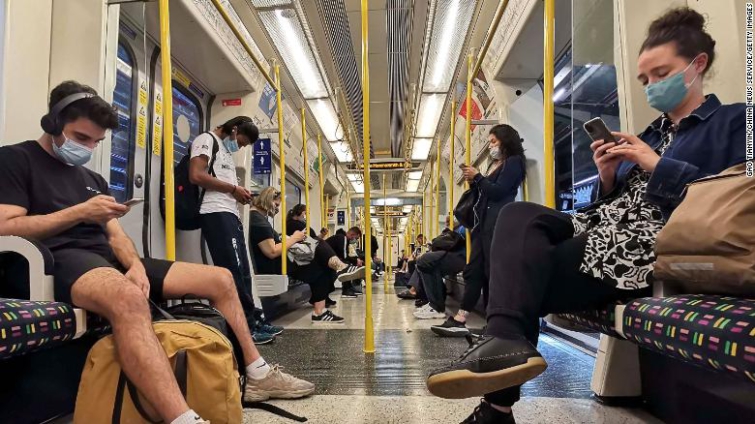
We are slowly learning if this year's changes are permanent. If work — for the lucky among us — will remain from home. If we will visit the grocery store less but spend more. If we will find wearing a mask on the metro to be just part of life. If shaking hands and embracing will become less common. If most of your daily interactions will occur via video conference (rather than in person).
"Five years' change in six months" is a common slogan for the pandemic. The disruption has upended lives in jobs lost and relatives who live alone or perhaps died without saying the right goodbyes.
Yet permanently severing ties with January is not necessarily a bad thing, psychologists say. The danger comes from hankering for normalcy again, rather than getting on with working out how to deal with whatever is ahead.
"Politicians who pretend that 'normal' is just around the corner are fooling themselves or their followers, or perhaps both," said Thomas Davenport, the president's distinguished professor of information technology and management at Babson College in Wellesley, Massachusetts.
"People who suffer tragedies eventually return to their previous happiness level," Davenport said via email.
"But I think that COVID-19 is a little different, because we keep expecting it will end soon. So there is no need to permanently change your attitudes about it."
The human tendency to believe change is temporary and that the future will again resemble the past is often called "normalcy bias."
People who don't adapt to change believe what they remember as "normal" will return, and delay modifying their daily routines or outlook. Those who refuse to wear masks may be guilty of normalcy bias, Davenport said, since they perceive this intrusion into lives as a passing fad they don't need to embrace.
Hardwired to adapt
The brain's circuitry does prefer to survive, however: While part of our minds may be inclined to resist change as we feel disasters are a passing event, another stronger part of our brains embraces the new swiftly.
"Hedonic adaptation" is the elaborate name for why we survive: It's the mind's ability to accept quickly something in your environment that weeks earlier would have stopped you in your tracks. Originally intended to protect humans from predators, it's hardwired — so we do not constantly see all relatively new things as threats and miss the newer, bigger ones.
"When both good and bad things happen, at first you feel intense emotions," said Sonja Lyubomirsky, distinguished professor of psychology at the University of California, Riverside.
"Then you adjust and you go back to baseline. This is much more powerful with positive events. People don't adapt as completely to negative change in their lives."
The benefit of hedonic adaptation is it works in all directions. Changes that alter daily life one month may be as quickly dropped the next when they are no longer relevant.
"It could be to adapting to the mask as the new normal," Lyubomirsky said, before dropping the mask, "and then adapting back to the old normal."
The behaviors that stick are those that are wired into our daily routines, that are "triggered automatically," she said.
"If it's a real habit, it can actually maintain itself. Now we wash our hands more frequently without even thinking. That's something that could definitely stay with us."
It's the same with the previous generation who grew up during the Depression and are still particularly fastidious about not wasting food or anything else. It's a habit that stayed with them.
Yet short-term changes are easily dropped. Lyubomirsky recalled an open-air meeting of academics she attended in Montana this past summer where Covid tests were administered and protocols were maintained.
Within minutes, the attendees' behavior had flipped back to pre-pandemic proximity to each other.
"We all went right back to as though the pandemic wasn't happening," she said.
"Everyone was just kind of gleeful. I didn't even notice I was doing it until later."
Life is essentially a series of changes and adaptation, she said, and the latter is something humans do well. People tend to place more weight on whatever they are feeling in the moment, Lyubomirsky said.
She recalled a vegetarian friend who started eating meat again when the pandemic made it seem pointless. Another friend dyed her hair, without explanation.
"She's like, 'Because f--- it. I'm just going to color my hair blue."
"We overweight it," she said. "It's so wonderful, or it's so awful. But it tends to go back."
Our circuitry tends to override our doomscrolling.
"We're actually more resilient than we think."
As with everything, we will find out just how resilient we are, and the future may seem normal again, however different it is.
Latest Stories
-
COCOBOD settles GH¢162m outstanding debt owed to non-DDEP Cocoa Bill holders
2 minutes -
We are working closely with BoG, other stakeholders in an orderly manner – Zeepay on license revocation
10 minutes -
KMA arrests food vendors over unhygienic practices in renewed Adum sanitation crackdown
13 minutes -
The 91-year-old Argentine journalist covering his 18th World Cup
16 minutes -
Zeepay responds to BoG licence revocation, says it is working towards resolution
19 minutes -
20-year mining lease cap could deter investors – Suame MP warns
27 minutes -
NPP annuls constituency executive elections in Bantama, Afigya Sekyere East and Adansi Asokwa
29 minutes -
Digital Chamber backs BoG’s Zeepay licence revocation, assures public of payment system stability
30 minutes -
Minority stages walkout accusing First Deputy Speaker of bias
36 minutes -
GoldBod rewards NACOC with GH¢12.65m over 2025 gold seizure
49 minutes -
Suame MP John Darko rates NDC government’s fight against galamsey 1/10
52 minutes -
Turn Atewa Forest Reserve into national park to protect it from galamsey – Awula Serwah urges gov’t
54 minutes -
Journalists must pursue truth, not just facts, says Harvard lecturer Prof Christopher Rhodes
54 minutes -
Police arrest 54 suspects and seize large quantity of suspected narcotics in Kumasi crackdown
55 minutes -
Fire destroys bedroom at Kutunse, no casualties recorded
1 hour