

Audio By Carbonatix
The US public will start receiving the Pfizer/BioNTech coronavirus vaccine from Monday after it was authorised for emergency use, officials say.
The first doses of the vaccine were being shipped "across all states" over the weekend, said Gen Gustave Perna, the official in charge of distribution.
The vaccine offers up to 95% protection against Covid-19 and was deemed safe by the Food and Drug Administration (FDA). The FDA said its approval for use was a "significant milestone" in the crisis.
The US agency authorised the emergency use of the Pfizer/BioNTech vaccine on Friday, after coming under intense pressure from the Trump administration to do so.
During a news conference on Saturday, Gen Perna - speaking for the government's vaccination campaign Operation Warp Speed - said doses of the vaccine were being packed into shipping containers for transportation "within the next 24 hours".
"Expect 145 sites across the states to receive the vaccine on Monday, another 425 sites on Tuesday, and the final 66 sites on Wednesday," he said, adding that next week's distribution would complete the initial delivery of the Pfizer/BioNTech vaccine.
Gen Perna told reporters he was "100% confident" that the doses "needed to defeat the enemy Covid" would be transported safely.
He warned, however, that while it had been a week of progress, "we are not done until every American has access to a vaccine".
The Pfizer vaccine has already received regulatory approval in the UK, Canada, Bahrain and Saudi Arabia. Like those countries, the US will give its first doses of the vaccine to the elderly, health workers and emergency crew.
Coronavirus deaths have been rising sharply since November in the US. On Wednesday, the country recorded more than 3,000 deaths - the highest total in a single day anywhere in the world.
What has the FDA said about the vaccine?
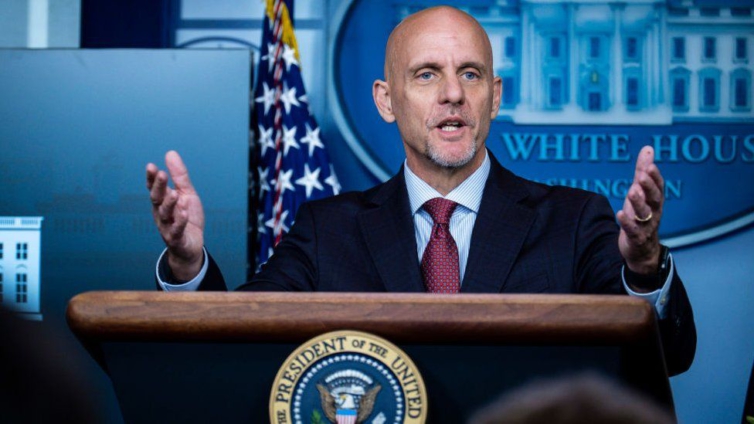
"The FDA's authorisation for emergency use of the first Covid-19 vaccine is a significant milestone in battling this devastating pandemic that has affected so many families in the United States and around the world," the head of the agency, Stephen Hahn, said.
He said the authorisation came after "an open and transparent review process" that ensured the vaccine met the "FDA's rigorous, scientific standards for safety, effectiveness, and manufacturing quality".
On Thursday, medical experts advising the FDA recommended the emergency-use authorisation. A 23-member panel concluded the vaccine's benefits outweighed its risks.
Emergency use, the FDA said, is not the same as full approval, which would require Pfizer to file a separate application to secure.
US media reported that Mr Hahn had earlier been told to approve the vaccine for emergency use by Friday or quit.
Mr Hahn, however, said the reports were "untrue" and stressed that the agency had not compromised safety in its testing.
How does the vaccine work?
The Pfizer/BioNTech vaccine was the first coronavirus jab to show promising results in the latter stages of its testing process.
It is a new type called an mRNA vaccine that uses a tiny fragment of genetic code from the pandemic virus to teach the body how to fight Covid-19 and build immunity.
"The vaccine contains a small piece of the [Covid-19] virus's mRNA that instructs cells in the body to make the virus's distinctive 'spike' protein," the FDA said.
"When a person receives this vaccine, their body produces copies of the spike protein, which does not cause disease, but triggers the immune system to learn to react defensively, producing an immune response against [Covid-19]."
The vaccine is given as two injections, 21 days apart, with the second dose being a booster. Immunity begins to kick in after the first dose but reaches its full effect seven days after the second dose.
Latest Stories
-
Built to Last, Left to Rot: Ghana’s maintenance crisis
2 minutes -
Number of debit cards issued by banks decreased by 11.8% to 5.7m in 2025
22 minutes -
Total mobile money transaction values grew by 50.8% to GH¢4.54trn in 2025
26 minutes -
Private aggregators, not state, will bear local refining costs – GoldBod
26 minutes -
Ablakwa urges African leaders to adopt new leadership paradigm to create opportunities for youth
32 minutes -
Photos: Mahama holds talks with Serbian President in Belgrade
42 minutes -
Local gold refining good for economy but costs must be controlled – Economist
42 minutes -
Keir Starmer announces he is standing down as MP
43 minutes -
One still missing after Grand Canyon floods kill two and prompts rescue efforts
44 minutes -
Mahama Ayariga calls for major overhaul of Ghana’s waste management system
48 minutes -
GoldBod programme contributed just 1.3% to reserves increase – Amin Adam
48 minutes -
Drive to Inspire–Africa equips UESD students with skills for future careers
50 minutes -
Diana Hamilton reveals she experiences stage fright before performances
54 minutes -
Number of ATMs declined by 0.5% to 2,272 in 2024 – BoG
55 minutes -
Look beyond government securities – GVCA tells pension funds
55 minutes