

Audio By Carbonatix
Fossil fuel price instability plus its increasing cost and climate change, as well as efforts to reduce pollution, have led to an unprecedented investment in renewable energy sources in recent times globally.
Ghana, like many other countries, is focused on the integration of renewable energy into the national energy mix to ensure security of energy supply, ensure a cleaner environment, and help mitigate climate change.
Sustainable energy security must therefore be one of the primary concerns if Ghana is interested in governing multi-faceted issue of development. Energy security plays an important role in human empowerment.
Higher energy use enhances production, promotes economic growth, and improves standard of living -all symbols of development which in turn leads to greater energy consumption. In addition, consumption and production of energy also play a major role in several environmental issues such as climate change, depletion of natural resources and air pollution.
Supply security for a country means the country’s ability for efficient generation and production of energy from diversified sources which include renewable e.g. Solar energy.
Now, most of the renewable energy interventions in the country are either being carried out as pilot projects or on short term planning cycle basis.
Thus, no clear integrated roadmap exists for the long-term development and promotion of the different renewable energy resources in the country. To address the related effects of such short-term planning of the overall development of the renewable energy sector, there must be a plan to develop framework for the promotion and development of the country’s rich renewable energy resources for sustainable economic growth, to contribute to improved social life and reduce adverse climate change effects.
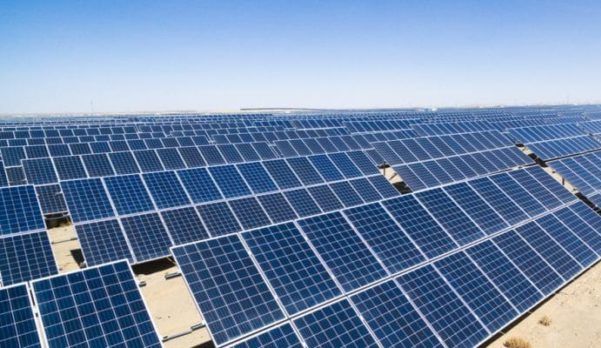
Solar energy it’s an efficient tool to support Ghana’s energy supply and sustainability. Investing in Solar power seems to be a promising solution for especially rural electrification in Ghana.
Small-scale Solar plants appear to be most appropriate because they are suitable to the needs of rural communities; most of the components are low-cost in Africa and Chinese markets.
And there are available qualified local human resources to build the system.
For example, Black Spider Ghana has been providing solar energy technology to residential homes, farms, hospitals, industrial and commercial buildings in both the rural and urban areas in Ghana for more than four years now.
Ghana can learn from Saudi Arabia where Solar power has been incredibly popular because of the height of the day, most energy is used for heating and cooling, that is generated from solar power.
Its much more effective and affordable and sensible way to power heating and cooling than to burn oil, which can be preserved and use in a more strategic way. This has been a positive benefit for Saudi Arabia and Ghana can do the same.
At the end of 2015, more than 10 MWp of stand-alone solar PV systems have been installed in Ghana. These are being used for lighting, water pumping, powering of computers for the teaching and learning of ICT and vaccine refrigeration across the country. Over 70,000 solar lanterns have been disseminated.
Stand-alone solar PV systems are market driven in Ghana, spurred by government and donor supported community projects in the past. There has been several of these government projects, but a few cases stand out for enjoying several years of success. Notable community cases implemented include the Weichau project, Isofoton project – funded by the Spanish government, Renewable Energy Services Project (RESPRO) – funded by UNDP and GEF, and the ARB Apex Bank project.
The objectives of these projects were to provide lighting solutions and other services to these communities, and many of them worked successfully until grid extension reached the community.
All these projects were based on the fee-for-service model and community ownership was key to their success.
Latest Stories
-
AU Chairperson reaffirms commitment to global African unity
5 minutes -
Air Pollution in Accra is not random; it is a burden carried by the poor
12 minutes -
GEXIM Bank grows loan portfolio to GH¢1.56bn as equity hits GH¢2.1bn in 2025 – SIGA Report
30 minutes -
Ghana Shippers’ Authority grows surplus by 272% as assets reach GH¢979.92m
37 minutes -
Government designates 13 blocked-out areas for small-scale mining to curb illegal mining
38 minutes -
Number of advertised jobs increased significantly in half-year 2026 – BoG
39 minutes -
GAFM demands retraction from GTEC over ‘unrecognised universities’ listing
45 minutes -
Saltpond residents renew call for return of Founders’ Day celebrations
48 minutes -
Consumer spending records mixed performance in 5-months of 2026, but manufacturing activities improved – BoG
51 minutes -
Passenger arrivals at airport increased by 3.7% in 5 months of 2026
56 minutes -
NSMQ 2026: St. Augustine’s College reach third straight semifinal after seeing off Aburi Girls, St. John’s Grammar
59 minutes -
Re: Mahama backs crackdown on airport workers begging visitors for tips
60 minutes -
Photos: 6th Akwasidae Festival in the U celebrates Asante heritage and Ghanaian unity
1 hour -
Ghana, India explore armwrestling collaboration as Golden Arms prepare for World Armwrestling Championship in New Delhi
1 hour -
What Is Wrong With Us: We sign off on value for money before we have even defined it
1 hour