

Audio By Carbonatix
India’s Covid-19 cases have soared 13-fold in barely two months, a vicious second wave propelled by open disregard for safety protocols in much of the vast country.
The country on Friday reported 131,968 new Covid-19 infections, a record increase for a third-straight day, data from the health ministry showed. Deaths rose by 780 to a total of 167,642.
With an overall tally at 13.06 million, India’s overall caseload was the third-highest globally, behind the United States and Brazil.
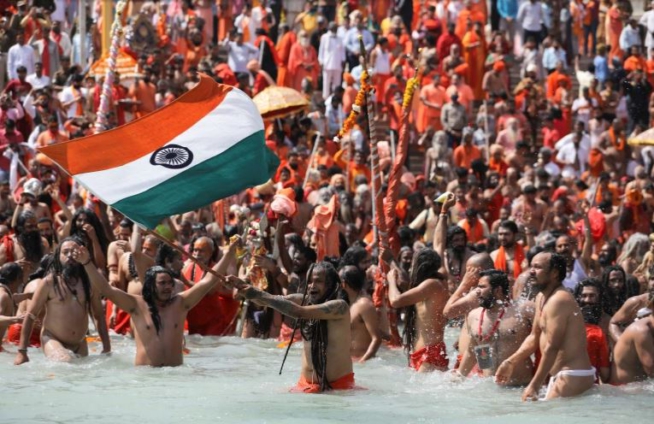
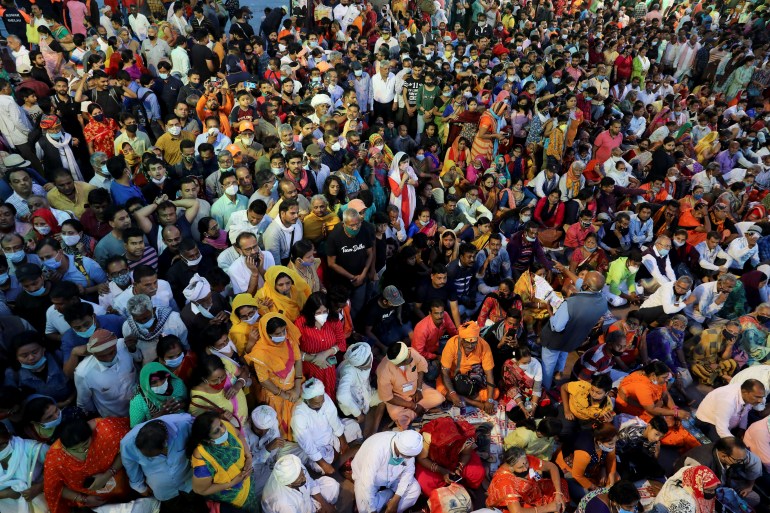
Election rallies led by Prime Minister Narendra Modi, main opposition leader Rahul Gandhi and other important political figures, as well as crowded festivals and religious gatherings have contributed to the record resurgence of the new coronavirus

After quelling the first surge late last year, India’s leaders let down their guard. Allowing or even encouraging dangerous behaviour, they underestimated the virus, reopening the economy too fast and too broadly, experts say.
Days after the federal health minister declared India’s Covid-19 outbreak contained in late January, Mumbai reopened its huge suburban train network and authorities let tens of thousands of visitors into stadiums for international cricket matches.
Many of the South Asian nation’s 1.35 billion people ignored masks and social distancing, while politicians including Modi and Home Minister Amit Shah greeted hundreds of thousands of mostly maskless supporters at election rallies.

Political parties have largely flouted Covid-19 rules during campaigns for multi-phase elections in four big states and one federal territory that started last month.
“Political leaders are themselves responsible” for the resurgence by allowing the packed rallies, said Dr Subhash Salunke, a former World Health Organisation official who advises the worst-hit state, Maharashtra. “The upward trend is going to be there for another couple of weeks.”
Health Minister Harsh Vardhan told officials of 11 of the worst-hit states this week that “people largely gave up on COVID-appropriate behaviour, became very careless” as activity resumed. ADVERTISING
“There have been elections, religious gatherings, reopening of offices, lots of people travelling, attending social functions, not following rules, little mask-wearing in functions like weddings, even on crowded buses and trains,” he told a video conference.
But Vardhan himself has faced criticism for tweeting dozens of images and videos of party rallies.
Authorities have refused to call off a weeks-long Hindu festival, held once every 12 years on the banks of the Ganga river in the northern state of Uttarakhand.
A successfully run Kumbh Mela or Pitcher festival, which is expected to draw millions of devotees, is seen as crucial for the campaign of Modi’s Hindu nationalist party in the state, which votes next year.
When daily infections fell below 10,000 in early February, some experts predicted India would see only a modest second wave at most.
“We were really premature to celebrate,” said University of Michigan epidemiologist Bhramar Mukherjee.
“This is a lesson,” said Mukherjee, who leads a team of researchers modelling the trajectory of India’s outbreak. “The really treacherous thing about this virus is how silently it casts its footsteps. By the time you see the cases and deaths, the damage is done.”
With 13.6 million cases, India is just behind Brazil and well below the US, which has recorded more than 30 million infections.
India’s COVID-19 deaths are above 166,000, although its death rate is one of the lowest in the world, partly because of its relatively young population.
Authorities have imposed some curbs on movement but federal ministers and industrialists have advised against another national lockdown. Last year’s curbs thrashed the economy and threw millions of poor people out of jobs.
Instead, an increasing number of states are imposing local curbs, including night curfews in mega-cities such as New Delhi and Mumbai.
New Zealand on Thursday suspended entry for all travellers from India, including its own citizens, for about two weeks.
Shashank Tripathi, a professor at the Centre for Infectious Disease Research at the Indian Institute of Science in Bengaluru, said that even if most people are eventually exposed to the virus, “there is no guarantee that it will not come back and infect you again.”
“The lesson is the same for any country.”
Latest Stories
-
APL says GoldBod terminated US$1bn Goldstream deal over failure to meet obligations
3 minutes -
Daily Insight for CEOs: Making better decisions under pressure
4 minutes -
Weta rice farmers seek urgent support after floods destroy crops
5 minutes -
Mahama commits GH¢200m in 2027 Budget to complete Police Hospital expansion
8 minutes -
Standard Chartered Bank delivers strong returns and sustainable shareholder value
19 minutes -
Akufo-Addo’s role in the artificial cedi stability is indisputable — Facts do not bend to political convenience
22 minutes -
Breaking Bad actor RJ Mitte dies aged 34
29 minutes -
Wontumi pleads not guilty in GH¢30m Exim Bank loan case
34 minutes -
Beyond the Flyer: Awareness without screening is not enough
40 minutes -
Bekwai MP donates GH¢100,000 to hospital for specialist equipment
48 minutes -
Van Vicker sues Lil Win for defamation, demands GH¢10m
53 minutes -
FIFA/ FIBA agency Pep Sports moves to admit Ghana’s 7-Foot Basketball talent to its Ultra-Modern Sports campus after MyJoyOnline report
55 minutes -
GAUA strike disrupts academic plans at University of Ghana as students, parents express frustration
60 minutes -
Dad’s Army/African Polistas crowned champions of 2026 Accra Polo Club Trustees’ Cup
1 hour -
Mahama approves Integrated Basic Education Model, with funding expected in 2027 under GETFund formula
1 hour