

Audio By Carbonatix
The sale of live wild mammals at food markets should be suspended as an emergency measure, the World Health Organisation (WHO) has said.
The statement comes after a WHO team visited Wuhan in China to investigate the origins of Covid-19.
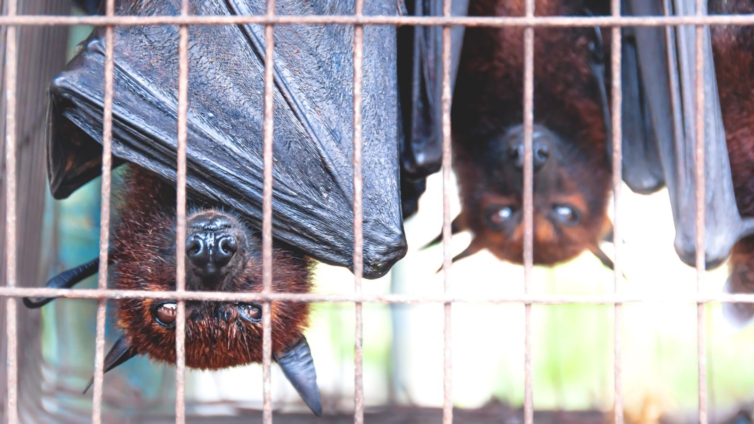
The most likely scenario is that the virus originated in bats, was spread to another unidentified animal, and then passed on to humans, a WHO report said in March.
The organisation said in a separate report on Tuesday that animals, "particularly wild animals", are the source of more than 70% of emerging infectious diseases in humans.
They added many of these are caused by novel viruses - a virus that has not previously been recorded.
The report states: "Wild mammals, in particular, pose a risk for the emergence of new diseases. They come into markets without any way to check if they carry dangerous viruses.
"There is a risk of direct transmission to humans from coming into contact with the saliva, blood, urine, mucus, faeces, or other body fluids of an infected animal, and an additional risk of picking up the infection from contact with areas where animals are housed in markets or objects or surfaces that could have been contaminated with such viruses."
The WHO said "traditional markets play a central role in providing food and livelihoods " around the world.
It added that banning the sale of live wild animals would help to protect the health of both shoppers and workers.
The closest-related viruses to Covid-19 have been found in bats in southwest China.
The intermediate host is more elusive: mink, pangolins, rabbits, raccoon dogs and domesticated cats have all been cited as a possibility.
The WHO team said that a theory the virus was leaked from a lab was "extremely unlikely" but it has not been ruled out.
The call for a ban on the sale of wild animals comes as the WHO said the global coronavirus pandemic is at a "critical point".
It added that people need a "reality check" as restrictions are eased.
Dr Maria van Kerkhove, head of the WHO's technical response, told a news conference vaccinations alone are not enough to combat Covid-19.
Coronavirus restrictions were eased in parts of the UK on Monday, with shoppers returning to high streets and drinkers visiting pub gardens in England, and non-essential retailers reopening in Wales.
Dr van Kerkhove, speaking on Monday afternoon, urged caution, saying: "We need headlines around these public health and social measures, we need headlines around the tools that we have right now that can prevent infections and save lives.
"We are in a critical point of the pandemic right now, the trajectory of this pandemic is growing."
Latest Stories
-
GACL to hold full-scale emergency simulation exercise on October 15
5 minutes -
327 entries submitted for 30th GJA Media Awards
19 minutes -
Mahama proposes rent-to-own scheme for unfinished houses
21 minutes -
Mahama wants banks to introduce affordable housing loans within six months
22 minutes -
Photos from National Conference on Housing Finance
25 minutes -
Italy, Ghana unite 40 artists for ‘Beyond Creation’ exhibition at Accra Art Centre
44 minutes -
Premature to call for Sports Minister’s removal while CID probe is ongoing – Ernest Norgbey
1 hour -
NPP mourns Samuel Arthur Odoi-Sykes
1 hour -
Stay out of World Cup visa probe to avoid interfering with CID investigations – Ernest Norgbey to politicians
2 hours -
Bono East Minister inspects ‘Big Push’ roads; contractor on Tankor-Fiema-Busunya road ahead of schedule
2 hours -
Scrutiny is not disloyalty – Chief of Staff defends serious journalism at 30th GJA Awards launch
2 hours -
Abuse case: Nana Akua’s husband Harold unable to appear in court after hospital admission – Police
2 hours -
Mahmud Kabore picks NDC Ashanti Regional Communication Officer nomination forms
2 hours -
KNUST Career Services pioneer Selina Doe Angmor named among 2026 40 Under 40 honourees
2 hours -
Nana Akua domestic abuse case: Police to arraign husband after hospital discharge
2 hours