

Audio By Carbonatix
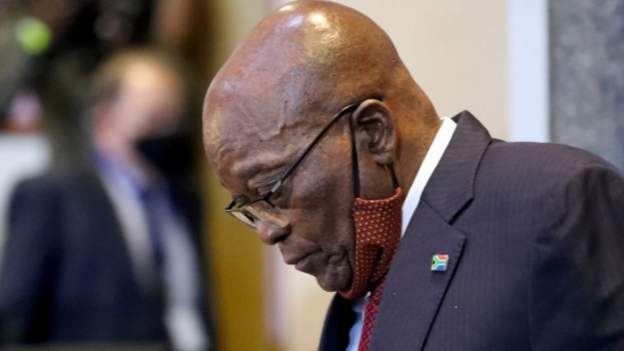
Former UN senior governance advisor, Prof. Baffuor Agyemang-Dua has lauded the South African judiciary for sentencing its former president, Jacob Zuma.
According to him, institutions in Africa have not been strong; hence the action depicts the court's power, and it is his wish all African countries will emulate the same.
“In the case of South Africa, I am impressed by the fact that the court has insisted on prosecuting the former president. It indicates perhaps the strength of the judiciary which of course will be shown in its independence in carrying out its responsibilities,” he said.
The former South African president was sentenced to 15 months in jail by the highest court on Tuesday after it found him guilty of contempt for defying its order to appear at an inquiry into corruption while he was president.
Commenting on Tuesday morning's sentencing, Prof. Agyemang-Dua told JoyNews that the action will also serve as a caution to leaders going forward.
“I think it gives a very strong, positive signal that leaders should begin to know that the fact that they become presidents or heads of state, that fact do not prevent them from accounting to the people, especially when it comes to corruption.”
According to him, leaders in most African countries rides on their past glory because “we don’t have a strong judiciary, we don’t have strong government institutions and therefore, even when they are out of power, former leaders are still regarded to be special and institutions wouldn’t want to touch them and that in itself is a problem.”
He, therefore, said “we need to have stronger institutions managed by independent-minded people."
“There’s a difference between having the institutions and having those appointed to run that institution having the courage to execute their mandate.”
He, however, noted that in most cases, the necessary institutions for good governance are in place, “yet the people that are appointed to head these institutions are simply not functioning, they don’t function, for all kinds of reasons.”
Prof Agyeman-Dua hopes other anti-corruption campaigners in other countries will take a cue from this and “begin to press on their own leaders in their various countries; this is the way we should go.”
He cited that, in Ghana, law enforcement has become a problem in the country because “we do not want to sanctions wrongdoers, even at times, wrongdoers get glorified than the victims of these wrongdoers.”
Latest Stories
-
Several injured as Saudi capital airport reportedly hit again
1 minute -
Christa Pike discharged from hospital and returned to prison, her lawyers say
4 minutes -
Ghana’s BRICS move requires clear strategy to manage risks – Godfred Bokpin
2 hours -
Pay teachers realistic income – Duncan Amoah to gov’t
2 hours -
Bechem to become chicken capital of Ghana – Mahama projects
2 hours -
Gov’t targets recruitment of 16,500 health professionals in 2026
2 hours -
Two-week strike will not derail academic calendar – GNAT President
3 hours -
Headmaster detained after BBC investigation into alleged sexual abuse of students
3 hours -
GNAT pushes for clear implementation procedures of teachers’ conditions of service
3 hours -
Recurrent strikes threaten quality of education and academic calendars – Prof Bokpin
3 hours -
‘Cockroach’ group leaders among hundreds detained in Delhi protest
3 hours -
Don’t let speed of information become your judgement – CJ tells new lawyers
4 hours -
World Cup visa scandal: People have leveraged public office to facilitate fraud – Senyo Hosi
4 hours -
Glut! Farmers count losses as prices crash, customers happy
5 hours -
GSA postpones auction of unserviceable vehicles
5 hours