

Audio By Carbonatix
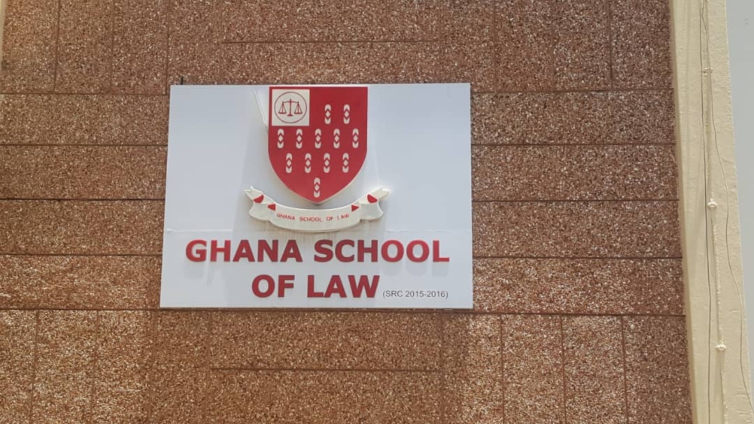
To all our friends preparing for the Ghana School of Law entrance exam next Tuesday, August 24, 2021, we have you in our thoughts. So give it your best shot.
Here are a few tips you may find useful:
1. Understand and know what the question requires of you in substance and form. Form and substance are equally important. For example, if the question says write a memo, write a memo, not an essay. The marking scheme would allocate marks for form and substance. Pay attention.
2. If you’re required to write an essay, it would be in your interest to summarise the key points in about 4/5 lines as part of your introduction. Eg. In this essay, I shall address the issue of XYZ. In doing so, I shall argue that (i)Q, (ii)R, (iii)S, (iv)T. Remember, thousands are sitting for this paper. Examiners may not have the time to go through your script fully if you start beating about the bush. They can smell bullshit from afar. First impressions matter!
3. Handling 'Case flight': Every law student knows what ‘case flight’ is; when you’re unable to recall the essential details of a case during an exam. This happens to almost all of us. If you forget the title of relevant case law and other essential details, please write the principle. It's in your interest to state and explains the principle, even when you may not recall the case title. One way of doing this is to couch your authority this way: The courts have held that XYZ... Write that and move on... don't sweat it. The examiner would recognise that knowledge of the law. Caution: Don't make it a habit in the exam hall!
4. Have a conclusion, always. Your conclusion may be a comment on the current position of the law, a suggestion for amendment of a prevailing law (e.g. statute) given an identifiable gap, etc. Even if it's 2 sentences, write it.
5. In your own interest, please do not go into the exam hall without knowing the trending socio-economic, political or cultural issues in Ghana today and the applicable law. If you've been following the news/news analysis in the media, participating in webinars such as the 'Law in Crisis series' organised by the University of Ghana Faculty of Law, you'd know what they are. Also, if you’re following the right legal policy experts and legal commentators such as Prof H. Kwasi Prempeh, Prof Stephen Kwaku Asare (‘Kwaku Azar’) or Mawuse Oliver Barker Vormawor (‘Barker H Vogues’) and others on social media, you should be fine.
6. Answering problem questions: At the analysis stage, restate the issue you've identified earlier in your answer and proceed to do your analysis. Analysis: Facts + Law =Conclusion.
7. Feel free to reach out to your seniors if you have any questions. No senior would say no when you reach out.
May the odds be in your favour.
Latest Stories
-
Queiroz outlines long-term plan to rebuild Black Stars for 2030 World Cup
17 minutes -
‘Most important trophy now is the next game’ – Carlos Queiroz
30 minutes -
Ahafo Ano South West DCE laid to rest as Muslims hold final prayers
2 hours -
Ghanaian professor Kofi Akamani shot dead in US; wife arrested
2 hours -
Sammy Gyamfi says 2018 NACOC removal from port inspections weakened drug checks
2 hours -
Greater Accra region accounts for 77% of total secured credit in half-year 2026 – BoG
2 hours -
Founder’s Day: We face forward, but are we moving?
2 hours -
Sheenah Naturals unveils Akuaba Collection at Beauty Inside Out Conference
3 hours -
T-bills: 91-day, 364-day yields to trade slightly higher in second half of 2026
3 hours -
Black Stars: It’s our decision to leave Kudus to recover – Queiroz
3 hours -
Sammy Gyamfi backs Mahama’s directive to restore NACOC’s at ports
3 hours -
Queiroz provides insight into Kudus’ decision to withdraw from Black Stars squad
3 hours -
I’m not changing after 47 Years – Queiroz fires back at critics
3 hours -
Nkrumah Never Dies: Celebrating the visionary who awakened a continent
4 hours -
Hassan Ayariga calls for Ghanaian ownership in strategic investment deals
4 hours