

Audio By Carbonatix
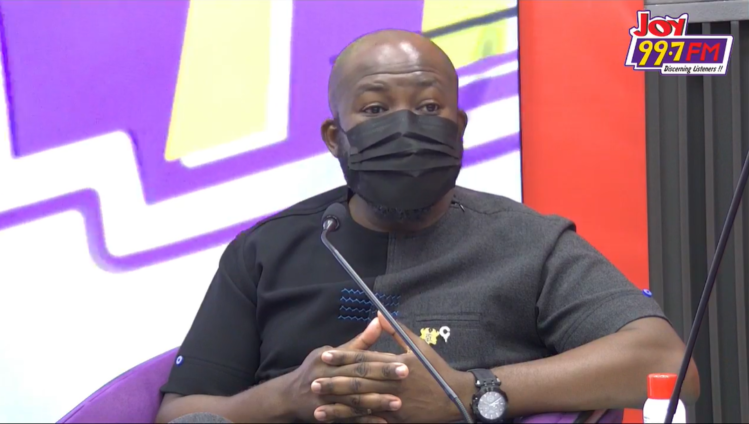
The Chief Executive Officer of the Ghana Chamber of Bulk Oil Distributors (CBOD), Senyo Hosi, has lamented the country's high cost of fuel prices.
According to him, the government must manage the foreign exchange rate to mitigate the high cost of fuel prices.
"One of the most potent and immediate things that government can do is to manage the forex rate. Either we have a central bank that is unwilling or a government that is not focused on the solution. We should be having a major crisis meeting by now oh how to deal with prices," he said.
Speaking in an interview on the Joy Super morning show, Senyo Hosi noted that government must commence talks with industry players to address petroleum prices.
"Politicians are not industry people; when they are out of government, they consult industry when they are in government sometimes they forget and then become people who claim to know all. So you can't fix these problems without the industry people.
"That conversation is not going on, and I don't think it is optimal from the policy front. Since our last conversation in your studio, we've not had an industry crisis meeting to see how to fix this," he said.
Mr Hosi noted that the country would face dire consequences in the future if prices are not controlled at the moment.
"It is crucial we address those things now. Going into the future, this is the bigger problem we are going to have. With prices going up, the crisis risk of Ghana will be going down, and there would be little funding even for oil import into this country.
"I think this is a crisis time there is the need for policymakers, the central bank to sit down and figure out a solution. The solutions are available if people are willing to help alleviate the suffering of our people.
Meanwhile, former CEO of the Volta River Authority, Dr Charles Wereko-Brobby, blamed the increase in fuel prices on government's failure to control fuel prices through its windfall profit.
"Right now, oil is around 85 dollars a barrel; we used $54 for our budgeting; it means that every extra barrel of oil that goes into our net basket $31 is the windfall profit that the government makes.
"I cannot think of a government saying it cares about the people if it is making $31 good windfall profit and is not applying that profit which is revenue neutral to reduce the prices of petroleum products," he explained.
At the beginning of this month, the National Petroleum Authority (NPA) commenced the removal of the Price Stabilisation and Recovery Levies (PRSL) on petrol, diesel, and LPG for two months.
The move is to stabilise prices for consumers and pay for Premix Fuel and Residual Fuel Oil (RFO) subsidies.
However, the Chamber of Petroleum Consumers (COPEC) said the removal of the PSRL will not cause a reduction in fuel prices at the pumps.
Latest Stories
-
Man City suffer as PSG masterclass sets up Champions League win
32 minutes -
Customer Service Africa CEO urges business leaders to observe staff and customer interactions
42 minutes -
On night of mayhem for Liverpool, Barcola arrives in style
43 minutes -
Muzic Mensah finds healing and renewed love in new single ‘WayƐ Late’
55 minutes -
FIFA to offer extra £2.6bn for football development
57 minutes -
Government backing is no EPA permit – Authority warns GoldBod, ministries
1 hour -
Real Madrid produce stunning late fightback to down Roma
1 hour -
EPA orders immediate halt to unpermitted reclamation and dredging nationwide
1 hour -
Afenyo-Markin’s lawsuit against Sammy Gyamfi takes focus away from development – Kpebu
2 hours -
FWSC urges media to guard against misinformation in proposed IPEC transition
2 hours -
MoMo Fest 2026: Shatta Wale to Rock Accra Stadium on October 17
2 hours -
GTEC’s letter directing public universities to reopen by October 16 is unprofessional – GAUA
2 hours -
Suspect in viral video assaulting wife jailed for 3 months
2 hours -
GAUA insists strike will end only after Fair Wages addresses market premium issue
2 hours -
Kpemka seeks compensation as he sues BOST over alleged unlawful termination
2 hours