

Audio By Carbonatix
The new coronavirus variant Omicron is spreading across the globe at an unprecedented rate, the World Health Organization (WHO) has warned.
Cases of the heavily mutated variant have been confirmed in 77 countries.
But at a press conference, WHO chief Tedros Adhanom Ghebreyesus said it was probably in many others that had yet to detect it.
Dr Tedros said he was concerned that not enough was being done to tackle the variant.
"Surely, we have learned by now that we underestimate this virus at our peril. Even if Omicron does cause less severe disease, the sheer number of cases could once again overwhelm unprepared health systems," he said.
The Omicron variant was first identified in South Africa in November, and the country has since seen a surge in infections. President Cyril Ramaphosa has tested positive for Covid-19 and is currently isolating with mild symptoms.
A number of countries have introduced travel bans affecting South Africa and its neighbours following the emergence of Omicron, but this has failed to stop it from spreading around the world.
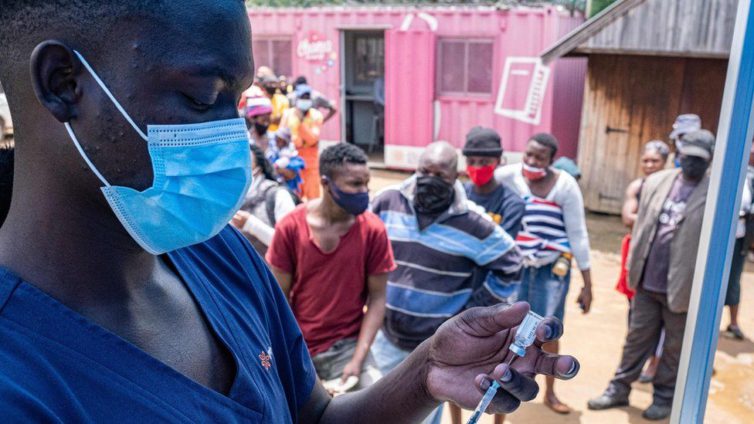
In the press conference on Tuesday, Dr Tedros reiterated concerns about vaccine inequity, as some countries accelerate rollouts of a booster shot in response to Omicron.
Recent studies of the Pfizer/BioNTech vaccine showed it produced far fewer neutralising antibodies against Omicron than against the original strain, but that this deficit could be reversed by a third, booster, jab.
Dr Tedros said boosters "could play an important role" in curbing the spread of Covid-19, but that it was "a question of prioritisation".
"The order matters. Giving boosters to groups at low risk of severe disease or death simply endangers the lives of those at high risk who are still waiting for their primary doses because of supply constraints," he said.
Supplies to the global vaccine-sharing programme Covax have increased in recent months.
However, world health officials fear a shortfall of tens of millions of doses - like the one which occurred in the middle of this year when India suspended its vaccine exports - could happen again.
In poorer countries, some vulnerable people are yet to receive a single dose.
Latest Stories
-
South African airline behind daring stadium stunt cancels next flyby
5 minutes -
PURC urges ECG to address outages, metering delays
16 minutes -
Police engage traders over alleged harassment, extortion on Aflao-Accra highway
26 minutes -
Uber shuts operations in Nigeria and Uganda with immediate effect
37 minutes -
Netherlands moves billions in gold to London in ‘crisis preparedness’ move
47 minutes -
Legal vacation does not halt urgent court cases – Chief Justice
55 minutes -
Keta residents react with mixed feelings to fresh fuel price hike
1 hour -
Managing Director on GH¢150,000 bail over five dud cheques
1 hour -
BOSTenergies reports strong 2025 performance, pays first-ever dividend to government
2 hours -
Carlos Queiroz reappointed as Black Stars head coach
2 hours -
Gov’t targets TVET transformation with US$300m World Bank facility
2 hours -
Flying into Ghana with more than 2 phones may face commercial import charges – GRA
2 hours -
Education Ministry warns private schools against use of unapproved textbooks
2 hours -
Travelers with multiple new devices returning to Ghana to pay additional charges – Customs Commissioner
3 hours -
John Boadu: A lifetime of party service, experience and grassroots leadership
3 hours