

Audio By Carbonatix
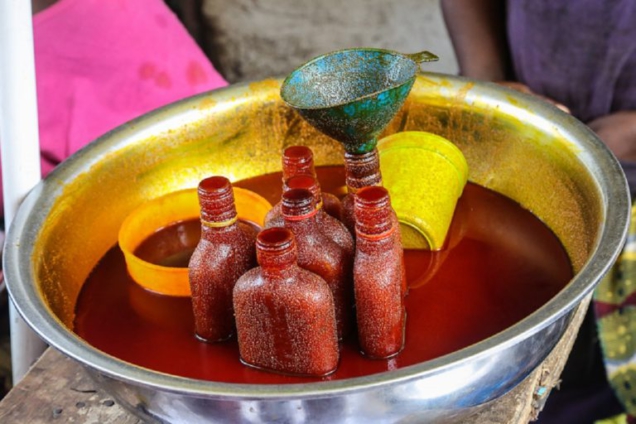
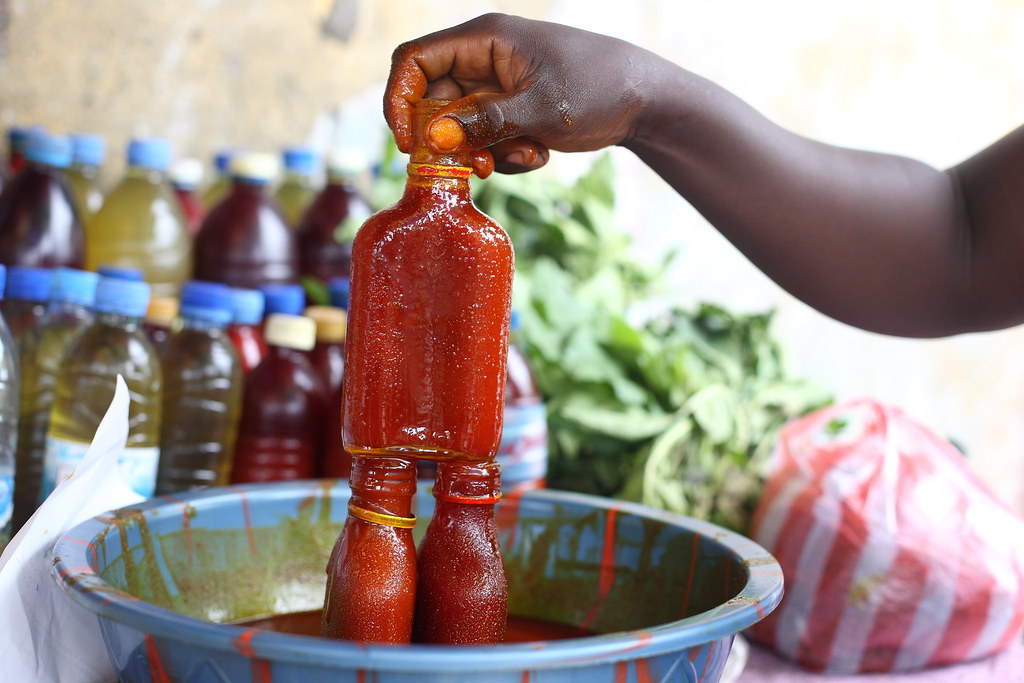
About 30% of palm oils found on the Ghanaian Market have failed the Food and Drugs Authority (FDA)’s nationwide Zero Sudan IV dye test, an increase from 7.3% in 2018.
This came to the fore as part of the Authority’s routine market surveillance activities on food safety conducted last year.
In October last year, the Authority sampled palm oils from major markets across the country including 10 major markets in Greater Accra to test for the presence of Sudan IV dye leading to several arrests.
The Laboratory analysis indicated that out of the 306 samples analysed, 70 representing failed the test for Sudan IV dye.
Except for the Upper West Region, all the regions had one or more samples from their markets testing positive for the presence of Sudan IV dye with Greater Accra recording the highest of failure rate (60.8%).
Some markets like Dome and the Mallam Attah Market in the Greater Accra Region had 100% failure for their samples analysed.
Sudan IV dye is a chemical used for in the production of textiles, leather, plastics, papers, hair, mineral oils, waxes, and cosmetics and not to be ingested.
The toxicity and illegal use of Sudan IV as food additives are strongly banned by the Food and Drugs Authority and other international bodies in the FAO/WHO Codex Alimentarius.
Despite the enormous public education and sensitization activities on the health implications of adding Sudan IV dye in foods especially palm oils, such as hyperactivity in children, severe allergies, hives, migraine, and diseases such as cancer, producers and Ghanaian traders continue to use this chemical as an enhancer in palm oil due to consumers preference and demand for “redness” in their palm oil products.
The FDA has initiated a rigorous public education campaign in major markets like Mallam Atta Market, Dome Market in Accra as well as other Satellite Markets across the country.
As part of this campaign, more samples are continuously being sampled across the markets and traders whose palm oil products fail the test will be made to face the full rigours of the law.
Additionally, the FDA is in the process of introducing a traceability system for AgroProducts in the country which would help in enhancing food safety issues as far as Agroproducts are concerned and safeguard the health and safety of the consuming public.
Latest Stories
-
GAEC must retain nuclear scientists for Ghana’s nuclear ambitions – Minister
20 minutes -
Man reportedly mistaken for game and shot by hunter dead in forest
22 minutes -
19-year-old mason jailed 15 years for defiling seven-year-old pupil
26 minutes -
Ghana’s banking sector assets rise 20.47% to GH¢500.2bn – BoG Governor
31 minutes -
22 injured as Sprinter bus overturns at Sege after tyre burst
32 minutes -
UN housing expert urges Ghana to strengthen Rent Control Department amid housing affordability concerns
40 minutes -
Delta-BCI partnership reaches 166,000 people with breast cancer education
50 minutes -
Power restoration fault suspected in Kumasi Central Market fire
6 hours -
The 7-foot giant of Ngleshie Amanfro: Seven-foot Ghanaian Ephraim Saawa dreams of joining the national basketball team
7 hours -
Government promises support for Kumasi Central Market fire victims
7 hours -
Vibes The Movie: Big Ghun’s Ghanaian film earns five nominations at 2026 REFFA
7 hours -
‘I’m a fulfilled man’—Justice Korbieh on missing out on Supreme Court despite two nominations
7 hours -
MamaCare CEO warns unresolved conflicts among health workers could undermine maternal and neonatal care
8 hours -
Health professionals urged to translate medical knowledge into practice to save mothers
8 hours -
Retired judge Justice Francis Korbieh charges 1,568 new lawyers to uphold integrity
9 hours