

Audio By Carbonatix
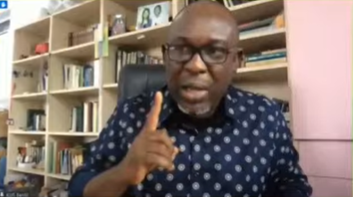
Vice President of IMANI Africa, Kofi Bentil, has called for the enforcement of strict sanctions against Chief Executive Officers of State-Owned Enterprises which do not perform.
He believes the non-performance of SOEs has been rampant because managers of these institutions are neither tied to any performance benchmark nor made to pay any price for their non-performance.
Speaking on the Super Morning Show, on Tuesday, April 26, he stated that "our leaders do not pay a price for continuing to use our State-Owned Enterprises as an extension of their personal resources, so they use it to reward their friends - when some people need favors they use it to give them jobs, when they need to pass a contract to another friend, they use them to do these things.
"We [Ghana] are a poor country, we should behave like that until we become a more wealthy country"
— Joy 99.7 FM (@Joy997FM) April 26, 2022
- Kofi Bentil on neutrality allowance, SOE executives, and matters arising. #JoySMS pic.twitter.com/9Ho915BKKh
"So we have set up a structure where these State-Owned Enterprises have become an extension of the people in power and they use it to reward their friends and cronies and other people and they don't pay a price for that," he said.
His comment follows recent agitations from a section of the public over the seemingly “fat salaries and allowances” of Management of some State-Owned Enterprises (SOEs) in Ghana.
On JoyNews’ Newsfile on April 23, host, Samson Lardy Anyenini, revealed a number of allowances leaders of State-Owned Enterprises (SOEs) are enjoying aside from their huge salaries.
The allowances include; an entertainment allowance of GH¢1,500 a month, home enhancement loan of about GH¢2,000, travel per diem of $1,500, allowance for a replacement for eye lenses at GH¢1,000 yearly, and inconvenience allowance of ¢500 per day. This revelation has sparked a conversation about protecting the taxpayers’ monies.
Already the Finance Ministry had revealed that SOEs were causing huge losses to the country to the tune of about GH¢6bn. Yet, leaders of State-Owned Enterprises do not only take high salaries but also enjoy a wide range of allowances.
Mr. Bentil therefore called for structures to be put in place to check the wastage.
"We should get to a point where companies that are state-owned, tax-funded have an existential redline where, by law, if for instance you make losses consistently three times or the state has to invest a certain amount of money in you more than twice, you are shut down or you are absolutely privatised.
"The state must not continue to put money in these institutions ad infinitum regardless of the outcome. We should stop somewhere. We are a poor country we should behave like that until we become a more wealthy country," he added.
Latest Stories
-
The job interview question you don’t have to answer
1 hour -
Trump unveils ‘Super Intelligence Force’ to oversee AI policy
1 hour -
Actress Chioma Chukwuka announces death of father in emotion-laden post
4 hours -
[Video]‘I have asked God to take me when it is time’ – Pete Edochie on health struggles
4 hours -
Manager remanded over $1m auto fraud
4 hours -
Mr President, Ghana was mentioned at the UN; why aren’t we talking about it?
4 hours -
US Marine arrested over murder of woman in Okinawa, Japan
4 hours -
Accra to convene Africa’s regulators and markets on tokenisation at AVAS 2026
4 hours -
Indian police accused of sexually harassing journalists at protest
5 hours -
Jeffrey Archer returns to his former school library
5 hours -
France to close up to 500 schools on Monday over student protests
5 hours -
The Paradox of Plenty — When every smartphone becomes a newsroom
5 hours -
Australia investigating Flydubai co-pilot’s links to country
5 hours -
GTA sensitises taxi drivers in ‘Know Ghana’ tourism campaign
6 hours -
Archbishop Agyinasare calls for responsible speech amid growing social media abuse
6 hours