


Audio By Carbonatix
The Member of Parliament (MP) for Ashaiman is heading to court over the government’s decision to sole-source the architectural design contract for the National Cathedral to Sir David Adjaye and Associates Limited.
Ernest Norgbey insists the contract breached procurement processes.
Although he said he does not have any challenges with the construction of the project, he is not happy with the disregard of the country’s laws.

“I do not have much difficulty with the construction of the cathedral, but what I do have is procurement breaches in granting single source approval to the consultant in this regard, and so basically that is my only challenge.”
“The office of the President wrote a letter to the Public Procurement Authority seeking approval under the single-source method. The precondition under which they wrote the letter was under 72 {5} B which states that you can only do that under emergency situations, but I am wondering what is urgent about this contract that we have to go by single-source,” he said in a media interview.

The award of the contract, to the renowned architect, has generated widespread conversation.
While some argue he is more than qualified for the job, others insist he was not a registered architect in Ghana at the time he was awarded the contract.
For instance, a procurement expert, Kobina-Bedu, has questioned the basis on which the architectural design contract was given to him.
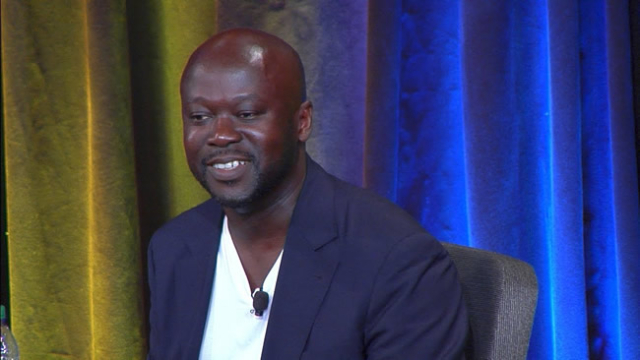
According to him, sole-sourcing the contract to Mr. Adjaye was illegal, since the contract did not qualify for that.
“I (want to) ask why the Public Procurement Authority (PPA) CEO and board approved the contract because, from an architecture point of view, it does not qualify under any circumstance for sole sourcing,” he said on JoyFM‘s Super Morning Show, on Monday, June 20.
What does the law say about sole sourcing?
Section 40 of the Public Procurement Act (act 663) says that;
(1) A procurement entity may engage in single-source procurement under section 41 with the approval of the Board,
(a) where goods, works, or services are only available from a particular supplier or contractor; or if a particular supplier or contractor has exclusive rights in respect of the goods, works, or services, and no reasonable alternative or substitute exists;
(b) where there is an urgent need for the goods, works, or services and engaging in tender proceedings or any other method of procurement is impractical due to unforeseeable circumstances giving rise to the urgency which is not the result of dilatory conduct on the part of the procurement entity;
(c) where owing to a catastrophic event, there is an urgent need for the goods, works or technical services, making it impractical to use other methods of procurement because of the time involved in using those methods;
d) where a procurement entity, that has procured goods, equipment, technology, or services from a supplier or contractor, determines that:
(i) additional supplies need to be procured from that supplier or contractor because of standardisation; (ii) there is a need for compatibility with existing goods, equipment, technology, or services, taking into account the effectiveness of the original procurement in meeting the needs of the procurement entity; (iii) the limited size of the proposed procurement in relation to the original procurement provides justification;
(e) where the procurement entity seeks to enter into a contract with the supplier or contractor for research, experiment, study, or development, except where the contract includes the production of goods in quantities to establish commercial viability or recover research and development costs; or
(f) where the procurement entity applies this Act for procurement that concerns national security and determines that single-source procurement is the most appropriate method of procurement.
(2) A procurement entity may engage in single-source procurement with the approval of the Board after public notice and time for comment where procurement from a particular supplier or contract or is necessary in order to promote a policy specified in section 59(4)(c), (d) or 69(2)(c)(i), and procurement from another supplier or contractor cannot promote that policy.
Touching on this, Mr Ata-Bedu insisted that the contract does not meet any of the above requirements mentioned for a contract to qualify for sole-sourcing.
Latest Stories
-
Nana B passport claims a diversionary tactic — Abu Jinapor
11 minutes -
Pope Leo diagnosed with cancer as doctors remove lobe of lung, Vatican says
11 minutes -
Legal Aid Commission takes free legal services to Techiman main lorry terminal
16 minutes -
Nana B denies seeking passport favour, accuses Ablakwa of failing to account for GH¢16.4m
21 minutes -
Young girls demand climate action, stronger protection against child marriage
32 minutes -
Ex-gang boss sentenced to 40 years for orchestrating Tupac Shakur’s murder
33 minutes -
From near-deferral to three awards: UMaT graduate’s academic journey
35 minutes -
Atta Akyea denies seeking presidential pardon for Wontumi in galamsey case
1 hour -
Photos: Mahama commissions 85-bed Police Hospital ward, donates two ambulances
1 hour -
GTEC directs Ghana’s public universities to reopen by October 16 and begin lectures on October 19
1 hour -
Star Oil donates GH¢1million towards construction of new CID facility
1 hour -
Court hands Adjetey Sowah, two others lifetime bans after Amputee Football legal dispute
2 hours -
NDC appoints Julius Kwame Anthony as a Deputy Communications Director
2 hours -
Ghana repatriates 120 Nigerians rescued from suspected cybercrime centres
2 hours -
NPP rejects Emelia Agbenyo’s appointment as Deputy EC Chair, demands withdrawal
2 hours