

Audio By Carbonatix
A communications lecturer at the University of Ghana (UG) has observed that there are still major impediments to the implementation of the Right to Information (RTI) Law.
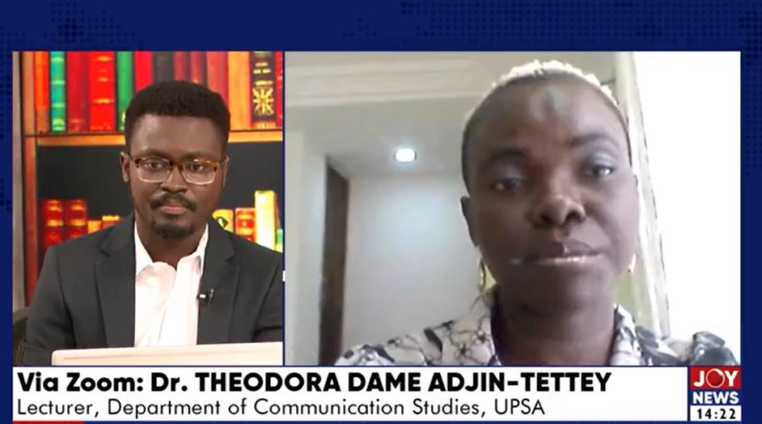
Dr Theodora Dame Adjin-Tettey said many public office holders are mostly reluctant in giving out information, even under the RTI Law, because they are glued to the old ways of performing their duties.
She noted that some are still not abreast of their duties under the law so they always frustrate persons who apply for information using the RTI law.
Speaking to Joseph Ackah-Blay on The Law, Dr Adjin-Tettey revealed that many civil society actors have that impression which seems to deter them from making any move in getting information.
This, she believes, destroys the rationale and objectives of the law.
“I spoke to a number of civil society actors; they get the impression that public servants are stuck to their old ways of doing things. You go into an office, you swear an oath of secrecy and confidentiality so those things are really a major impediment to accessing information,” she said on Sunday, September 25.
The opportunity to access information by the public is provided for in Ghana under Article 21(1)(f) of the 1992 Constitution which “guarantees the right to information by all persons, subject to such qualifications and laws as are necessary for a democratic society.”

Despite how succinct the provision is set out to operate, Dr Adjin-Tettey highlighted that other challenges like the unavailability of information officers have restricted access to information in some public institutions.
The RTI law stipulates that where there is no information officer, the head of an institution should be treated as the information officer.
The academic wants some clear-cut criteria to be outlined for public institutions to guide them in the selection of information officers and other persons who aid in access to information.
“It’s one of the things that we found that because there are no information officers, a lot of the time, the process becomes slow.
"Some of the challenges, particularly when it comes to the sub-national agencies like the district assemblies; it’s quite difficult to get information from there because a lot of the time they feel that they need clearance from the headquarters or the main ministry.
“…once the go-ahead is given, then they can give that information but we should also note that if the response from the Ministry says ‘don’t’, then they are likely going to comply with the ‘don’t’.”
Latest Stories
-
Assemblies of God requires pastors to resign before entering partisan politics – Rev. Wengam
3 minutes -
Ghana targets 20% annual reduction in maternal deaths – Health Minister
8 minutes -
Cyber attacks in Africa grow faster than global rate, report finds
10 minutes -
Ghana signs UAE deal to create 5,000 overseas jobs
17 minutes -
One Million Coders Programme targets 100,000 digital jobs in two years – Sam George
20 minutes -
John Jinapor, Italian Ambassador explore opportunities for energy sector investment
22 minutes -
NHIA seeks legal reforms to support Free Primary Healthcare
26 minutes -
Beatrice Annan defends Afi Agbenyo’s EC appointment, cites record of gender advocacy
29 minutes -
Ghana seeks investment deals in Bangkok amid global economic crises
33 minutes -
IMF raises Ghana’s 2026 growth forecast to 5.7%, sees inflation falling to 4.8%
34 minutes -
Ablakwa urges Africans not to view immigrants as threat to national progress
39 minutes -
Mahama Cares must fund treatment, not looting – Asogli chiefs
40 minutes -
Ghana’s economic salvation lies not in shifting geo-political allegiances – Dr Atuahene
43 minutes -
BoG proposes tougher rules on loan repayment assessment
48 minutes -
Government plans mandatory drug tests for public service jobs — Muntaka
53 minutes