

Audio By Carbonatix
Neglected tropical diseases (NTDs) are a diverse group of health conditions that affect more than 1 billion people across the world, many of which are exposed to sub-standard living conditions prevalent in underdeveloped communities of tropical regions.
These diseases are caused by a variety of pathogens, including viruses, bacteria, parasites, fungi, and toxins.
In Ghana, these diseases have an immense socioeconomic impact on the lives of the individuals they affect. For example, lymphatic filariasis or elephantiasis, locally known as "gyepim" in the Twi language, is caused by filarial worms.
In the long term, it inflicts immense pain, disability, and deformative swelling of body parts of infected individuals, leading to shame and poverty.
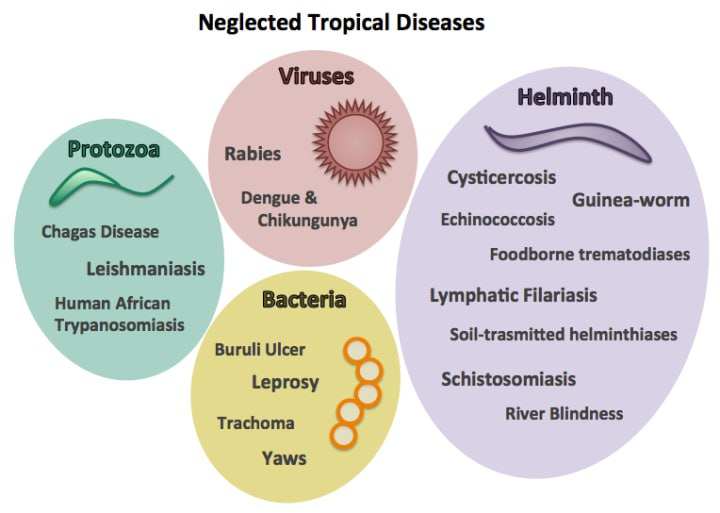
Interestingly, this disease is also spread by mosquitoes, well-known for their role in the spread of the plasmodium parasite species which cause the more familiar malaria disease. The lack of this knowledge among the general public is a result of low efforts to create public awareness and carry out preventive action against the spread of this particular NTD as compared to its more popular counterpart, malaria; which is in part, why it is described as ‘neglected’. As a result, the presence of a single untreated person in a community creates an equal risk of infection for everyone as that of malaria, especially in young children.
Besides, the disease burden that NTDs imposes on their patients, it also poses some sort of financial burden to the families. This is expressed through the patient’s disability-adjusted life years (DALY), which describes the years of healthy life lost due to the disability and translates to an economic cost arising from a loss of the otherwise productive populace.
Even today, when the focus is on universal health coverage, NTDs research and management have relatively little financing, even from global funding agencies making them almost absent from our global health agendas and allowing them to continue perpetuating a cycle of poor educational outcomes and limited professional opportunities.
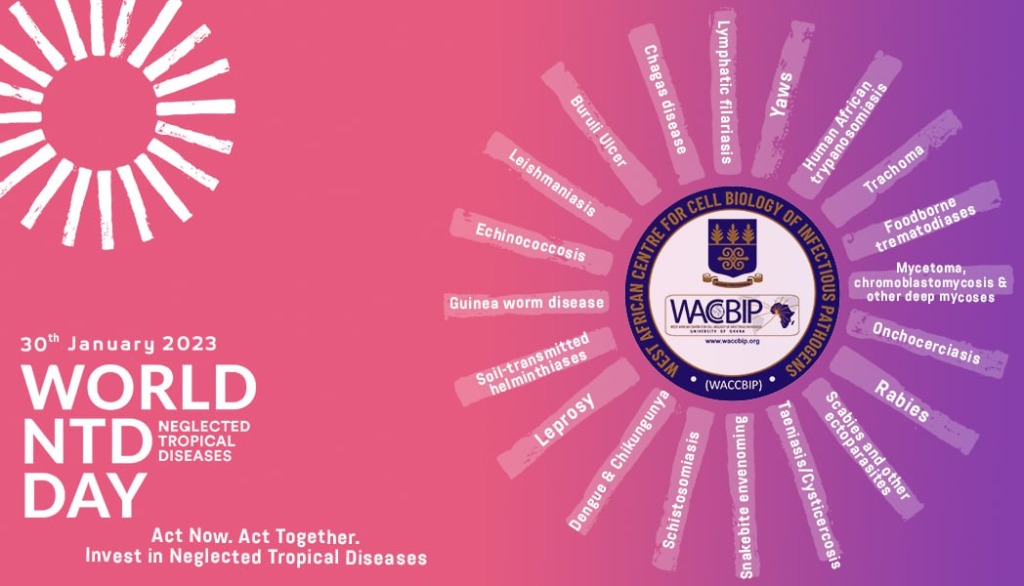
Of the 20 listed NTDs by the World Health Organization, some of those reported in Ghana include: Lymphatic Filariasis, Onchocerciasis, Trachoma, Schistosomiasis, Soil Transmitted Helminthiasis, Buruli ulcer, Yaws, Leprosy and Human African Trypanosomiasis.
WACCBIP scientists conduct research into a number of these NTDs with support from our partner institutions. The recent publication of our Buruli Ulcer Drug Discovery Database (BuDb), research into the potential of Acanthospermum hispidum (bristly starbur/goat head) against Trypanosoma brucei, monitoring of urogenital schistosomiasis transmission dynamics in school-age children in Northern Ghana, discovery of the diversity in structural biology of bloodstream form African trypanosomes, Machine learning prediction of antischistosomal small molecules and the identification of novel antileishmanial compounds are some highlights of our collaborative action toward fighting these NTDs.
Latest Stories
-
Power restoration fault suspected in Kumasi Central Market fire
5 hours -
The 7-foot giant of Ngleshie Amanfro: Seven-foot Ghanaian Ephraim Saawa dreams of joining the national basketball team
6 hours -
Government promises support for Kumasi Central Market fire victims
6 hours -
Vibes The Movie: Big Ghun’s Ghanaian film earns five nominations at 2026 REFFA
6 hours -
‘I’m a fulfilled man’—Justice Korbieh on missing out on Supreme Court despite two nominations
6 hours -
MamaCare CEO warns unresolved conflicts among health workers could undermine maternal and neonatal care
7 hours -
Health professionals urged to translate medical knowledge into practice to save mothers
7 hours -
Retired judge Justice Francis Korbieh charges 1,568 new lawyers to uphold integrity
8 hours -
Conflicts among care providers linked to maternal, neonatal deaths – Expert
8 hours -
GIS marks 10th TIME conference, champions improved teaching practices
8 hours -
BRICS Or Balance? What Ghana’s bid really means
9 hours -
GPRTU wants full TRAFFITECH-GH implementation to start in 2027
9 hours -
How 10-mile walks for basic education birthed a 50-year legal career for Justice Korbieh
9 hours -
Mahama announces plans to import electric wheelchairs for PWDs
9 hours -
KGL U17 Colts 2026: Western beat Prempeh Elite Academy to set up final final with Greater Accra Region
10 hours