

Audio By Carbonatix
Eight out of 10 South African school children struggle to read by the age of ten, an international study has found.
South Africa ranked last out of 57 countries assessed in the Progress in International Reading Literacy Study, which tested the reading ability of 400,000 students globally in 2021.
Illiteracy among South African children rose from 78% in 2016 to 81%.
The country's education minister blamed the results on school closures during the Covid-19 pandemic.
Describing the results as "disappointingly low", Angie Motshekga also said the country's education system was faced with significant historical challenges, including poverty, inequality and inadequate infrastructure.
In many primary schools "reading instruction often focuses solely on oral performance, neglecting reading comprehension and making sense of written words", she added.
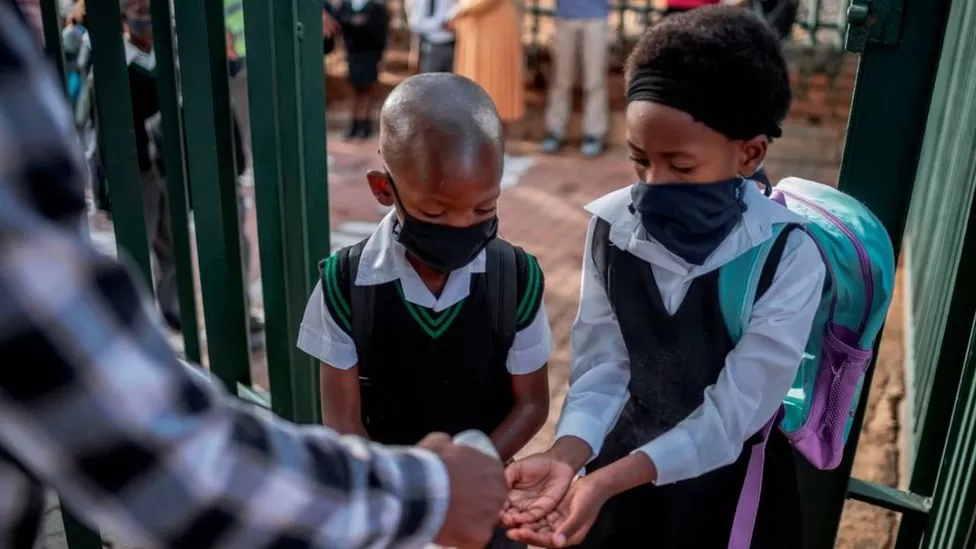
The study showed that 81% of South African children could not read for comprehension in any of the country's 11 official languages.
Alongside Morocco and Egypt, South Africa was one of only three African countries which participated in the assessments to monitor trends in literacy and reading comprehension of nine- and 10-year-olds.
Based on tests taken every five years at the end of the school year, the new study places countries in a global education league table.
Singapore secured top spot in the rankings with an average score of 587, while South Africa ranked last on 288 points - below second-last Egypt's average of 378. The scores are benchmarked against an international average of 500.
The study also showed that overall, girls were ahead of boys in their reading achievement in nearly all of the assessed countries, but the gender gap has narrowed in the most recent testing round.
South Africa's struggles with its education system are longstanding, with significant inequality between black and white students a consequence of the segregation of children under apartheid.
Education is one the single biggest budget expenses for the government, which can lead to disappointment over poor performance in studies like this.
A lack of suitable reading materials and inadequate infrastructure in schools, often things like toilets, have contributed to the crisis.
Latest Stories
-
Alex Acheampong shakes the airwaves with ‘Nyame Baako pɛ’ track, featuring Obaapa Christie
1 second -
2024 JoyNews Impact Makers Award winner provides free healthcare to 1,447 Nabdam residents
5 minutes -
GRA warns of legal action after alleged assault on officers at Westlands
12 minutes -
‘Our members are frustrated’ – GAUA on stalled talks with government
24 minutes -
Five African countries unite to tackle zero-dose children through stronger immunisation systems
31 minutes -
Siidi Abubakar campaign rejects Madina NDC poll, questions Mussah Dankwah’s neutrality
42 minutes -
Ghana’s clean cooking drive gets boost with Asharami’s new LPG terminal in Tema
43 minutes -
National Housing Fund cuts mortgage rate to 8.4% to expand access to homeownership
52 minutes -
Youth and Sports Committee engages NYA on youth development programmes
53 minutes -
Teachers have lost confidence in government over delayed demands – Abuakwa South MP
58 minutes -
Two months of talks with the government have yielded no progress – GAUA
1 hour -
COP31 must deliver action, not more promises – African climate negotiators
1 hour -
What happens when you have too little body fat
1 hour -
Peki SHS old students to break ground for new entrance gate
2 hours -
This is an Organised Crime – PAC Ranking Member on 10 million MoH car loan debt
2 hours