

Audio By Carbonatix
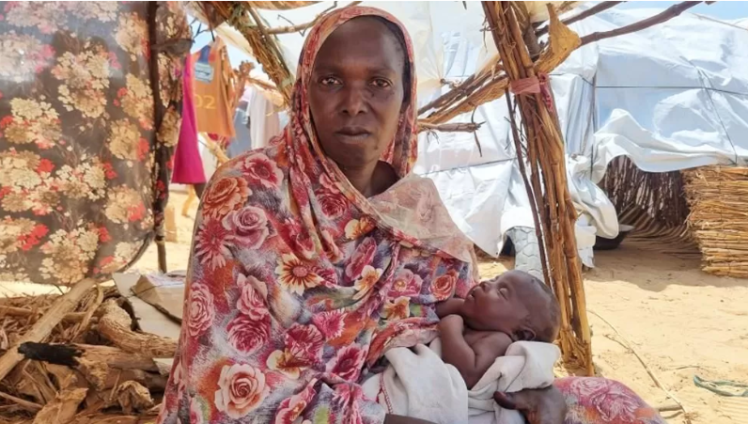
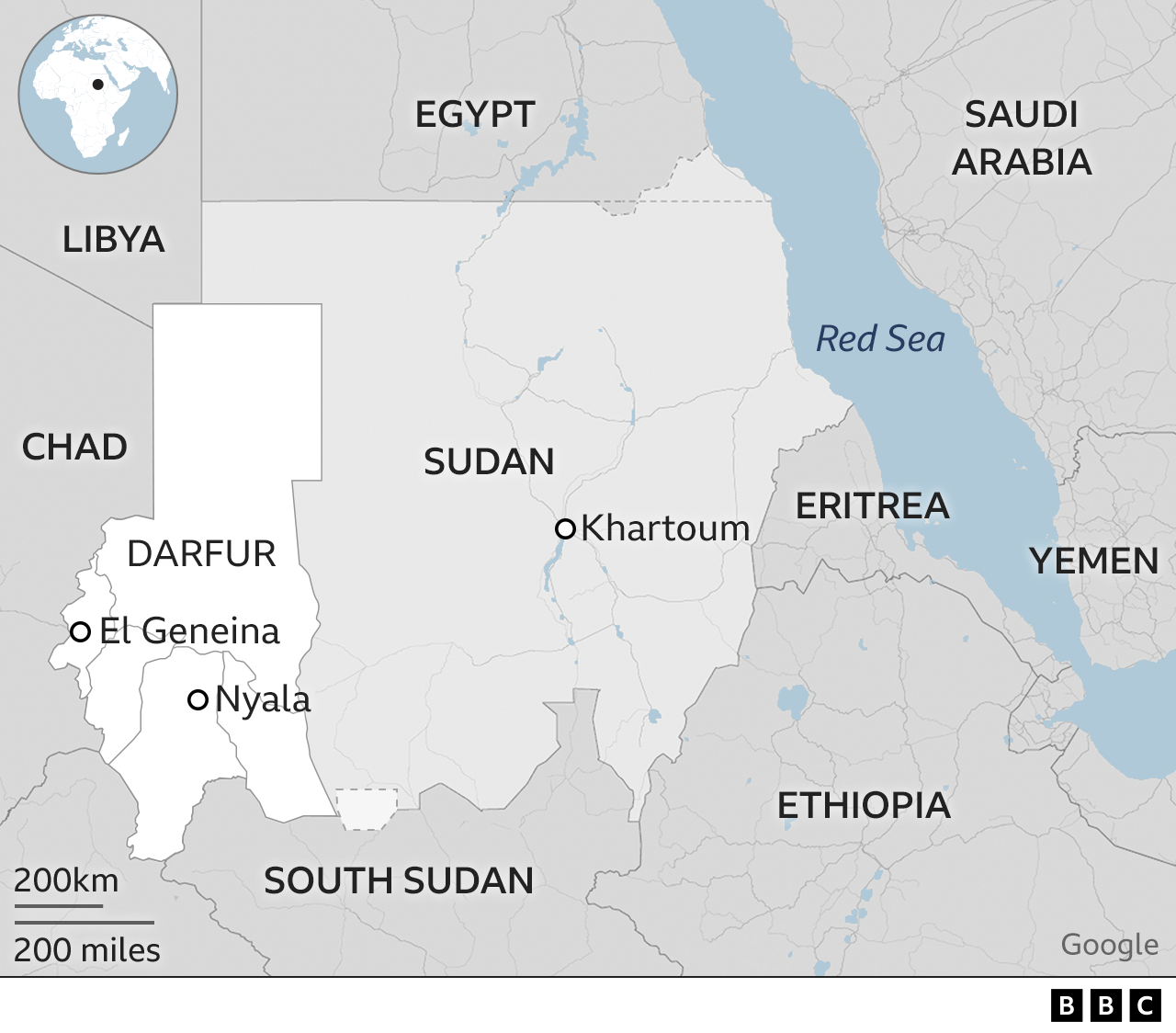
After her three sons were killed, a heavily pregnant radio presenter fled the war in Sudan's Darfur region on foot - and gave birth to a baby boy at the border crossing with Chad.
"I delivered it on the road. There were no midwives and no-one to support me. Everyone was thinking of themselves. Everyone was running to save their lives
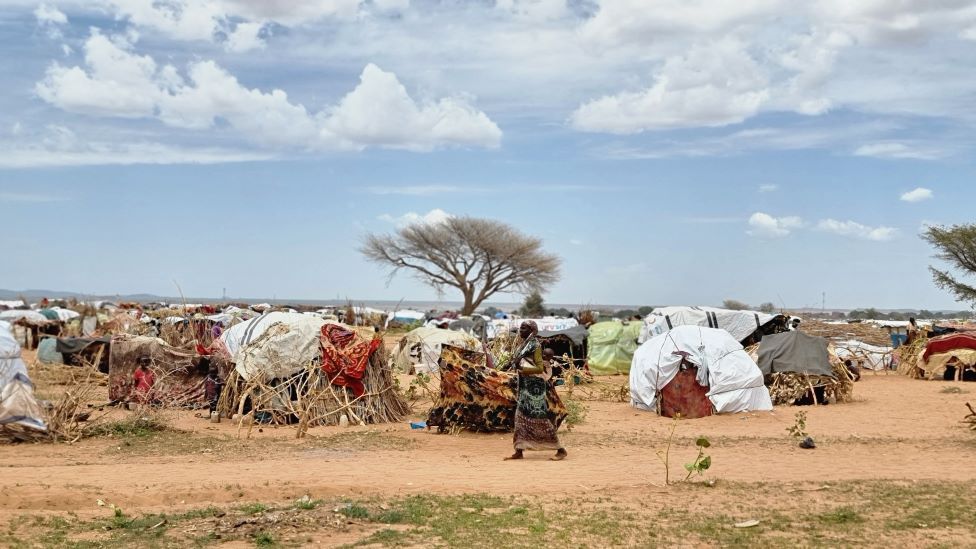
"The baby got out, I wrapped it up. I didn't think of anything else. I continued walking to Adré," Arafa Adoum said when I met her at a refugee camp of tens of thousands of people on the outskirts of the Chadian town.
The 38-year-old said she had walked in the scorching sun for 25km (15 miles) from her hometown of El Geneina with her four daughters, while her husband had - for his own safety - taken a longer and more arduous route to reach the camp.
"When I arrived at the border I found myself wiped out and exhausted until I delivered the baby," Mrs Adoum said, pointing out that she had named her son Mohamed, after the Prophet of Islam.
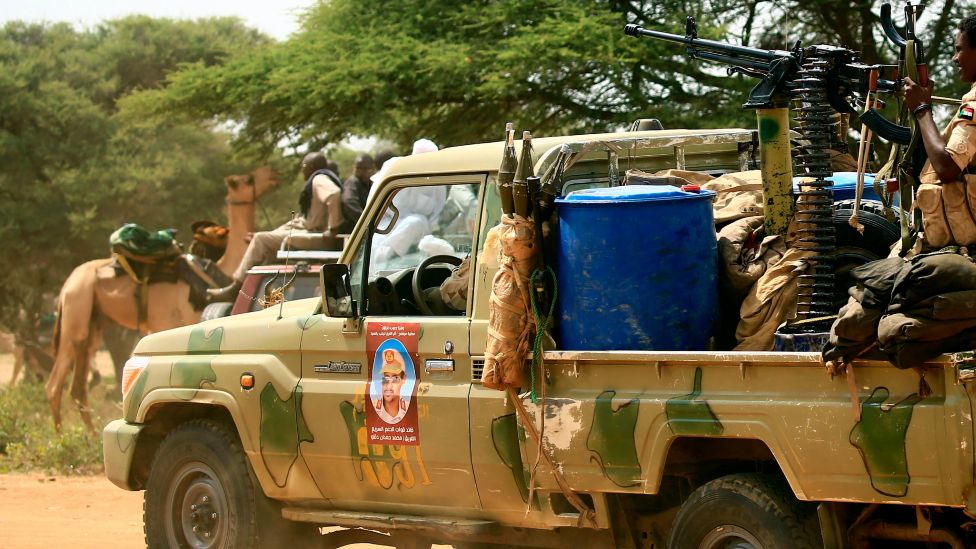
She left behind the unburied corpses of her other boys - aged three, seven and nine years - after she says they were killed by the paramilitary Rapid Support Forces (RSF) and allied Arab militiamen at the centre of the war raging in Sudan since April.
Darfur is the worst-affected area, with the RSF and the militias accused of trying to establish Arab supremacy in the region by "cleansing" it of black Africans - including those from Mrs Adoum's Massalit community.
Not surprisingly, the battle for El Geneina - historically a symbol of black African power in Darfur, and the traditional capital of the Massalit kingdom - has been vicious.
"We tried to defend ourselves, but they were using very big weapons," said Sheikh Mohammed Yagoub, an influential Muslim cleric and Massalit leader, who has also become a refugee in Adré.
"In our area in one day, we lost 82 [people] within three hours," he added.
The RSF denied involvement in the fighting, but said that Darfur was witnessing the resurgence an old conflict between Arab groups and the Massalit.
Giving her version, Mrs Adoum said her three sons were killed at El Geneina's university - where they were taking refuge - after it was shelled and torched by the RSF and Janjaweed, as the Arab militias are known.
"The three kids were hit by the shells and lost their lives at that same spot," Mrs Adoum said..
Several members of her extended family were also killed, she said, including her father-in-law, who had both his legs "smashed", one of his ears cut, and then "they fired some bullets, finishing him".
Mrs Adoum and her husband then fled with their four daughters, but he took back routes to avoid passing through RSF-manned roadblocks as the paramilitaries were - according to numerous refugees - killing Massalit men and boys, sometimes by dousing them with petrol and setting them alight.
The couple reunited at the refugee camp, where her husband cradled Mohamed for the first time - a child whom they see as a blessing after the loss of three sons.
The sheikh's wife, Rakhiya Adum Abdelkarim, told me that she had also been pregnant, but she lost her baby the day after reaching Adré - a walk that left her hungry, exhausted and weak.
"I started to bleed. Then I started to get headaches, and all the while blood was coming. Then, at dawn, the foetus came," she said.
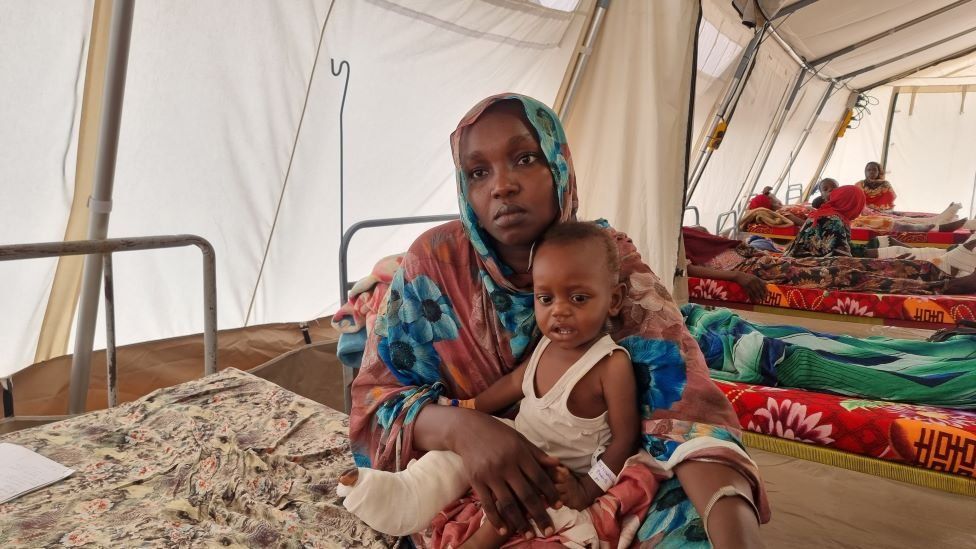
A field hospital has been established in Adré by a charity, but Mrs Abdelkarim did not manage to get there for treatment.
The hospital is packed with patients - mostly women, babies, and children, some of whom have gun-shot wounds.
One of the patients, Naima Ali, said she and her nine-month-old son were shot by a RSF sniper as they fled their village.
The boy was strapped on her back, when a bullet hit him on the leg, and "me on my side, narrowly missing my kidney.
"We were both bleeding and no-one was helping us," she said, pointing out that she too kept fleeing on foot until she reached the camp.
To end the atrocities, four East African states have called for a regional peacekeeping force to be deployed to Sudan, with Kenya's President William Ruto raising concern that the country was being "destroyed", and there were "already signs of a genocide" in Darfur.
A joint United Nations (UN) and African Union (AU) peacekeeping force withdrew from Darfur in 2021, about 18 years after conflict, which caused the deaths of an estimated 300,000 people, first broke out in the region.
The conflict had caused global outrage, with the International Criminal Court (ICC) indicting Sudan's then-ruler Omar al-Bashir on charges of genocide, war crimes and crimes against humanity, which he denied.
When the peacekeepers withdrew, the UN said the decision was aimed at "empowering Sudan's government to take charge of maintaining peace in the region".
But since their withdrawal, Sudan has been hit by a coup, and plunged into a civil war in mid-April after its two most powerful generals - army chief Abdel Fattah al-Burhan and RSF commander Mohamed Hamdan Dagalo, better known as Hemedti - fell out.
Their feud has reignited the conflict in Darfur, forcing more than 160,000 people from the Massalit community to flee to Chad. It is unclear how many people have been killed in the region, with the lowest estimate of the death toll in El Geneina put at 5,000.
According to Sudan's Professional Pharmacists Association, the number is higher. It says 11,000 bodies have been buried in mass graves in the city, while some refugees told the BBC they had seen corpses being thrown into a river.
The RSF also ransacked the city of Zalingei, home to the Fur community, and encircled the two biggest cities in the region, Fasher and Nyala.
Many Darfuris fear this is the culmination of a long-standing plan to transform the ethnically mixed region into an Arab-ruled domain.
They say that El Geneina - along with numerous other towns and villages - have been emptied of most of their residents, with buildings and infrastructure - including hospitals and water stations - destroyed.
"What is happening is worse than what happened in 2003," the sheikh said, pointing out that the Massalit people's most-famous personalities - including doctors and lawyers - have been killed.
Mrs Adoum - a presenter at the now-silent Radio El Geneina - was fortunate to survive, when the RSF raided the broadcaster's office in the early days of the war.
"They went in and smashed all the equipment and looted what they could," she said.
Now Mrs Adoum lives in a hut, built with sticks and pieces of clothing, not knowing whether she will ever be able to return home.
"We came as refugees. Many died along the way. But we had to keep moving," she said, as she held her three-week-old baby in her arms.
Another refugee ruled out ever returning, saying: "Who do I go back to? I have been here for weeks and the smell of the rotting corpses on the streets of El Geneina have refused to leave my nose."
Latest Stories
-
50,000-litre LPG tanker fire contained on Tema Motorway as Fire Service averts disaster
56 minutes -
Allround Baby Pants launched in Ghana to ease diapering for mothers
2 hours -
Aggrieved Gold Coast Fund Management Company customers to petition Mahama over locked-up funds
3 hours -
NSMQ 2026: PRESEC, Legon dethrones defending champions Mfantsipim in thrilling battle to book semi-final spot
3 hours -
NPP set to overhaul constitution as delegates prepare to vote on sweeping reforms
3 hours -
Ghana’s cashew industry faces processing gap as Côte d’Ivoire moves to capture more value
3 hours -
“Our greatest wealth is not in our soil but our people” — Upper West Minister
3 hours -
Luex Healthcare launches children’s health education book series with Luey the Lion
3 hours -
NAGRAT urges gov’t to communicate early if September deadline cannot be met
4 hours -
We trust government to meet September deadline on teachers’ promotions – NAGRAT
4 hours -
“We dare not fail” – Gov’t promises to honour teachers’ promotion pay deal
4 hours -
The GH¢19.8 billion mirage: Inside Ghana’s state enterprise turnaround
4 hours -
Luv FM High School Debate: KNUST SHS and Osei Adutwum SHS set up thrilling final after dramatic semi-finals
5 hours -
KNUST AI Coordinator urges structured adoption of AI in teacher education
5 hours -
Nepal rescuers blast hillside in search of hydropower workers as families wait anxiously
5 hours