

Audio By Carbonatix
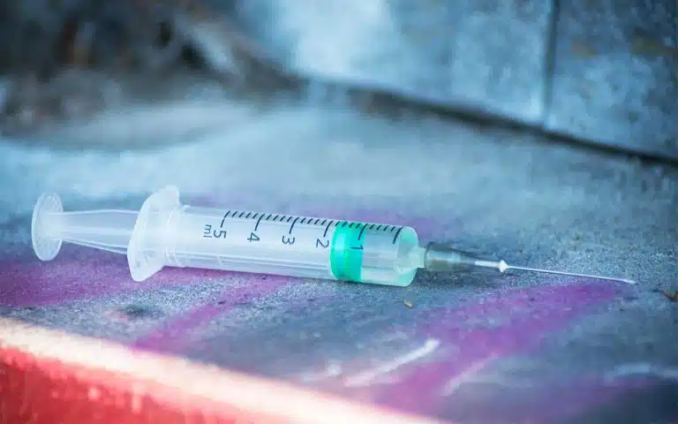
Ghana is at risk of HIV and blood-borne infections by persons who inject drugs, the Dean of the School of Public Health at the University of Ghana, Prof Kwasi Torpey, has said.
HIV prevalence among persons who used and injected drugs was 2.5 per cent, according to the outcome of research conducted in four regions in the country by a team in 2022.
“We found HIV prevalence of 2.5 per cent among persons who used and injected drugs. Unfortunately, the prevalence was 12.7 per cent among women who injected drugs and 17.7 per cent among women who injected drugs and were also sex workers.
“These results point to a simple fact that the country is at the cusp of an outbreak of HIV and blood-borne infections among persons who inject drugs,” he said.
In an inaugural lecture organised in his honour by the University of Ghana, Prof. Torpey recommended the development of a harm reduction programme for persons who use or inject drugs.
He was speaking on the topic: “Ending HIV/AIDS in Africa: Reflections from the clinic, field and classroom.”
The event was attended by the Vice-Chancellor of the University of Ghana, Prof. Nana Aba Appiah Amfo; the Director-General of Ghana Health Service, Dr Patrick Kuma-Aboagye; the Second Deputy Governor of the Bank of Ghana, Elsie Addo-Awadzi, and a former Vice-Chancellor of the UG, Prof. Clifford Nii Boi Tagoe.
There were also representatives from the World Health Organisation, USAID, the Society for AIDS in Africa, the Ghana AIDS Commission and the Ministry of Health, among others.
Situation
On HIV in Africa, Prof. Torpey, who has over 26 years of experience as a physician, scientist, researcher and trainer, said there were about 39 million people living with HIV on the continent, with 20.8 million of them living in East and Southern Africa, while 4.8 million were in West and Central Africa.
“UNAIDS updates in 2023 estimate that a life is lost every minute due to HIV. This is equivalent to 650,000 HIV-related deaths.

“In addition, there are 4,000 new infections daily. Every week, 4,000 adolescent girls and young women get infected. About 84,000 children died of HIV last year.
“As an HIV physician, I can confidently say without equivocation that ending AIDS in Africa will be a pipe dream if we do not make deliberate and intentioned efforts to improve access of all populations to health services, a public health imperative,” he said.
On mother-to-child transmission (MTCT), Prof. Torpey said that “HIV in children was a blot on the conscience of humanity”.
“This is because we have the knowledge and the strategies to eliminate paediatric HIV.
“Vertical or Mother to child transmission of HIV can take place during pregnancy, labour and delivery and during the breastfeeding period, he said”
“Ghana has introduced HIV+ baby’s tool for auditing purposes. If appropriately implemented, this will enable us to understand why our babies are getting infected; whether their mothers attended the antenatal clinic and did not receive ARVs or received ARVs but did not adhere to the drugs or seroconverted from HIV-negative to positive during the pregnancy and breastfeeding period,” he said.
Tackling HIV
Prof. Torpey further said that programmes to tackle HIV could only succeed with a good leadership and governance system, financing and adequate human resource, among other initiatives.
“Ghana must take urgent steps to increase its domestic contribution to HIV not only to provide services to the people, but also demonstrate its commitment to national response.

“The availability of the long-acting agents will require us as a country to start making changes in the health and community systems to respond to these new advances,” the Dean of the School of Public Health, University of Ghana, added.
“Ending AIDS in Africa is feasible, but we must aggressively cut down the new infections through combination prevention strategies, identifying and improving access to treatment for all populations, removing structural barriers which limit access to treatment and the strengthening of community health systems to respond to the evolving needs of the epidemic,” he said.
Latest Stories
-
Court delays can amount to denial of justice – Mahama
11 seconds -
NPP approves proxy voting for October 3 national officers elections
10 minutes -
Yemen’s Houthis reportedly seize strategic Red Sea port of Mokha
12 minutes -
Horse racing community hits Accra streets, petitions Presidency over demolished Racecourse
13 minutes -
Two arrested over alleged plot to kill Susu collector at Botwe in Accra
17 minutes -
Jirapa MP provides SHS prospectus items to 1,196 fresh graduates
22 minutes -
Ghana signs offshore deals with Eni, Vitol to revive oil exploration
23 minutes -
Two feared dead, several injured after trailer crashes into vehicles at Krofrom
27 minutes -
Where did we lose it? The falling standards of our airwaves and silence of regulators
28 minutes -
I remain fully committed to judicial independence – Mahama
31 minutes -
NDC opens nominations for 2026 constituency executive elections on September 15
32 minutes -
GROW2 project exceeds targets for women farmers in Northern Ghana
47 minutes -
Twenty-five dead after fire on cargo ship in eastern China
49 minutes -
The Battle For The Soul of the Ghanaian BAR: Is it a freedom of association or regulatory anarchy?
51 minutes -
Mahama urges new Supreme Court Justices to draw on diverse experience
56 minutes