

Audio By Carbonatix
Ghana’s ambition to end HIV as a public health threat by 2030 could face a major setback if stigma continues to discourage people from getting tested, accessing treatment and remaining in care.
Dr Ekua Houphouet, Country Programme Manager at AIDS Healthcare Foundation (AHF) Ghana, said eliminating HIV will require more than medical interventions, stressing that society must also confront stigma and misinformation surrounding the virus.
Stigma can affect people living with HIV in ways that go beyond their health. It can influence whether a person tests, seeks treatment, discloses their status, or continues with care.
Speaking at a media training on “Breaking Myths, Building Trust: The Role of Media in Ending HIV Stigma," Dr Ekua Houphouet, Country Program Manager at AIDS Healthcare Foundation (AHF) Ghana, described HIV stigma as “the negative attitudes, beliefs, stereotypes, and judgments directed at people living with HIV or those associated with HIV.”

She stated that such an act “may result in fear, blame, exclusion, discrimination, or unfair treatment.” She also added that it “can discourage people from getting tested, seeking treatment, disclosing their status, or accessing health services in general.”
How stigma affects the HIV response
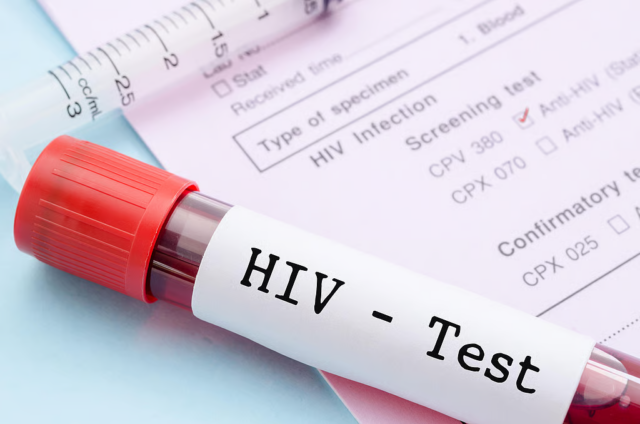
Testing is one of the first and most important steps in Ghana’s HIV response. A person can only know their HIV status by testing.
But when people fear being judged, rejected, or treated differently if their status becomes known, some may choose not to test.
A person who does not know their status may not seek treatment if they are living with HIV. They may also unknowingly contribute to the continued spread of the virus. The problem does not end with testing.
For people who test positive, access to antiretroviral therapy (ART) is critical. But taking medication can become difficult when individuals fear that others may discover their status.
This is where stigma becomes more than a social problem. It becomes a public health concern.
One broken link can affect the entire chain
The importance of reducing stigma becomes clearer when viewed against the UNAIDS 95-95-95 targets.
The targets seek to ensure that 95% of people living with HIV know their status; 95% of those who know their status are on treatment; and 95% of those on treatment achieve viral suppression.
The first target depends on testing. If stigma discourages people from testing, the country may struggle to identify people living with HIV who need care.
The second target depends on people who know their status being willing and able to access treatment. Again, stigma can become a barrier.
The final target is viral suppression. When people consistently take their medication and achieve viral suppression, the amount of HIV in their blood becomes very low.
But if stigma causes people to avoid treatment or disengage from care, achieving viral suppression becomes more difficult.
In effect, stigma can disrupt the chain at any point, weakening the broader national response.
The responsibility of society
The fight against HIV cannot be left to the Ghana AIDS Commission, health workers and other stakeholders alone.
The general public also has a role to play, beginning with how society treats people living with HIV.
A person’s HIV status should not become a reason to mock, isolate, blame or discriminate against them.
Stigma may not always come in the form of obvious discrimination. It can be a reaction, a look, a comment or a change in how someone is treated after their status becomes known.
But even seemingly small actions can have serious consequences.
A person who experiences stigma may become less willing to seek healthcare, disclose their status or remain engaged in treatment.
What should change?
Ghana’s response to HIV must include a stronger focus on changing public attitudes.
People need accurate information about HIV and how it is transmitted. Myths and misconceptions must be challenged, while conversations about HIV should be based on facts rather than fear.
The media also has an important role.
How HIV is discussed in the media can either reinforce existing stereotypes or help break them down. Reporting should avoid language that blames or shames people living with HIV and should instead promote understanding and accurate information.
Most importantly, people living with HIV must be allowed to live their lives without being viewed through a judgmental lens.
The goal is not simply to get people tested. It is to create an environment where people feel safe enough to test, seek treatment, remain in care and achieve viral suppression.
Ghana’s ambition to end HIV as a public health threat by 2030 will require the collective effort of government, health institutions, the media, civil society, and the public.
But that effort will be much harder if stigma continues to push people away from the very services designed to protect them.
Ending HIV therefore also means ending the stigma surrounding it. The message is simple: let people live without judgment, promote understanding, and make it easier for everyone to seek the care they need.
Stopping stigma is not only about protecting people living with HIV. It is also about protecting Ghana’s public health goal.
Latest Stories
-
GTA sensitises taxi drivers in ‘Know Ghana’ tourism campaign
1 hour -
Archbishop Agyinasare calls for responsible speech amid growing social media abuse
1 hour -
‘It will be inexcusable for gov’t not to honour payment of teachers’ arrears by 30th October’ – Haruna Iddrisu
1 hour -
Forbes’ World’s Best Employers 2026: No Ghanaian firm ranked among 900 companies
1 hour -
Electronic processing of teachers’ data: ‘The decision is the Controller’s’ – GES boss
1 hour -
Teachers’ Strike: Haruna Iddrisu questions paper-based processing of promoted teachers’ data
2 hours -
Savannah Region: Kunfusi bridge collapses again, leaving nearly 4,000 residents cut off
2 hours -
Teachers’ strike: GES targets Monday deadline to submit promotion data to Controller
2 hours -
Inflation to average 11.3% in 2027 – Fitch Solutions
2 hours -
‘I didn’t campaign for NDC to come and do this nonsense’ – Kpebu on EOCO’s conduct
2 hours -
Fitch Solutions maintains policy rate forecast of 14% by December 2026
2 hours -
Diaspora Nasara Caucus congratulates Mohammed Ali Suraj, new NPP executives
4 hours -
Dr Antwi-Boasiako’s cybersecurity book showcased at UN crime prevention congress
4 hours -
We will empower the grassroots and protect every vote – NPP’s 1st Vice Chair Kojo Bamba
4 hours -
I do not see myself as better than anyone – NPP’s 1st Vice Chair Kojo Bamba
5 hours